
Centro Histórico in Ciudad de México, Mexico — The Valley of Mexico (The Central Highlands)
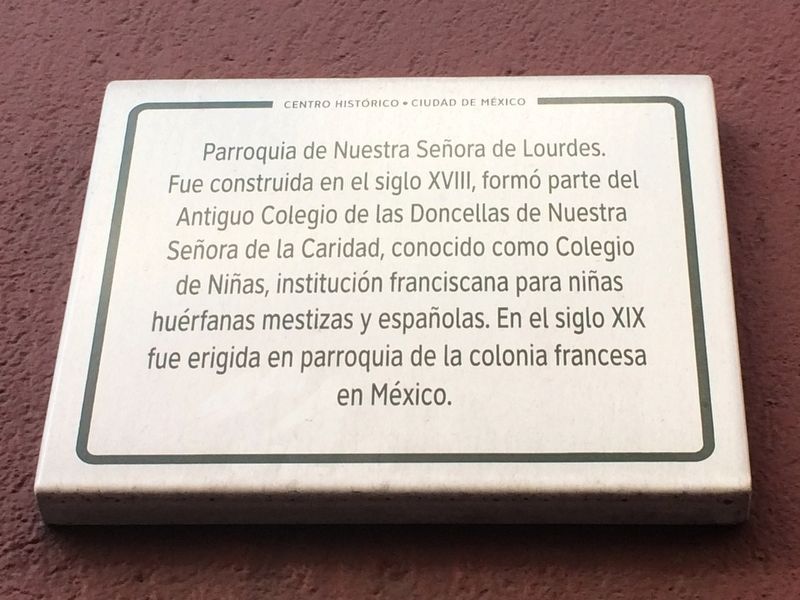
Parish of Our Lady of Lourdes
Photographed by J. Makali Bruton, January 23, 2017
1. Parish of Our Lady of Lourdes Marker

Fue construida en el siglo XVIII, formó parte del
Antiguo Colegio de las Doncellas de Nuestra
Señora de la Caridad, conocido como Colegio
de Niñas, institución franciscana para niñas
huérfanas mestizas y españolas. En el siglo XIX
fue erigida en parroquia de la colonia francesa
en México.
It was constructed in the 18th century, forming part of the Old College for Damsels of Our Lady of Charity, also known as the Girls’ College, a Franciscan institution for mixed-race and Spanish orphan girls. In the 19th century it was converted into the parish church for the French living in Mexico City.
Topics. This historical marker is listed in these topic lists: Charity & Public Work • Religion & Religious Structures.
Location. 19° 25.919′ N, 99° 8.319′ W. Marker is in Ciudad de México. It is in Centro Histórico. It is on Calle Bolivar, on the right when traveling south. Touch for map. Marker is at or near this postal address: 37 Calle Bolivar, Ciudad de México 06000, Mexico. Touch for directions.

Regionally,
this page online
Other nearby markers. At least 8 other markers are within walking distance of this marker: Teatro Colón (a few steps from this marker); The Ottoman Clock (within shouting distance of this marker); El Gallo de Oro (within shouting distance of this marker); First Cockfighting Plaza (within shouting distance of this marker); House of Jaime Nunó (within shouting distance of this marker); House of José y Francisco Fagoaga y Villaurruña (about 90 meters away, measured in a direct line); Portal del Coliseo (about 120 meters away); Museum and Cultural Center “El Borceguí” (about 120 meters away). Touch for a list and map of all markers in Ciudad de México.
Other markers no longer nearby. The Golden Rooster Bar (was within shouting distance of this marker but has been confirmed missing); Teatro Principal (was about 120 meters away
Photographed by J. Makali Bruton, January 23, 2017
2. An additional Parish of Our Lady of Lourdes Marker
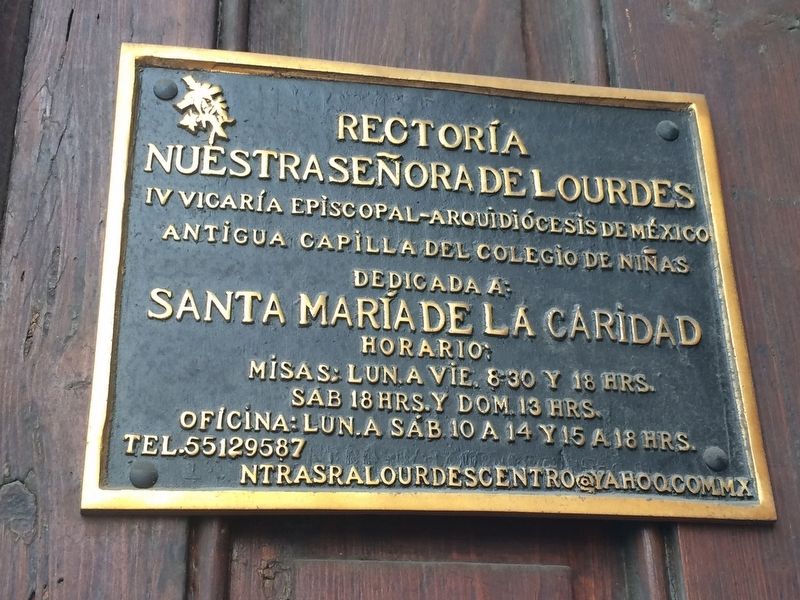
This additional informational marker is mounted to the doors of the church and includes the hours of masses and contact information.
Photographed by J. Makali Bruton, January 23, 2017
3. An additional nearby marker mounted to the front of the Parish of Our Lady of Lourdes Church
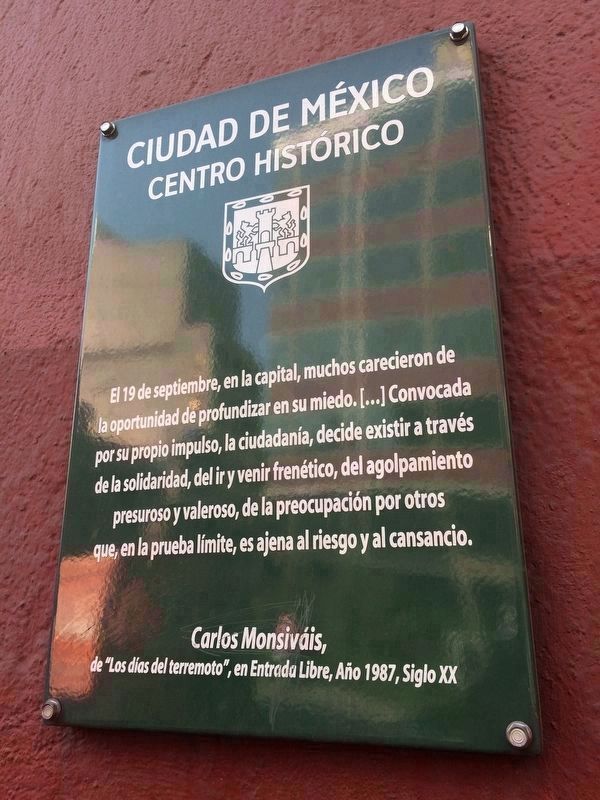
There are many additional markers such as this in the Historic Center of Mexico City. They attempt to give additional details about the area’s rich history, usually through quotes from literature. This additional marker describes a small part of the 1985 earthquake which so affected Mexico City. It reads:
Ciudad de México
Centro Histórico
El 19 de septiembre, en la capital, muchos carecieron de la oportunidad de profundizar en su miedo. […] Convocada por su propio impulso, la ciudadanía, decide existir a través de la solidaridad, del ir y venir frenético, del agolpamiento presuroso y valeroso, de la preocupación por otros que, en la prueba límite, es ajena al riesgo y al cansancio.
Carlos Monsiváis,
de “Los dias del terremoto", en Entrada Libre, Año 1987, Siglo XX
English translation:
The Historic Center of Mexico City
On September 19 in the capital, many lacked the opportunity to deepen their fear. [...] Summoned by their own impulse, by a feeling of citizenship, they decided to exist through solidarity, the frenzy of coming and going, the rush of being hurried and courageous, of showing concern for others, which, in the last, is foreign to any risk or fatigue.
Carlos Monsiváis,
from "The Days of the Earthquake", in Entrada Libre, 1987
Centro Histórico
El 19 de septiembre, en la capital, muchos carecieron de la oportunidad de profundizar en su miedo. […] Convocada por su propio impulso, la ciudadanía, decide existir a través de la solidaridad, del ir y venir frenético, del agolpamiento presuroso y valeroso, de la preocupación por otros que, en la prueba límite, es ajena al riesgo y al cansancio.
Carlos Monsiváis,
de “Los dias del terremoto", en Entrada Libre, Año 1987, Siglo XX
On September 19 in the capital, many lacked the opportunity to deepen their fear. [...] Summoned by their own impulse, by a feeling of citizenship, they decided to exist through solidarity, the frenzy of coming and going, the rush of being hurried and courageous, of showing concern for others, which, in the last, is foreign to any risk or fatigue.
Carlos Monsiváis,
from "The Days of the Earthquake", in Entrada Libre, 1987
Photographed by J. Makali Bruton, January 23, 2017
4. Parish of Our Lady of Lourdes Marker
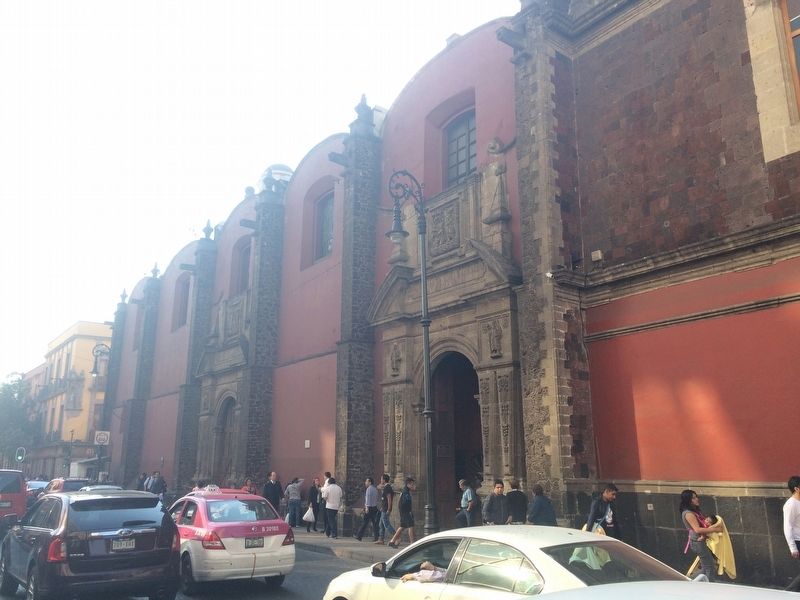
The small marker is to the left of the main entryway to the church.
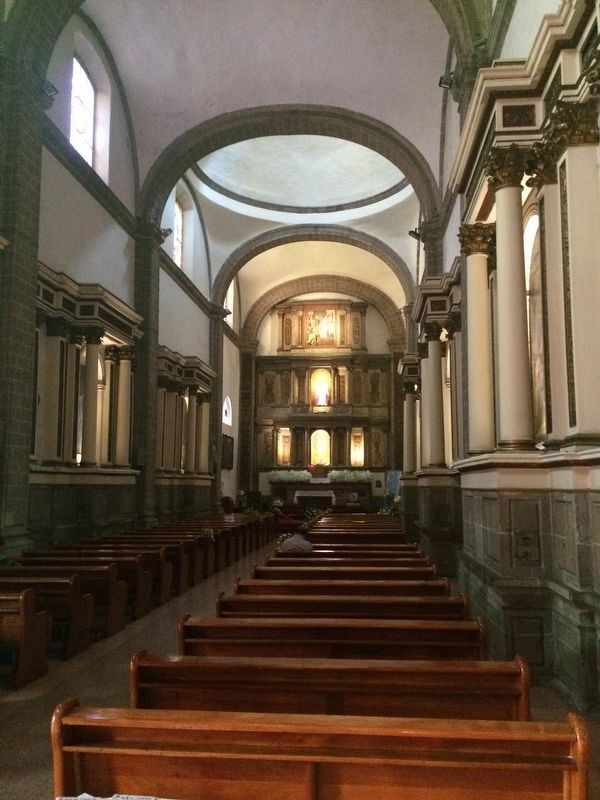
Photographed by J. Makali Bruton, January 23, 2017
5. Interior of the Parish of Our Lady of Lourdes
Credits. This page was last revised on April 17, 2020. It was originally submitted on May 13, 2017, by J. Makali Bruton of Washington, District of Columbia. This page has been viewed 525 times since then and 62 times this year. Photos: 1, 2, 3, 4, 5. submitted on May 13, 2017, by J. Makali Bruton of Washington, District of Columbia.
