Mt. Olivet Heights in Frederick in Frederick County, Maryland — The American Northeast (Mid-Atlantic)
Frederick Town Barracks
The American Revolution 1776 - 1783
Photographed by Allen C. Browne, May 9, 2017
1. Frederick Town Barracks Marker
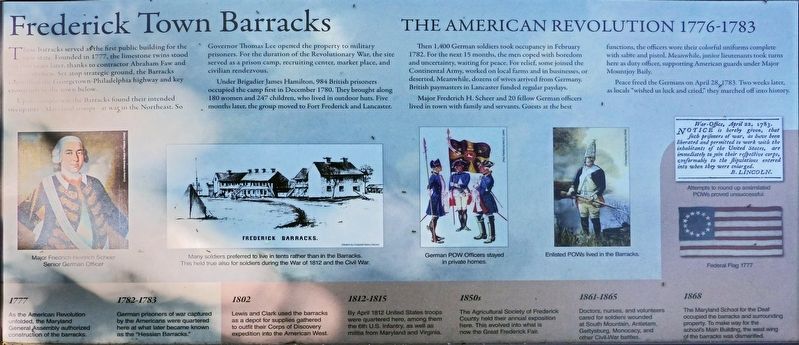
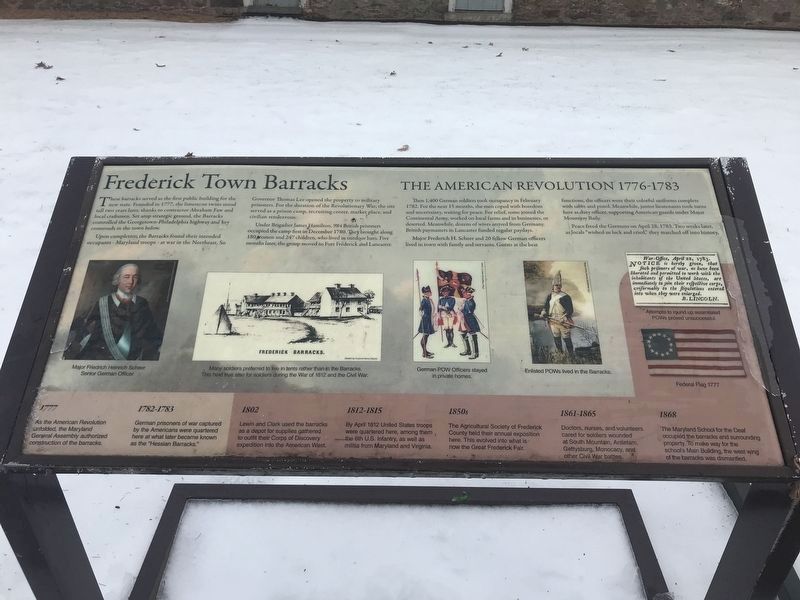
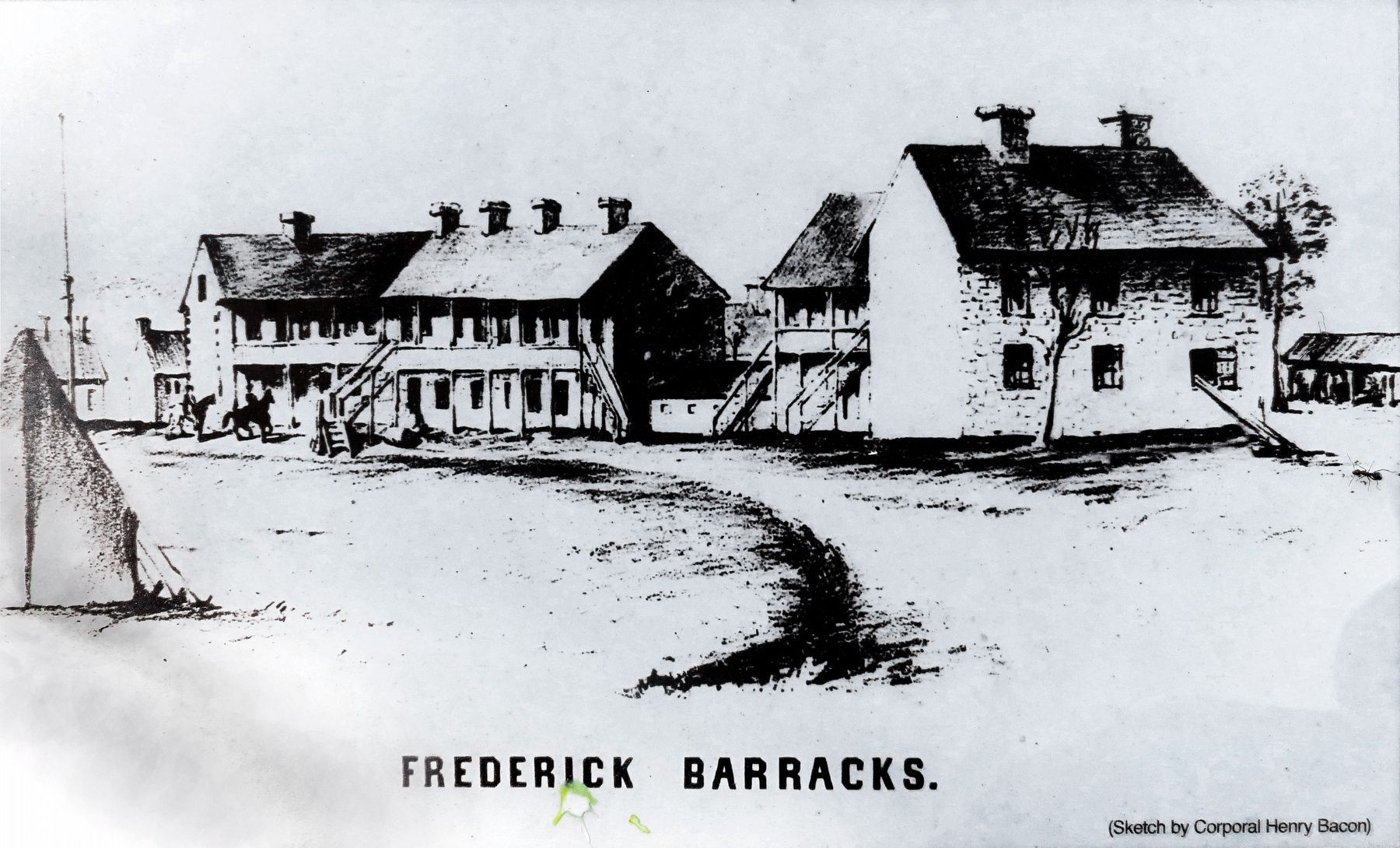
Upon completion of the Barracks found their intended occupants — Maryland troops — at war in the Northeast. So Governor Thomas Lee opened the property to military prisoners. For the duration of the Revolutionary War, the site served as a prison camp, recruiting center, market place, and civilian rendezvous.
Under Brigadier James Hamilton, 984 British prisoners occupied the camp first in December 1780. They brought along 180 women and 247 children, who lived in outdoor huts. Five months later, the group moved to Fort Frederick and Lancaster.
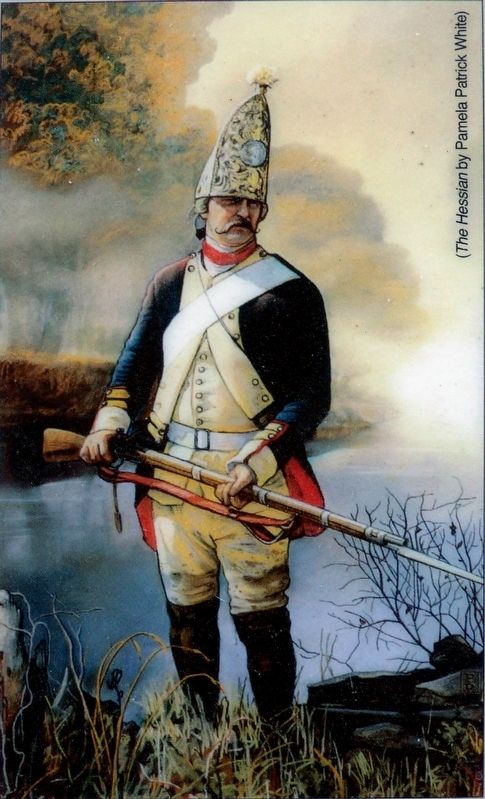
Then 1,400 German soldiers took occupancy in February 1792. For the next 15 months, the men coped with boredom and uncertainty, waiting for peace. For relief, some joined the Continental Army, worked on local farms and in businesses, or deserted. Meanwhile, dozens of
this page online
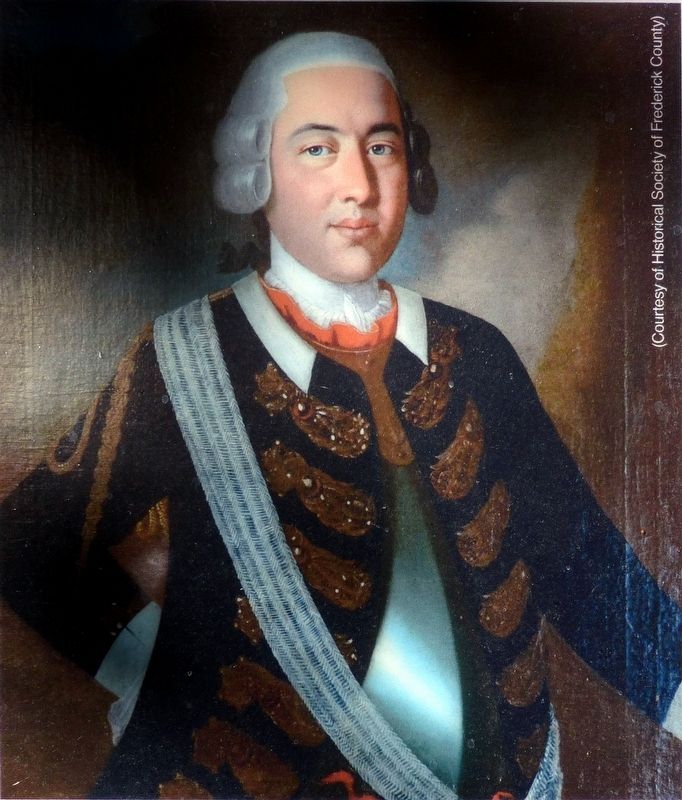
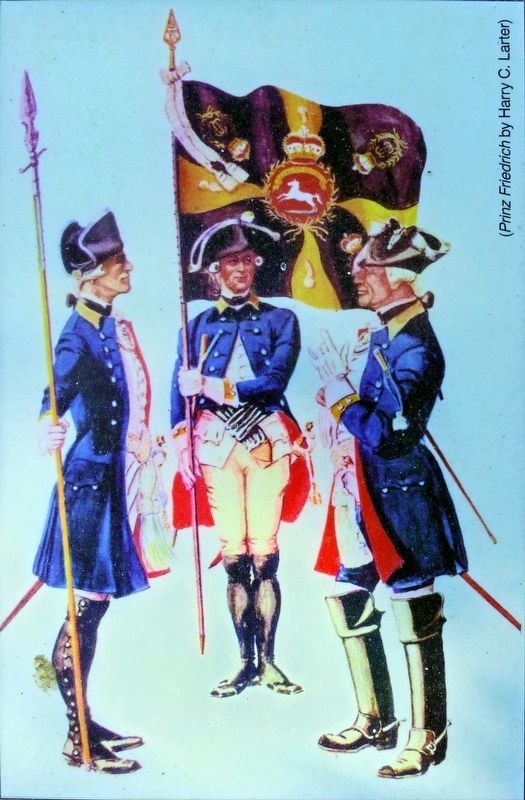
Major Frederich H. Scheer and 20 fellow German officers lived in town with family and servants. Guests at the best functions, the officers wore their colorful uniforms complete with sabre and pistol. Meanwhile, junior lieutenants took turns here as duty officer, supporting American guards under Major Mountjoy Baily.
Peace freed the Germans on April 28, 1783. Two weeks later, as locals “wished us luck and cried,” they marched off into history.
1777 — As the American Revolution unfolded, the Maryland General Assembly authorized construction of the Barracks.
1782 - 1783 — German prisoners of war captured by the Americans were quartered here at what later became known as the “Hessian Barracks.”
1802 — Lewis and Clark used the barracks as a depot for supplies gathered to outfit their Corps of Discovery expedition to the American West.
1812 - 1815 — By April 1812 United States troops were quartered here, among them the 6th U.S. Infantry, as well as militia from Maryland and Virginia.
1850s — The Agricultural Society of Frederick County
Photographed by Adam Margolis, January 17, 2022
2. Frederick Town Barracks Marker
1861 - 1865 — Doctors nurses and volunteers cared for soldiers wounded at South Mountain, Antietam, Gettysburg, Monocacy, and other Civil War battles.
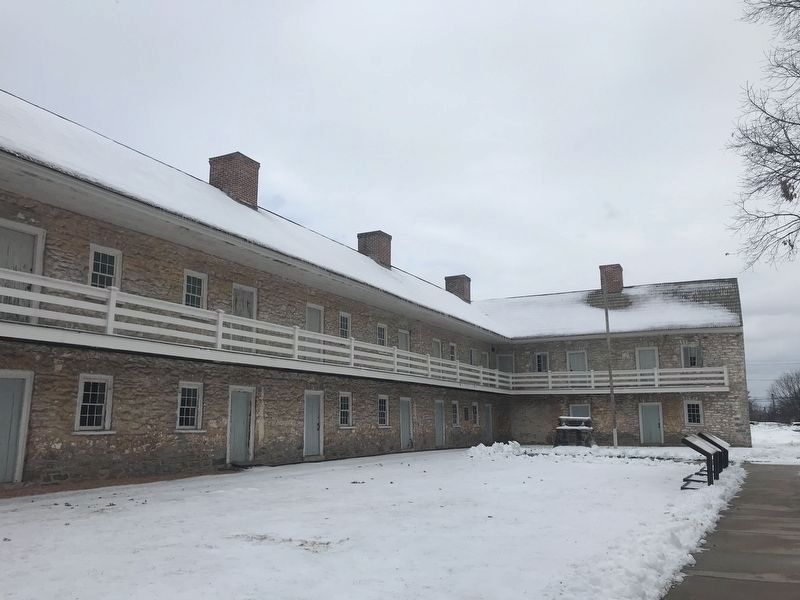
1868 — The Maryland School for the Deaf occupied the barracks and surrounding property. To make way for the school's Main Building, the west wing of the barracks were dismantled.
Topics. This historical marker is listed in this topic list: War, US Revolutionary.
Location. 39° 24.534′ N, 77° 24.563′ W. Marker is in Frederick, Maryland, in Frederick County. It is in Mt. Olivet Heights. It can be reached from Clarke Place. At the Maryland School for the Deaf. Touch for map. Marker is at or near this postal address: 101 Clarke Place, Frederick MD 21701, United States of America. Touch for directions.

Regionally, this marker is in the Washington Metropolitan Area and in Central Maryland. It is also in the American Mid-Atlantic. Globally, it is in North America, the Western Hemisphere, the Western World, and the Anglosphere. Historically,
Photographed by Allen C. Browne, May 9, 2017
3. Frederick Town Barracks Marker
Other nearby markers. At least 8 other markers are within walking distance of this marker: “The Great Baby Waker” (a few steps from this marker); Hessian Barracks - Witness to History (a few steps from this marker); a different marker also named The Frederick Town Barracks (within shouting distance of this marker); United States Army General Hospital #1 (within shouting distance of this marker); Historic Frederick Barracks (within shouting distance of this marker); Lewis & Clark Trail Marker (within shouting distance of this marker); These Barracks (within shouting distance of this marker); The Frederick Brick Works (approx. 0.2 miles away). Touch for a list and map of all markers in Frederick.
Photographed by Adam Margolis, January 17, 2022
4. Frederick Town Barracks Marker
Photographed by Allen C. Browne, May 9, 2017
5. Major Friedrich Heinrich Scheer Senior German Officer
Photographed by Allen C. Browne, May 9, 2017
6. Frederick Barracks
Photographed by Allen C. Browne, May 9, 2017
7. German POW Officers stayed in private homes.
Photographed by Allen C. Browne, May 9, 2017
8. Enlisted POWs lived in the Barracks.
Credits. This page was last revised on June 28, 2024. It was originally submitted on May 14, 2017, by Allen C. Browne of Silver Spring, Maryland. This page has been viewed 950 times since then and 88 times this year. Photos: 1. submitted on May 14, 2017, by Allen C. Browne of Silver Spring, Maryland. 2. submitted on January 17, 2022, by Adam Margolis of Mission Viejo, California. 3. submitted on May 14, 2017, by Allen C. Browne of Silver Spring, Maryland. 4. submitted on January 17, 2022, by Adam Margolis of Mission Viejo, California. 5, 6, 7, 8. submitted on May 14, 2017, by Allen C. Browne of Silver Spring, Maryland. • Bill Pfingsten was the editor who published this page.
