Near Park Valley in Box Elder County, Utah — The American Mountains (Southwest)
Kelton
Photographed by Barry Swackhamer, June 20, 2017
1. Kelton Marker
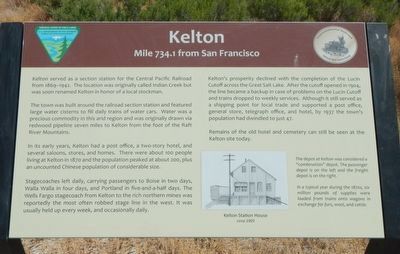
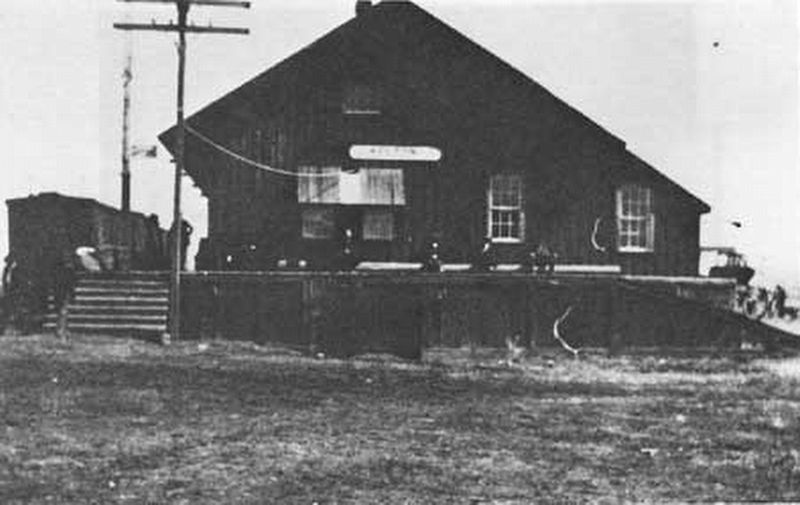
Caption: Kelton Station Hotel circa 1905. The depot at Kelton was considered a "combination" depot. The passenger depot is on the left and freight depot is on the right. In a typical year during the 1870s, six million pounds of supplies were loaded from trains onto wagons in exchange for furs, wool, and cattle.
Kelton served as a section station for the Central Pacific Railroad from 1869-1942. The location was originally called Indian Creek but was soon renamed Kelton in honor of a local stockman.
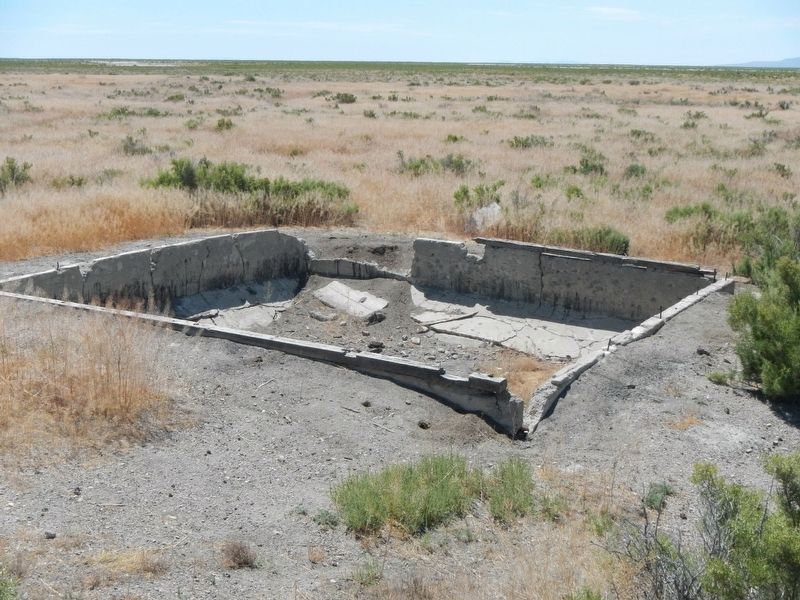
The town was built around the railroad section station and featured large water cisterns to fill daily trains of water cars. Water was a precious commodity in this arid region and was originally drawn via redwood pipelines seven miles to Kelton from the foot of the Raft River Mountains.
In its early years, Kelton had a post office, a two-story hotel, and several saloons, stores, and homes. There were about 100 people living in Kelton in 1870 and the population peaked at about 200, plus and uncounted Chinese population of considerable size.
Stagecoaches left daily, carrying passengers to Boise in two days, Walla Walla in four days, and Portland in five-and-a-half days. The Wells Fargo stagecoach from Kelton to the rich northern mines was reportedly the most often robbed stage line in the west. It was usually held up every week, and occasionally daily.
Keaton's prosperty declined with the completion
this page online
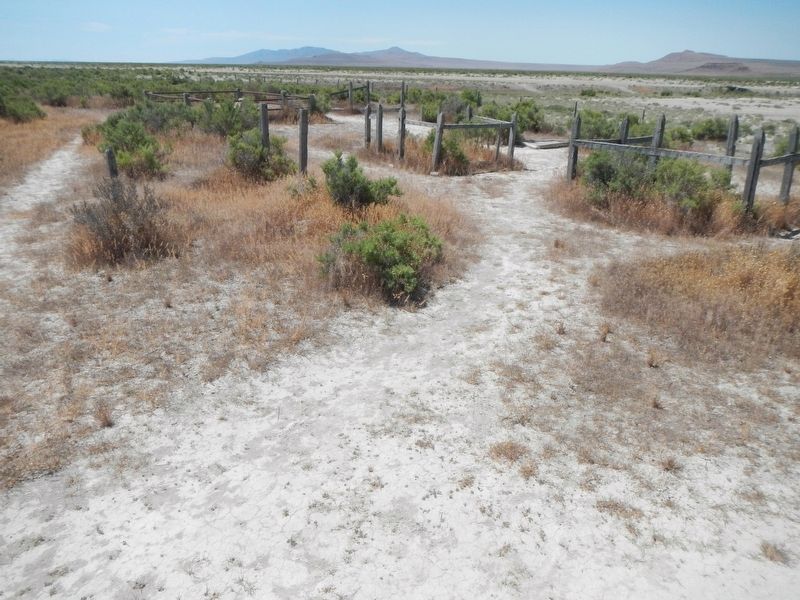
Remains of the old hotel and cemetery can still be seen at the Kelton site today.
Erected by Department of the Interior, Bureau of Land Management.
Topics and series. This historical marker is listed in this topic list: Railroads & Streetcars. In addition, it is included in the First Transcontinental Railroad series list. A significant historical year for this entry is 1869.
Location. 41° 44.76′ N, 113° 6.678′ W. Marker is near Park Valley, Utah, in Box Elder County. It is on Transcontinental Railroad Back Country Byway near Kelton Road, on the right when traveling west. Touch for map. Marker is in this post office area: Park Valley UT 84329, United States of America. Touch for directions.

Regionally, this marker is in the Cache Valley and in the West Desert.
Photographed by Barry Swackhamer, June 20, 2017
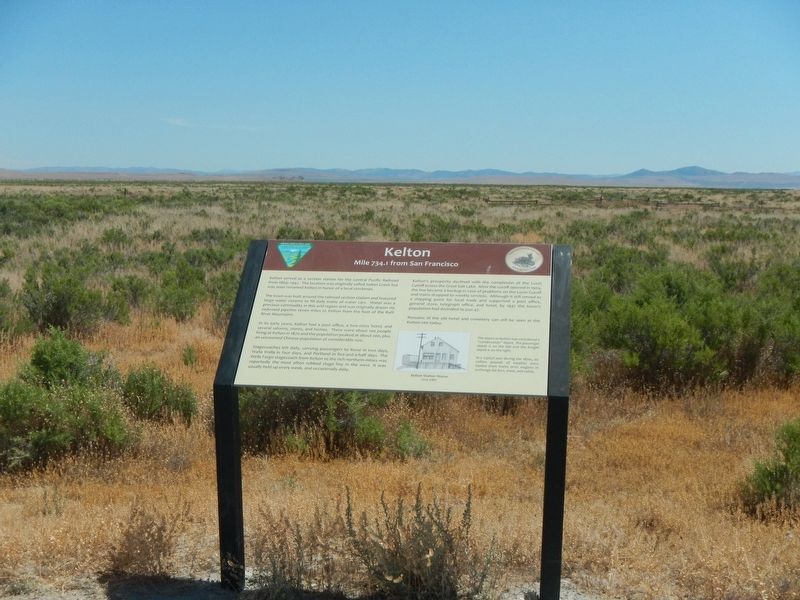
2. Kelton Marker
Other nearby markers. At least 6 other markers are within 14 miles of this marker, measured as the crow flies: Elinor (approx. 5.2 miles away); Peplin (approx. 6.2 miles away); Seco (approx. 9 miles away); Ombey (approx. 9.6 miles away); Nella Siding (approx. 9.9 miles away); Romola (approx. 13.7 miles away).
More about this marker. The Transcontinental Railroad Back Country Byway is a 90 mile dirt/gravel track on top of or beside the old Central Pacific Rail Road grade between Old Lucin and Promontory Summit. Other than markers designating old station and sidings there are few, if any, road signs identifying any of the side roads. Any other road names or numbers use on this marker page have been taken Google Maps which identifies the Byway variously as Golden Spike Loop Road, Old Railroad Grade Road, Salt Wells Road, etc.
Neither are there
Photographed by Barry Swackhamer, June 20, 2017
3. Kelton Cemetery
Photographed by Barry Swackhamer, June 20, 2017
4. Kelton Ruins: Cistern?
Photographed by Unknown
5. Kelton Depot
Credits. This page was last revised on August 28, 2020. It was originally submitted on July 11, 2017, by Barry Swackhamer of Brentwood, California. This page has been viewed 1,247 times since then and 100 times this year. Photos: 1, 2, 3, 4, 5. submitted on July 11, 2017, by Barry Swackhamer of Brentwood, California.
