Saint Maries in Benewah County, Idaho — The American West (Mountains)
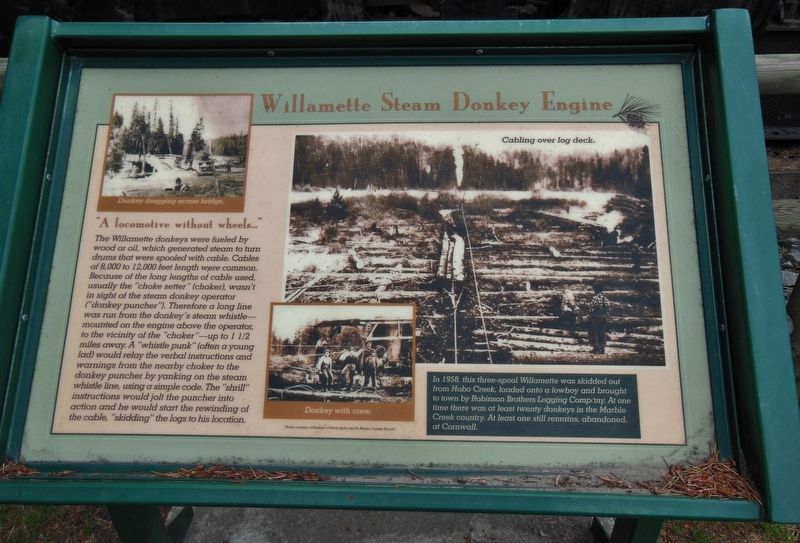
Willamette Steam Donkey Engine
Photographed by Cosmos Mariner, June 26, 2013
1. Willamette Steam Donkey Engine Marker
“A locomotive without wheels…”
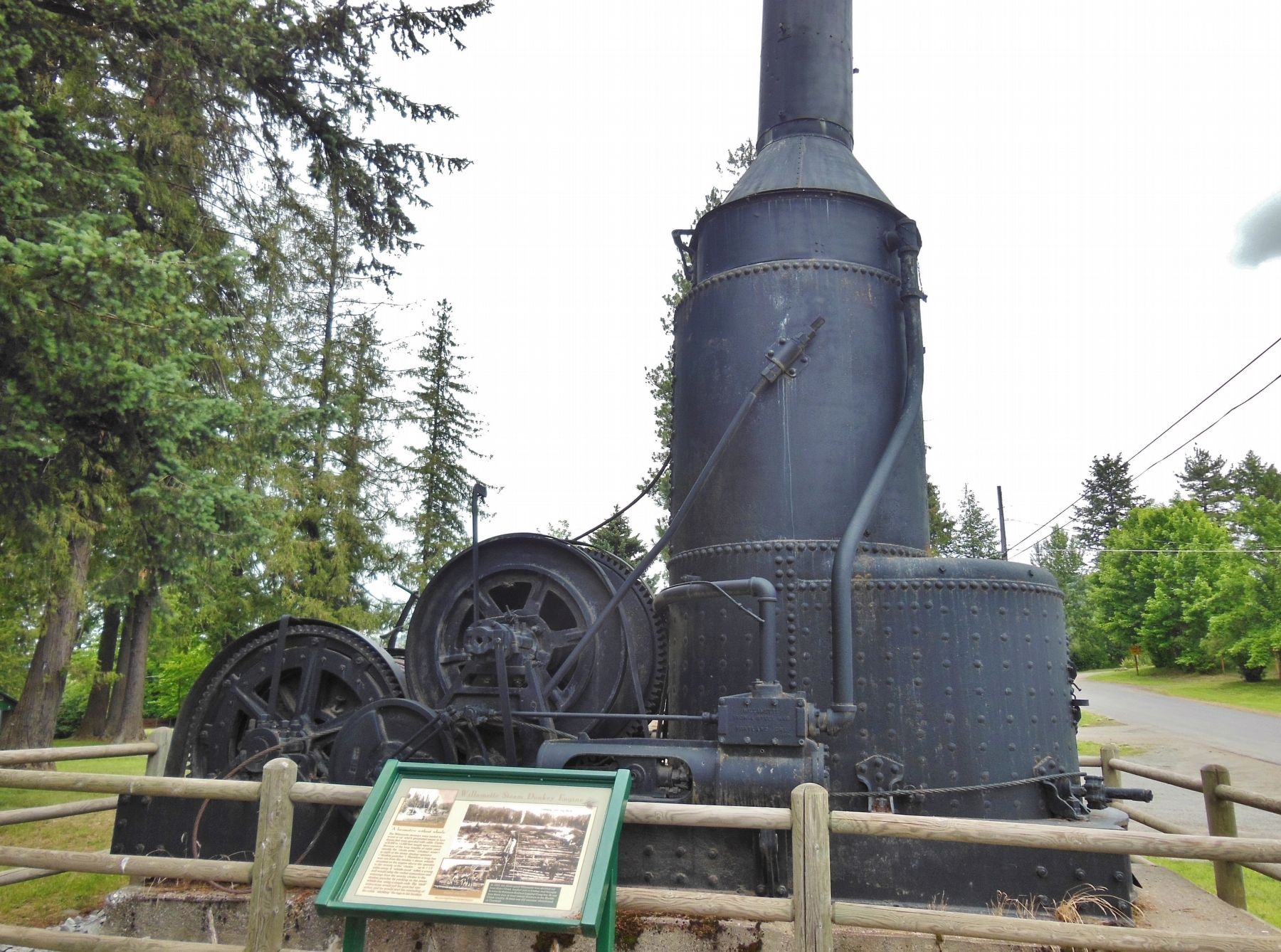
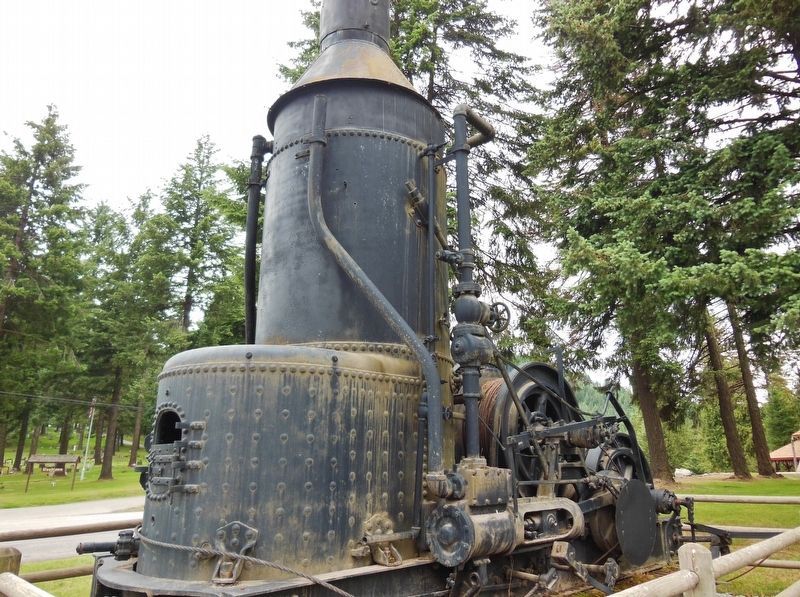
The Willamette donkeys were fueled by wood or oil, which generated steam to turn drums that were spooled with cable. Cables of 8,000 to 12,000 feet length were common. Because of the long lengths of cable used, usually the “choke setter” (choker), wasn’t in sight of the steam donkey operator (“donkey puncher”). Therefore a long line was run from the donkey’s steam whistle – mounted on the engine above the operator, to the vicinity of the “choker” – up to 1 ½ miles away. A “whistle punk” (often a young lad) would relay the verbal instructions and warnings from the nearby choker to the donkey puncher by yanking on the steam whistle line, using a simple code. The “shrill” instructions would jolt the puncher into action and he would start the rewinding of the cable, “skidding” the logs to his location.
In 1958, this three-spool Willamette was skidded out from Hobo Creek, loaded onto a lowboy and brought to town by Robinson Brothers Logging Company. At one time there were at least twenty donkeys in the Marble Creek country. At least one still remains, abandoned, at Cornwall.
Topics.
this page online
Location. 47° 19.103′ N, 116° 35.185′ W. Marker is in Saint Maries, Idaho, in Benewah County. It is at the intersection of North 23rd Street (State Highway 5) and North 23rd Street, on the right when traveling west on North 23rd Street. Marker is located in Mullan Trail Park. Touch for map. Marker is in this post office area: Saint Maries ID 83861, United States of America. Touch for directions.

Regionally, this marker is in North Idaho — Idaho’s Panhandle. It is also in the American Mountain West and specifically in the Pacific Northwest. Globally, it is in North America, the Western Hemisphere, the Western World, and the Anglosphere.
Other nearby markers. At least 8 other markers are within 2 miles of this marker, measured as the crow flies: Splash Dam at Hobo Creek (here, next to this marker); Mullan Trail Road (within shouting distance of this marker); John Mullan (within shouting distance of this marker); The 1910 Fire (approx. one mile away); Hughes House Historical Museum
via Old Oregon Photos, 1925
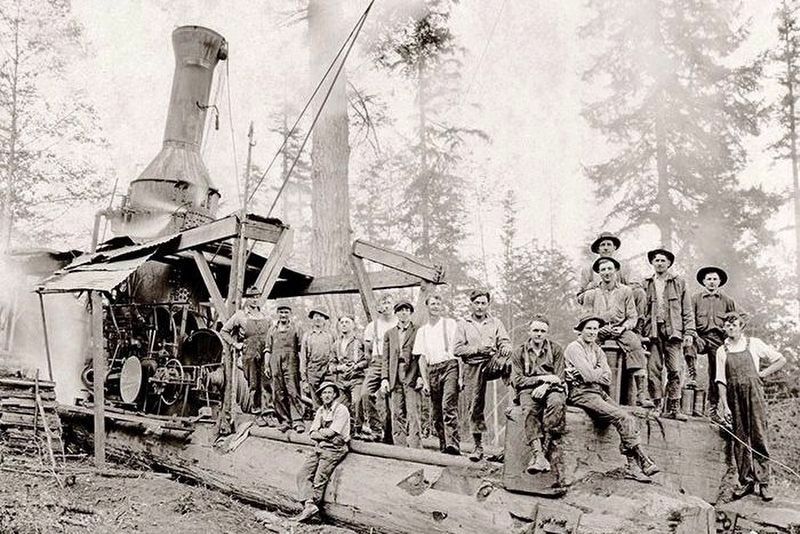
2. Willamette Steam Donkey, Deer Island Logging Company - c. 1925
The Willamette was a popular brand of steam donkey for Northwest logging operations. From 1901 to 1930, over 3,000 of these workhorses were built in their Portland factory. In this photo the full crew has gathered on the large skids on which the donkey has been mounted. By using its own winches, the donkey was able to be moved from spot to spot on a large tract.
Also see . . .
1. Donkey, Willamette 3-Drum Loader. Roots Of Motive Power website entry:
This steam donkey was built by Willamette Iron and Steel Works of Portland, Oregon in 1923 as C/N 2139 for the Westside Lumber Company in Tuolumne, California. (Submitted on November 13, 2017, by Cosmos Mariner of Cape Canaveral, Florida.)
2. Steam Donkey. Wikipedia entry:
A logging engine comprised at least one powered winch around which was wound hemp rope or (later) steel cable. They were usually fitted with a boiler and usually equipped with skids, or sleds made from logs, to aid them during transit from one "setting" to the next. The larger steam donkeys often had a "donkey house" (a makeshift shelter for the crew) built either on the skids or as a separate structure. Usually, a water tank, and sometimes a fuel oil tank, was mounted on the back of the sled. In rare
Photographed by Cosmos Mariner, June 26, 2013
3. Willamette Steam Donkey Engine Marker (wide view)
Photographed by Cosmos Mariner, June 26, 2013
4. Willamette Steam Donkey
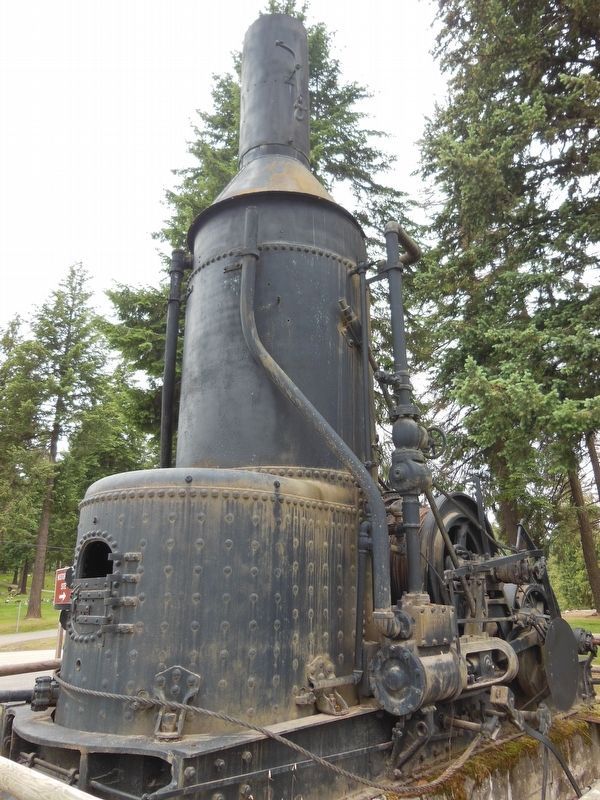
Photographed by Cosmos Mariner, June 26, 2013
5. Willamette Steam Donkey
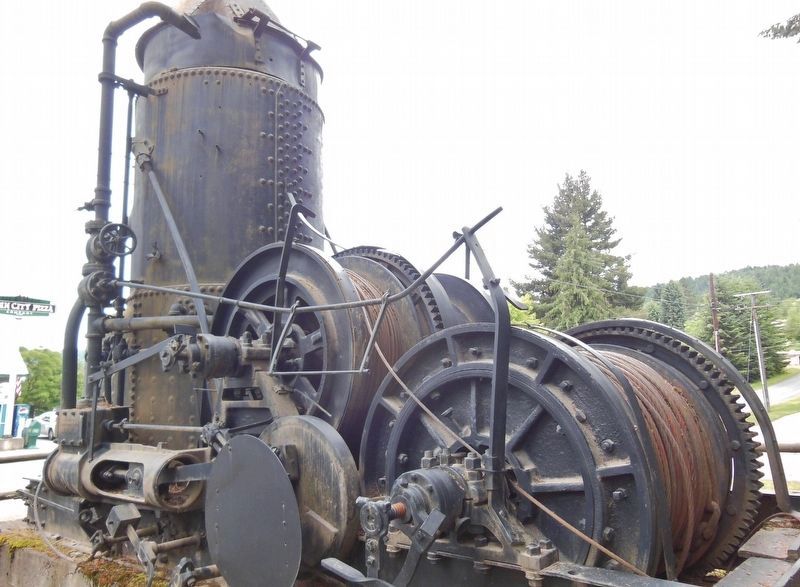
Photographed by Cosmos Mariner, June 26, 2013
6. Willamette Steam Donkey
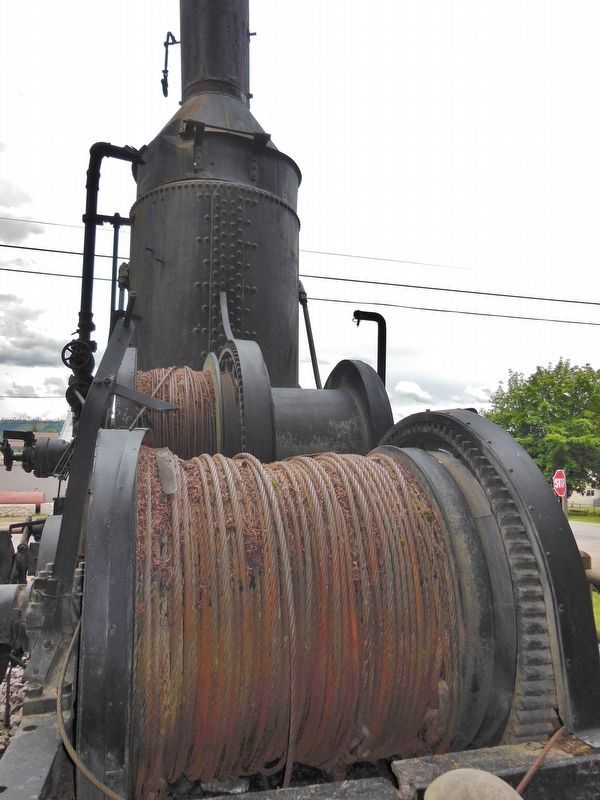
Photographed by Cosmos Mariner, June 26, 2013
7. Willamette Steam Donkey
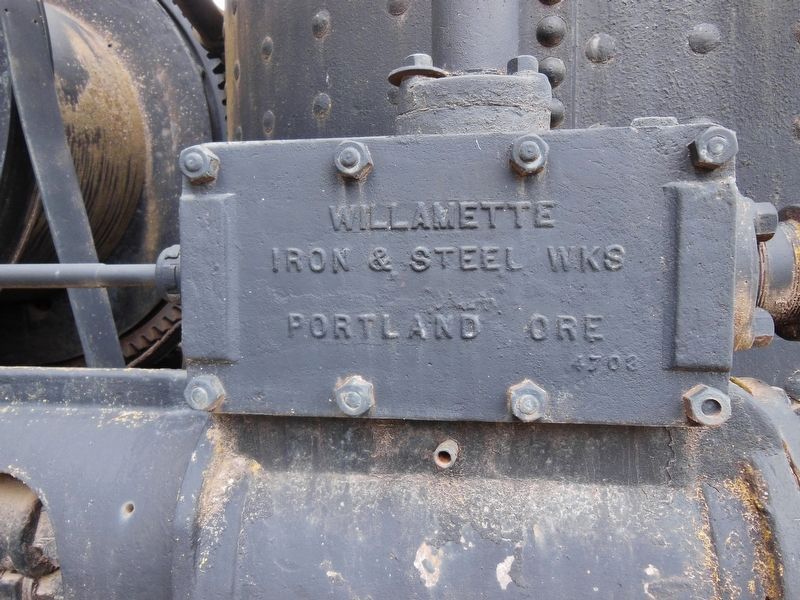
Photographed by Cosmos Mariner, June 26, 2013
8. Willamette Steam Donkey
Photographed by Cosmos Mariner, June 26, 2013
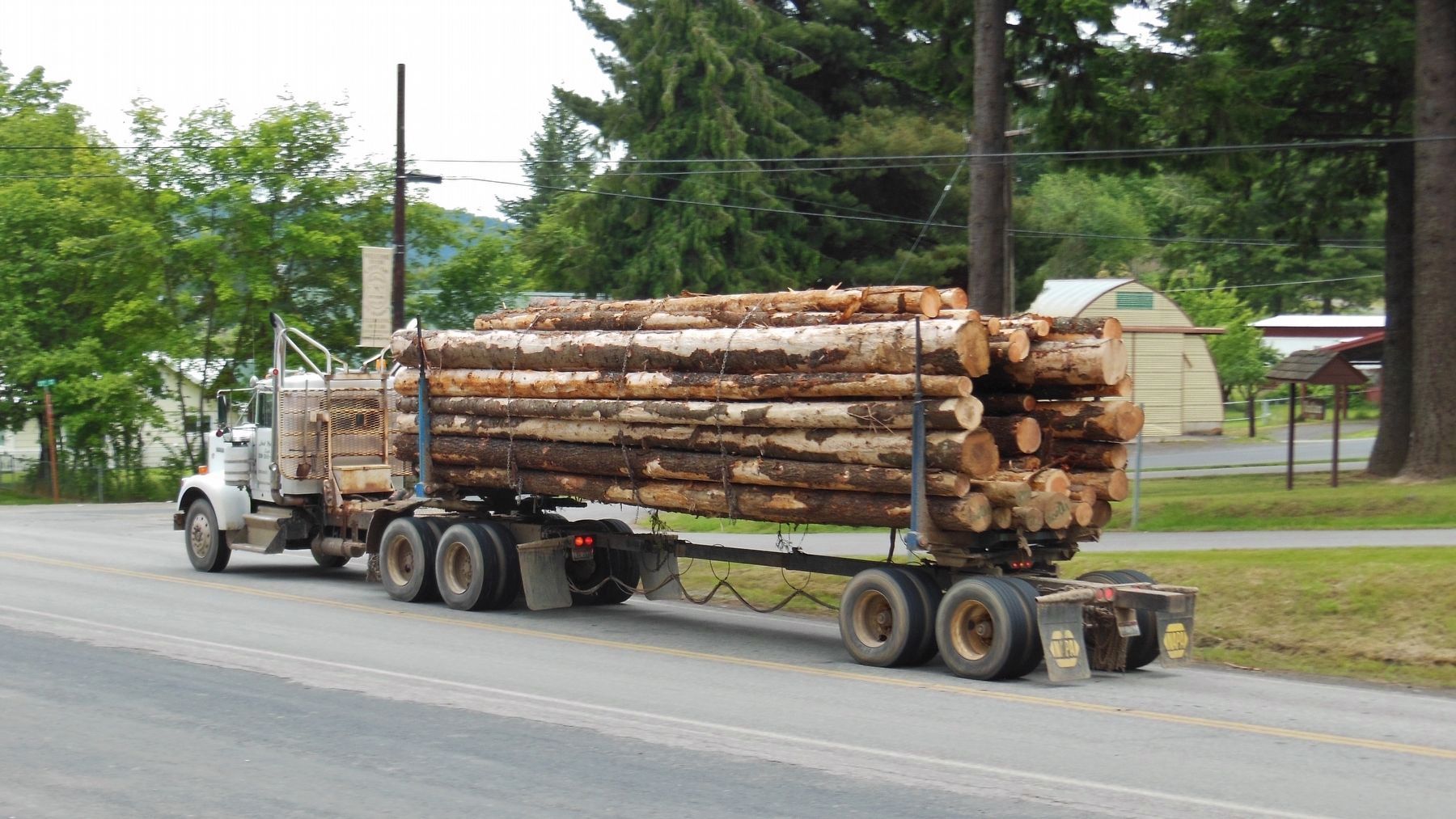
9. Logging Truck Passing by Marker
Logging is still big business here! The big log trucks pass by this marker every few minutes!
Credits. This page was last revised on December 28, 2024. It was originally submitted on November 13, 2017, by Cosmos Mariner of Cape Canaveral, Florida. This page has been viewed 2,681 times since then and 132 times this year. Photos: 1. submitted on November 13, 2017, by Cosmos Mariner of Cape Canaveral, Florida. 2. submitted on February 17, 2022, by Larry Gertner of New York, New York. 3, 4. submitted on November 13, 2017, by Cosmos Mariner of Cape Canaveral, Florida. 5. submitted on November 18, 2017, by Cosmos Mariner of Cape Canaveral, Florida. 6, 7, 8. submitted on November 13, 2017, by Cosmos Mariner of Cape Canaveral, Florida. 9. submitted on November 18, 2017, by Cosmos Mariner of Cape Canaveral, Florida. • Bill Pfingsten was the editor who published this page.
