Lockhart in Covington County, Alabama — The American South (East South Central)
W.S. Harlan School
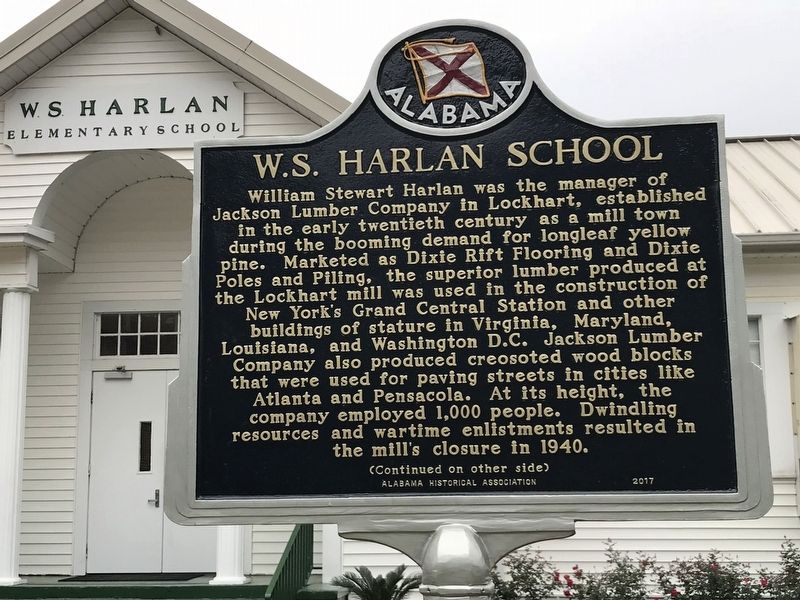
December 7, 2017
1. W.S. Harlan School Marker (front)
William Stewart Harlan was the manager of Jackson Lumber Company in Lockhart, established in the early twentieth century as a mill town during the booming demand for longleaf yellow pine. Marketed as Dixie Rift Flooring and Dixie Poles and Piling, the superior lumber produced at the Lockhart mill was used in the construction of New York’s Grand Central Station and other buildings of stature in Virginia, Maryland, Louisiana, and Washington, D.C. Jackson Lumber Company also produced creosoted wood blocks that were used for paving streets in cities like Atlanta and Pensacola. At its height, the company employed 1,000 people. Dwindling resources and wartime enlistments resulted in the mill’s closure in 1940.
this page online
Erected 2017 by Alabama Historical Association.
Topics and series. This historical marker is listed in these topic lists: Education • Industry & Commerce. In addition, it is included in the Alabama Historical Association series list. A significant historical year for this entry is 1903.
Location. 31° 0.9′ N, 86° 21.344′ W. Marker is in Lockhart, Alabama, in Covington County. It is at the intersection of Mohegan Street and Seminole Street, on the right when traveling south on Mohegan Street. Touch for map. Marker is at or near this postal address: 1641 Mohegan Street, Lockhart AL 36455, United States of America. Touch for directions.

Regionally, this marker is in the American South, specifically in the Deep South, and in the Wiregrass. Globally, it is in North America, a Gulf of Mexico state, the Western Hemisphere, the Western World, and the Anglosphere.
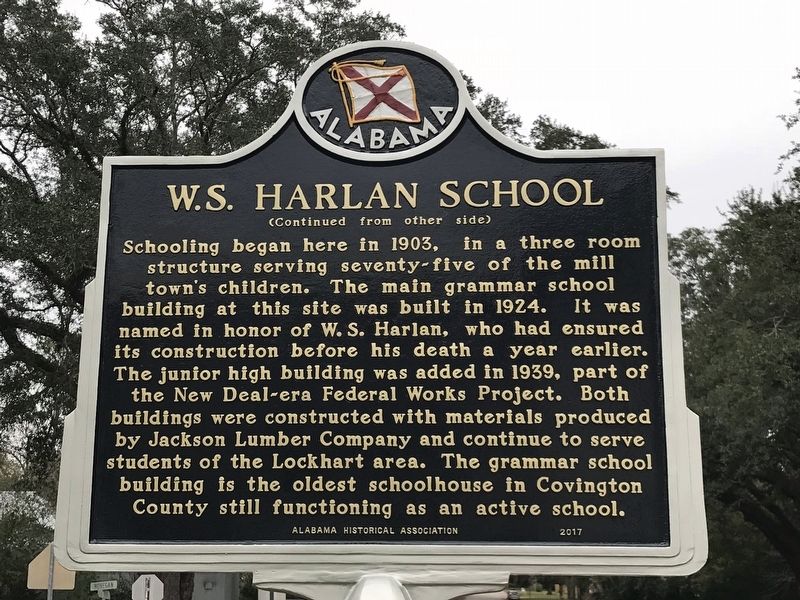
December 7, 2017
2. W.S. Harlan School Marker (back)
Other nearby markers. At least 2 other markers are within 18 miles of this marker, measured as the crow flies: Downtown Square and Veterans Memorial Park (approx. 1.7 miles away); Lake Jackson (approx. 1.9 miles away).
Another marker is no longer nearby. Confederate Park (was approx. 17.1 miles away in Florida but has been permanently removed).
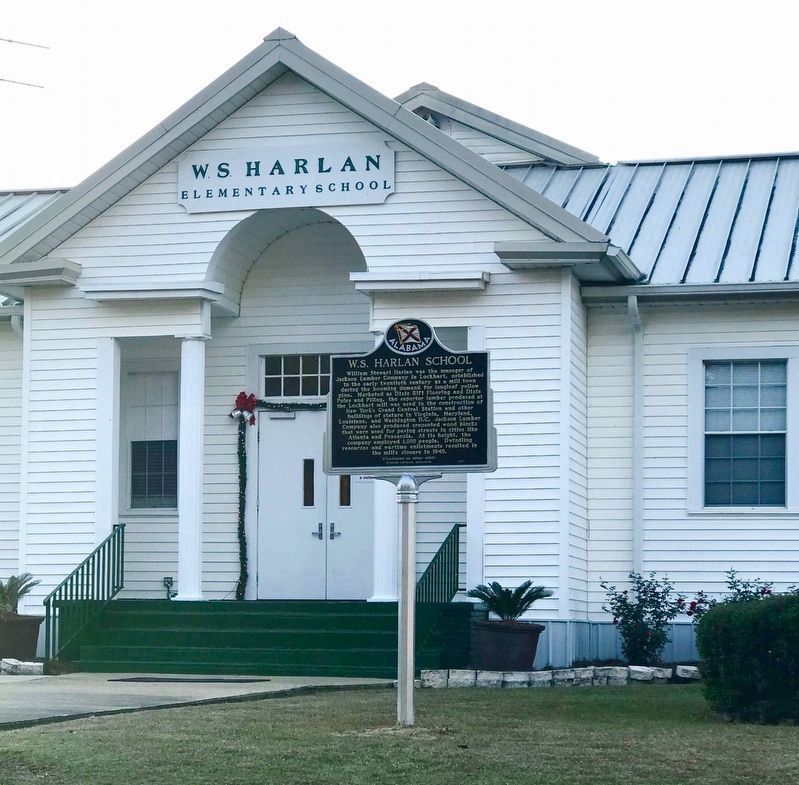
December 11, 2017
3. W.S. Harlan School Marker
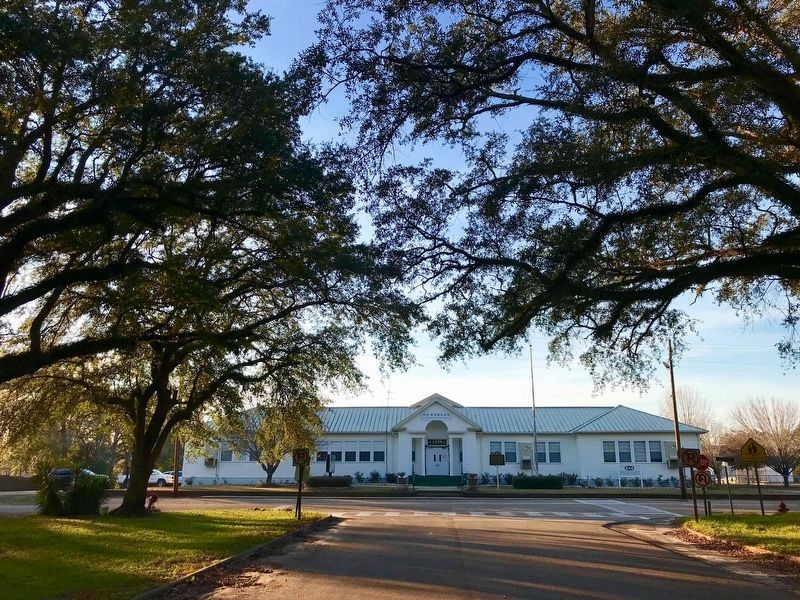
December 11, 2017
4. W.S. Harlan School Marker/1924 Grammar School Building
Credits. This page was last revised on December 13, 2017. It was originally submitted on December 9, 2017. This page has been viewed 1,543 times since then and 103 times this year. Photos: 1, 2. submitted on December 9, 2017. 3, 4. submitted on December 12, 2017. • Bernard Fisher was the editor who published this page.
