Ellicott City in Howard County, Maryland — The American Northeast (Mid-Atlantic)
The Road to Prosperity
Ellicott's Mills
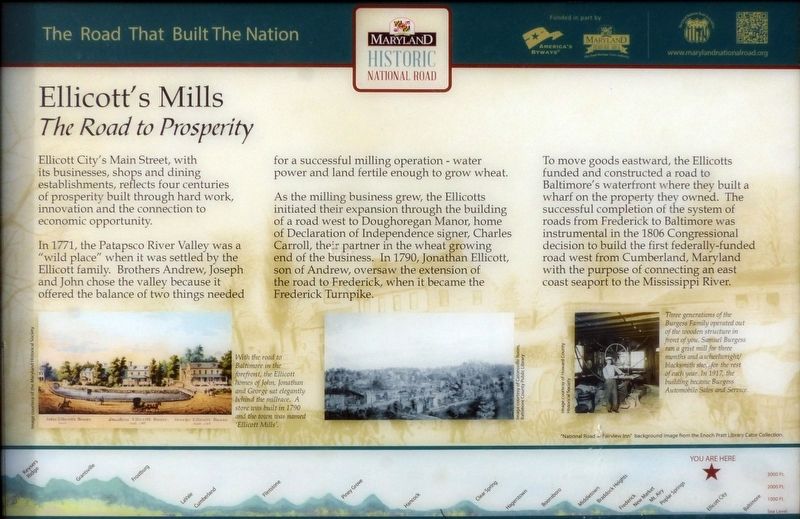
Photographed by Allen C. Browne, December 18, 2017
1. The Road to Prosperity Marker
this page online
Erected 2006.
Topics. This historical marker is listed in these topic lists: Industry & Commerce • Roads & Vehicles. A significant historical year for this entry is 1771.
Location. Marker is missing. It was located near 39° 16.13′ N, 76° 48.043′ W. Marker was in Ellicott City, Maryland, in Howard County. It could be reached from the intersection of Main Street (Maryland Route 144) and Ellicott Mills Drive. Touch for map. Marker was at or near this postal address: 8394 Main Street, Ellicott City MD 21043, United States of America. Touch for directions.

Regionally, this marker was in the Baltimore Metro Region and in Central Maryland. It was also in the American Mid-Atlantic and on the Eastern Seaboard. Globally, it was in the North Atlantic Region, North America, the Western Hemisphere, the Western World, and the Anglosphere. Historically, it found itself in what was once one of the original Thirteen Colonies and also the Antebellum South.
Other nearby markers. At
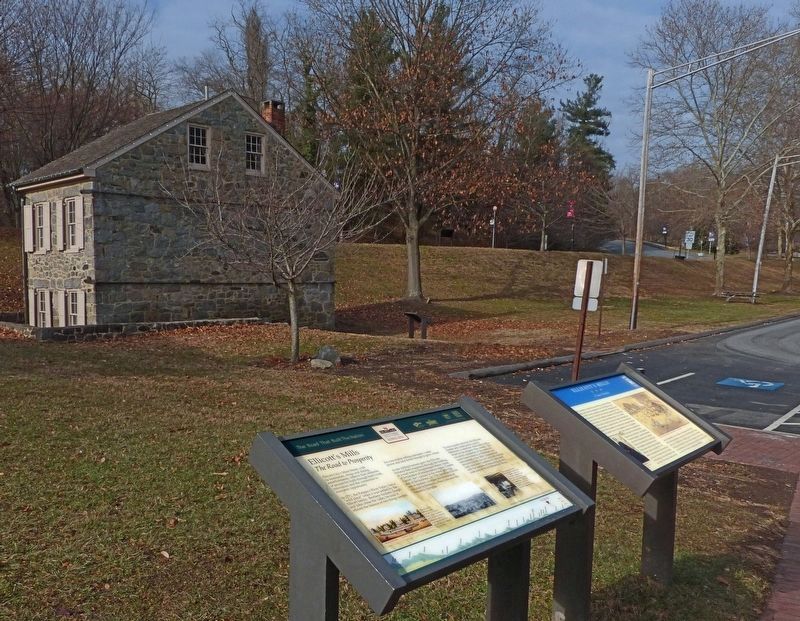
Photographed by Allen C. Browne, December 18, 2017
2. The Road to Prosperity Marker
Other markers no longer nearby. Old Court House, 1840: (was within shouting distance of this marker but has been confirmed missing); MaryLandscapes (was within shouting distance of this marker but has been permanently removed); Fells Lane Community (was within shouting distance of this marker but has been replaced with another marker now near it).
Additional commentary.
1. Ellicott City Flood 2018
A recent visit to Ellicott City shows
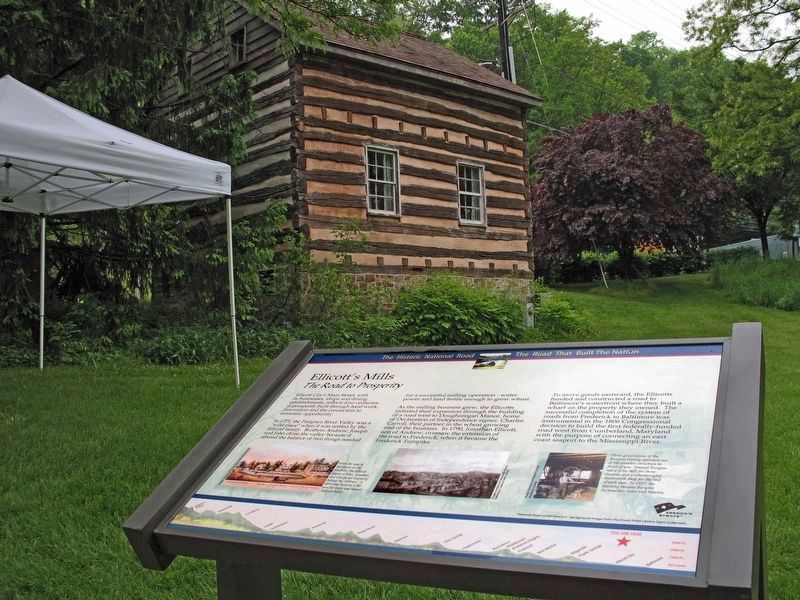
Photographed by Allen C. Browne, May 15, 2006
3. The Road to Prosperity Marker
— Submitted June 25, 2018, by Andy P of Ellicott City, Maryland.
Library of Congress
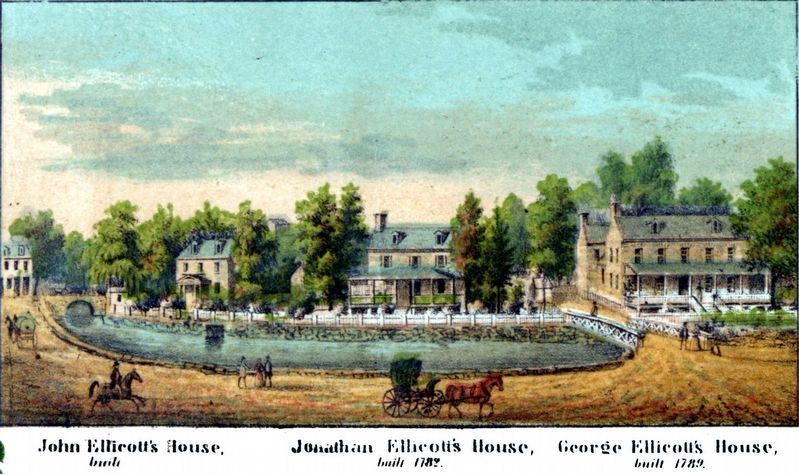
4. Ellicott Houses
With the road to Baltimore in the forefront, the Ellicott Homes of John, Jonathan and George sat elegantly behind the millrace. A store was built in 1790 and the town was named ‘Ellicott Mills’. from a E. Sachse lithograph, c. 1854.
Photographed by Allen C. Browne, December 18, 2017
5. Samuel Burgess
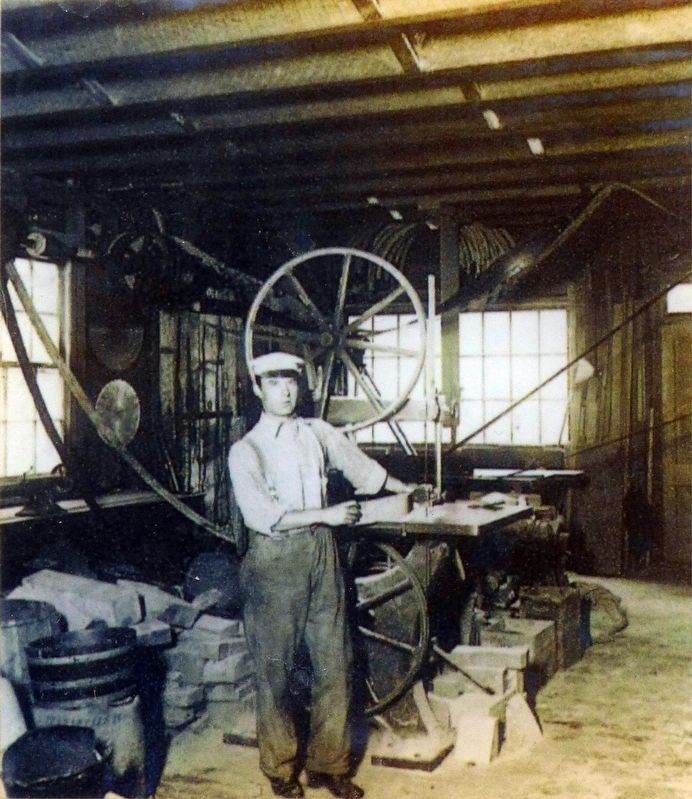
Three generations of the Burgess Family operated out of the wooden structure in front of you. Samuel Burgess ran a grist mill for three months and a wheelwright/blacksmith shop for the rest of each year. In 1917, the building became Burgess Automobile Sales and Service.Close-up of photo on marker
Photographed by Allen C. Browne, May 15, 2006
6. Unveiling
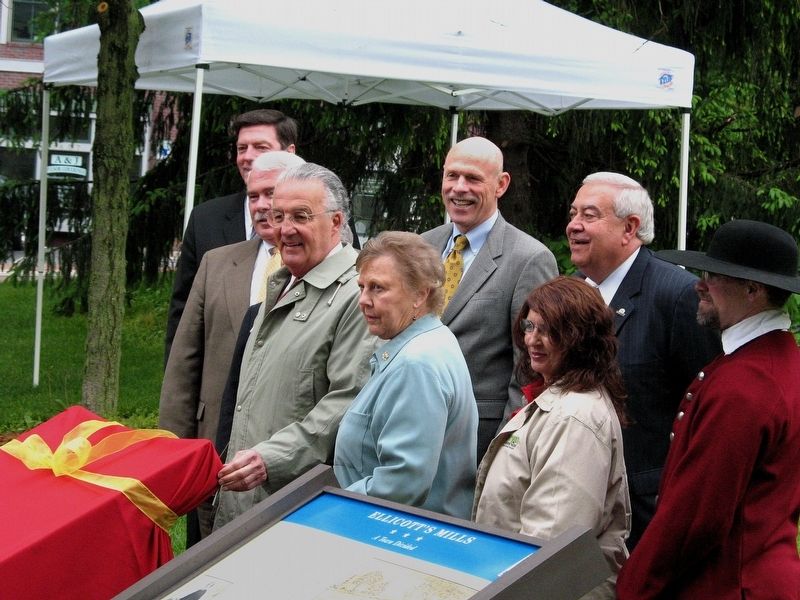
Senator Paul Sarbanes et al. unveil this marker on May 15, 2006.
Credits. This page was last revised on June 28, 2018. It was originally submitted on December 22, 2017, by Allen C. Browne of Silver Spring, Maryland. This page has been viewed 664 times since then and 30 times this year. Photos: 1, 2. submitted on December 22, 2017, by Allen C. Browne of Silver Spring, Maryland. 3. submitted on December 24, 2017, by Allen C. Browne of Silver Spring, Maryland. 4, 5, 6. submitted on December 22, 2017, by Allen C. Browne of Silver Spring, Maryland. • Bill Pfingsten was the editor who published this page.
