Near Lake Wales in Polk County, Florida — The American South (South Atlantic)
Sumica
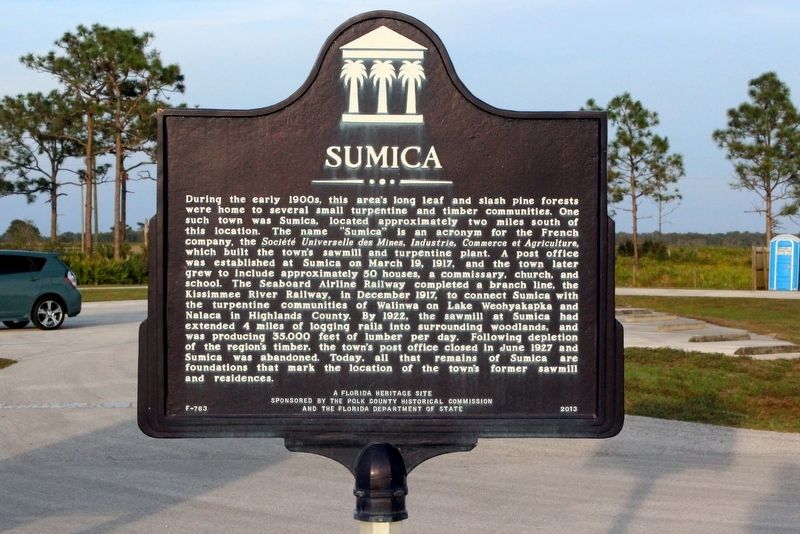
Photographed by Tim Fillmon, December 23, 2017
1. Sumica Marker
this page online
Erected 2013 by The Polk County Historical Commission and the Florida Department of State. (Marker Number F-763.)
Topics and series. This historical marker is listed in these topic lists: Horticulture & Forestry • Industry & Commerce • Settlements & Settlers. In addition, it is included in the Postal Mail and Philately series list. A significant historical date for this entry is March 9, 1917.
Location. 27° 51.395′ N, 81° 22.52′ W. Marker is near Lake Wales, Florida, in Polk County. It can be reached from Hesperides Road (State Road 60) 1.1 miles east of Tiger Lake Road, on the right when traveling east. Marker is located in the parking area of the Sumica Trailhead. Touch for map. Marker is at or near this postal address: 12993 FL-60, Lake Wales FL 33898, United States of America. Touch for directions.

Regionally, this marker is in Central Florida. It is also in the American South. Globally, it is in the North Atlantic Region, North America, a Gulf of Mexico state, the Western Hemisphere, the Western World, and the Anglosphere. Historically, it finds itself in what was once New Spain, the territory of the
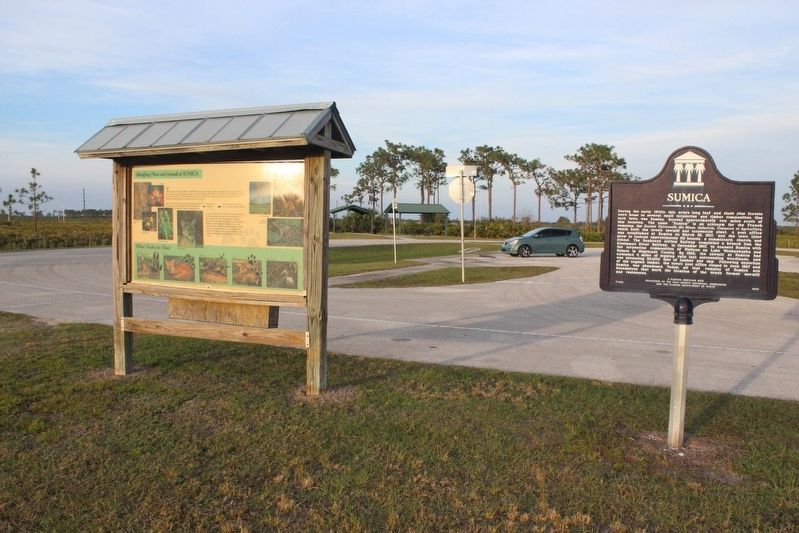
Photographed by Tim Fillmon, December 23, 2017
2. Sumica Marker and surrounding area of parking lot.
Other nearby markers. At least 6 other markers are within 14 miles of this marker, measured as the crow flies: A different marker also named Fort Gardiner (approx. 8.4 miles away); Shady Oaks Fish Camp (approx. 9.9 miles away); Church of the Holy Spirit (approx. 11.9 miles away); Indian Burial Mound (approx. 12.1 miles away); Site of Fort Clinch (approx. 12.8 miles away); The Mountain Lake Sanctuary (approx. 13.7 miles away). Touch for a list and map of all markers in Lake Wales.
Other markers no longer nearby. Fort Gardiner (was approx. 6.8 miles away but has been permanently removed); Old Indian Trails (was approx. 12.3 miles away but has been permanently removed).
Also see . . .
1. Sumica Ghost Town. (Submitted on January 1, 2018, by Tim Fillmon of Webster, Florida.)
2. Sumica. Polk County Environmental Lands Program (Submitted on January 2, 2018.)
Credits. This page was last revised on January 2, 2018. It was originally submitted on January 1, 2018, by Tim Fillmon of Webster, Florida. This page has been viewed 1,085 times since then and 110 times this year. Photos: 1, 2. submitted on January 1, 2018, by Tim Fillmon of Webster, Florida. • Bernard Fisher was the editor who published this page.
