Ninety Six in Greenwood County, South Carolina — The American South (South Atlantic)
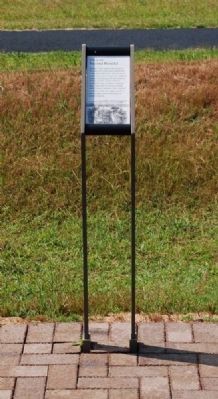
Second Parallel
June 3, 1781
Photographed by Brian Scott, May 13, 2010
1. Second Parallel Marker
Erected 2009 by National Park Service, U.S. Department of the Interior.
Topics. This historical marker is listed in these topic lists: Forts and Castles • Man-Made Features • Patriots & Patriotism • War, US Revolutionary. A significant historical month for this entry is June 1734.
Location. 34° 8.815′ N, 82° 1.119′ W. Marker is in Ninety Six, South Carolina, in Greenwood County. It can be reached from South Cambridge Street (Route 248). Marker is on the grounds of Ninety Six Historic Park battlefield. Touch for map. Marker is in this post office area: Ninety Six SC 29666, United States of America. Touch for directions.

Regionally, this marker is in Upstate. It is also in the American South and specifically in the Deep South. Globally, it is in North America, the Western Hemisphere, the Western World, and the Anglosphere. Historically, it finds itself in what was once the territory of the Mississippian Culture, one of the original Thirteen Colonies, one of the Confederate States of America, and the Antebellum South.
Other nearby markers. At least 10 other markers are within walking distance of this marker: Second Approach Trench (here, next to this marker); Approach Trench (a few steps from this marker); The Rifle Tower (within shouting distance of this marker); The Artillery (within shouting distance of this marker); The Mine (within shouting distance of this marker); Island Ford Road
this page online
Another marker is no longer nearby. Siege Trenches (was about 300 feet away but has been confirmed missing).
More about this marker. Marker shown in Photo 1 is the current version of the marker.
Also see . . .
1. Ninety Six National Historic Site (U.S. National Park Service). Here settlers struggled against the harsh backcountry to survive, Cherokee Indians hunted and fought to keep their land, two towns and a trading post were formed and abandoned to the elements, and two Revolutionary War battles that claimed over 100 lives took place here. (Submitted on September 8, 2008, by Brian Scott of Anderson, South Carolina.)
2. Otho Holland Williams. Otho Holland Williams (March 1, 1749 – July 15, 1794) was a famous Continental Army soldier from Maryland in the American Revolutionary War. (Submitted on September 8, 2008, by Brian Scott of Anderson, South Carolina.)
Photographed by Brian Scott, May 13, 2010
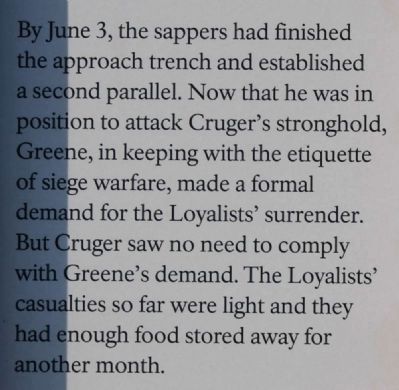
2. Second Parallel Marker
Photographed by Brian Scott, September 5, 2008
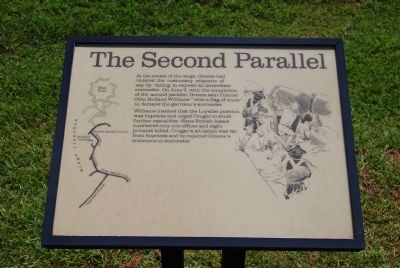
3. Original The Second Parallel Marker
At the onset of the siege, Greene had violated the customary etiquette of war by failing to request an immediate surrender. On June 3, with the completion of the second parallel, Greene sent Colonel Otho Holland Williams "with a flag of truce" to demand the garrison's surrender.
Williams insisted that the Loyalist position was hopeless and urged Cruger to avoid further casualties. Since British losses numbered only one officer and eight privates killed, Cruger's situation was far from hopeless and he rejected Greene's summons to surrender.
Williams insisted that the Loyalist position was hopeless and urged Cruger to avoid further casualties. Since British losses numbered only one officer and eight privates killed, Cruger's situation was far from hopeless and he rejected Greene's summons to surrender.
Photographed by Brian Scott, May 13, 2010
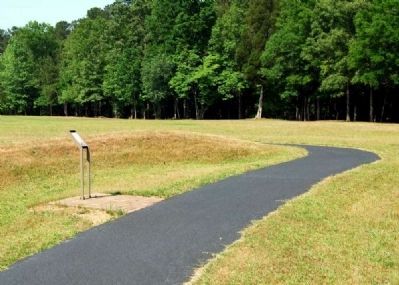
4. Paved Walking Path Leading to Second Parallel Marker
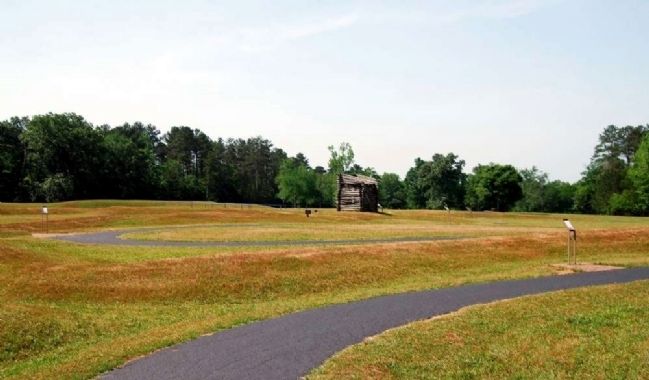
Photographed by Brian Scott, May 13, 2010
5. Battlefield from the Current Second Parallel Marker
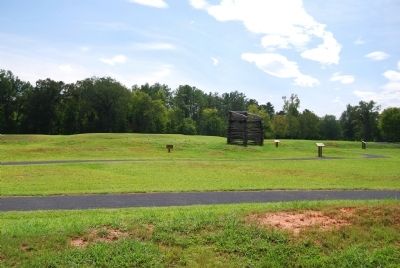
Photographed by Brian Scott, September 5, 2008
6. Battlefield from the Original Second Parallel
Near the right stands the rifle tower. The ridge of Star Fort can be seen to the left.
Credits. This page was last revised on November 20, 2020. It was originally submitted on September 8, 2008, by Brian Scott of Anderson, South Carolina. This page has been viewed 933 times since then and 14 times this year. Photos: 1, 2. submitted on July 11, 2010, by Brian Scott of Anderson, South Carolina. 3. submitted on September 8, 2008, by Brian Scott of Anderson, South Carolina. 4, 5. submitted on July 11, 2010, by Brian Scott of Anderson, South Carolina. 6. submitted on September 8, 2008, by Brian Scott of Anderson, South Carolina. • Craig Swain was the editor who published this page.
