Butte Falls in Jackson County, Oregon — The American West (Northwest)
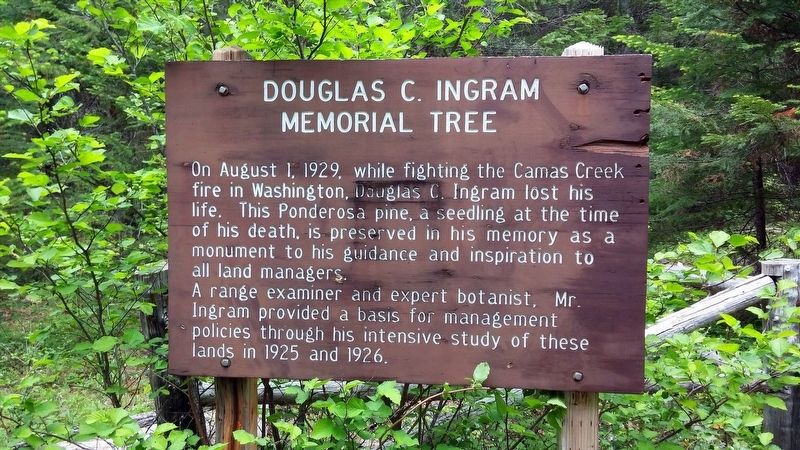
Douglas C. Ingram Memorial Tree
Photographed by Douglass Halvorsen, May 31, 2015
1. Douglas C. Ingram Memorial Tree Marker
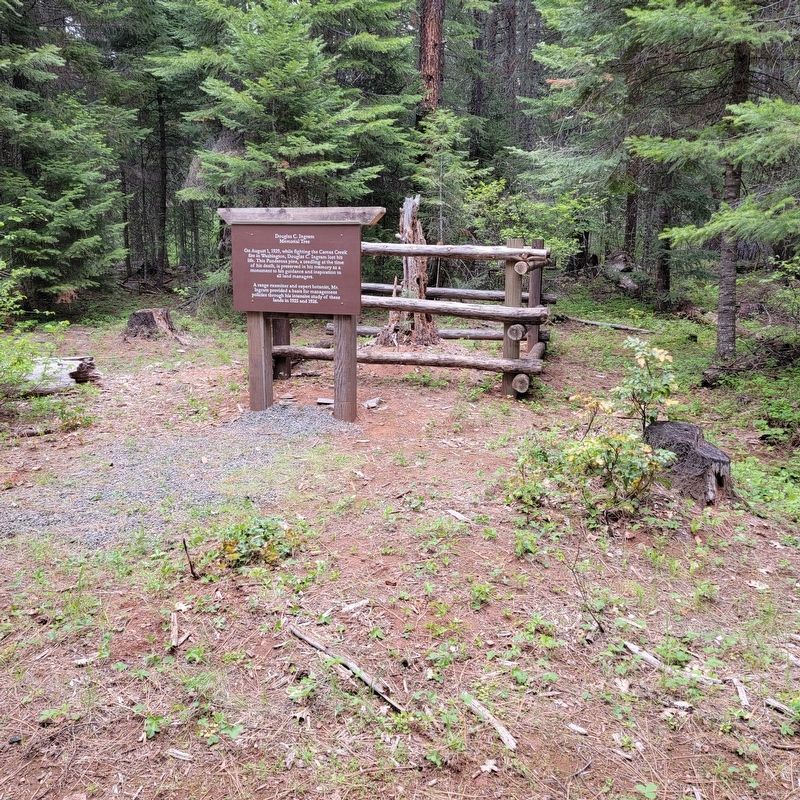
A range examiner and expert botanist, Mr. Ingram provided a basis for management policies through his intensive study of these lands in 1925 and 1926.
Topics. This historical marker is listed in this topic list: Disasters. A significant historical date for this entry is August 1, 1929.
Location. 42° 30.033′ N, 122° 24.087′ W. Marker is in Butte Falls, Oregon, in Jackson County. It is on Park Meadows Rd. Touch for map. Marker is in this post office area: Butte Falls OR 97522, United States of America. Touch for directions.

Regionally, this marker is in Southern Oregon. It is also on the American Pacific Coast, in the Pacific Northwest, and in the Lewis & Clark Corridor. Globally, it is in North America, in the Cascade Range, on the Ring of Fire, on the Pacific Rim, in the Western Hemisphere, in the Western World, and in the Anglosphere. Historically, it finds itself
this page online
Other nearby markers. At least 3 other markers are within 5 miles of this marker, measured as the crow flies: Whiskey Spring and Mt. McLoughlin (approx. 1.2 miles away); Butte Springs Watershed (approx. 2.9 miles away); Cat Hill (approx. 4.4 miles away).
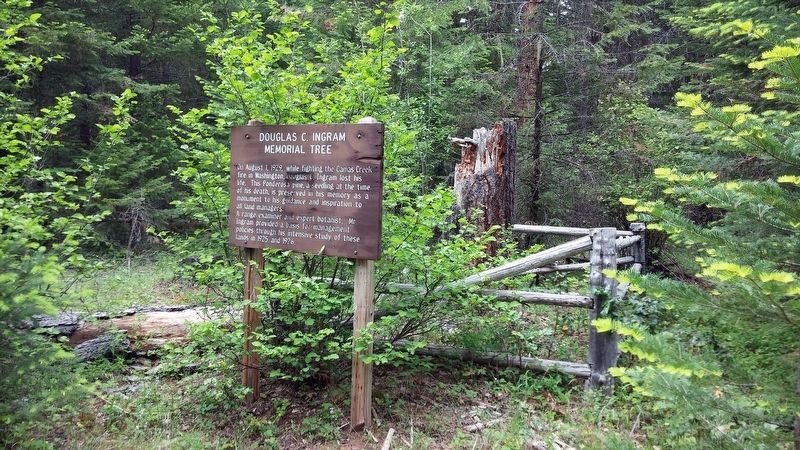
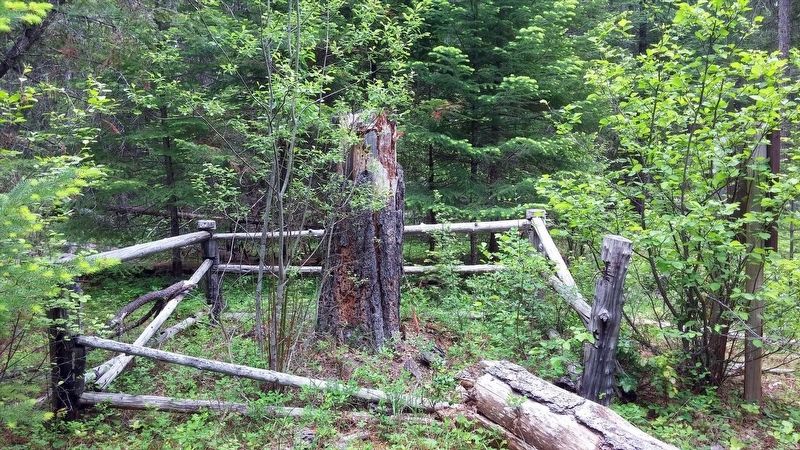
More about this marker. This marker survives but unfortunately, the tree does not. It died a number of years ago. This marker also exists on a topography map. To get to this tree you'll need to park just off Park Meadows Rd across the road from Fourbit Ford Campground and walk a short distance east. You approach a metal fence that you'll need to cross over (it's smooth, not barb-wired). The brown wooden marker stands out from a distance in a small open area and is easy to see. My posted coordinates should place you very close to this tree.
Regarding Douglas C. Ingram Memorial Tree. Article from the Mail Tribune provides more history on Doug Ingram and reads: Fires run uphill, and there’s nothing worse for a firefighter than looking down on a blazing forest.
Doug Ingram and Ernanie St. Luise knew they were in trouble.
This wasn’t a ground fire
Photographed by Douglass Halvorsen, May 31, 2015
2. Douglas C. Ingram Memorial Tree Marker
A few days before, Ingram had calmly saved a dozen panicky men from this same inferno by telling them not to run and leading them to a clearing where they laid flat until the fire passed over.
Now, Ingram’s only hope was to flank the blaze and get behind it. But a quick walk along the ridgeline turned into a run when the flames did something unexpected. Instead of climbing the hill, the fire raced in a straight line, parallel to the men’s escape route.
Then, with a mind of its own, the fire scrambled uphill on a freak gale-force wind. Like a runaway freight train, the hot flames roared over treetops toward the men.
They saw it coming. They ran to an open slope where there was little to burn and laid down, faces pressed against the earth.
It lingered over them for a moment, burned their clothes, blackened their skin and left them dead. Their bodies were found nearly two weeks later.
Ingram emigrated
Photographed by Douglass Halvorsen, May 31, 2015
3. Douglas C. Ingram Memorial Tree (died)
He began his career with the Forest Service at a time when ranger districts hadn’t been defined in Oregon’s Cascade Range. His first assignment was to post sheep and cattle grazing allotments within the forest.
He progressed through the ranks and in 1918 was appointed Northwest regional range examiner, tasked with scientifically studying the forestlands and livestock range of the Pacific Northwest.
Not long before he died, Ingram came across a ponderosa pine sapling along Fourbit Creek, a few miles east of Butte Falls. Admiring its strength and form, he marked the tree and recommended it never be logged.
After Ingram’s death, the Forest Service placed a barrier around the pine and dedicated it as the Douglas C. Ingram Memorial Tree. For more than 70 years it grew, reaching nearly 40 feet in height before it died.
“It was overtopped,” said former Forest Service historian Jeff LaLande.
Photographed by Scott Koester, May 25, 2024
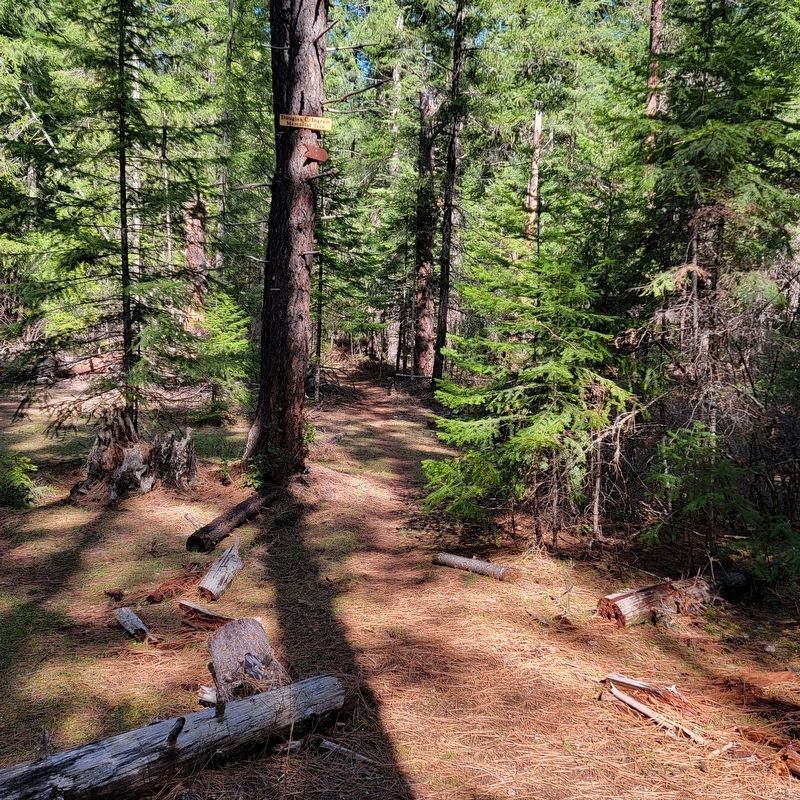
4. New access to Douglas C. Ingram Memorial Tree
Ingram is remembered as one of the best field naturalists in the Pacific Northwest. He was a ranger and a scientist, traveling throughout Oregon and Washington collecting plants and documenting habitats. Two plants are named for him — the Ingram Columbia lily and a pink Southern Oregon wildflower called the Silene ingrami.
In the words of a colleague, ranger G.C. Blake, “He became a very able man and he did great work for the Forest Service.”
Additional commentary.
1. Update - Douglas C. Ingram Memorial Tree
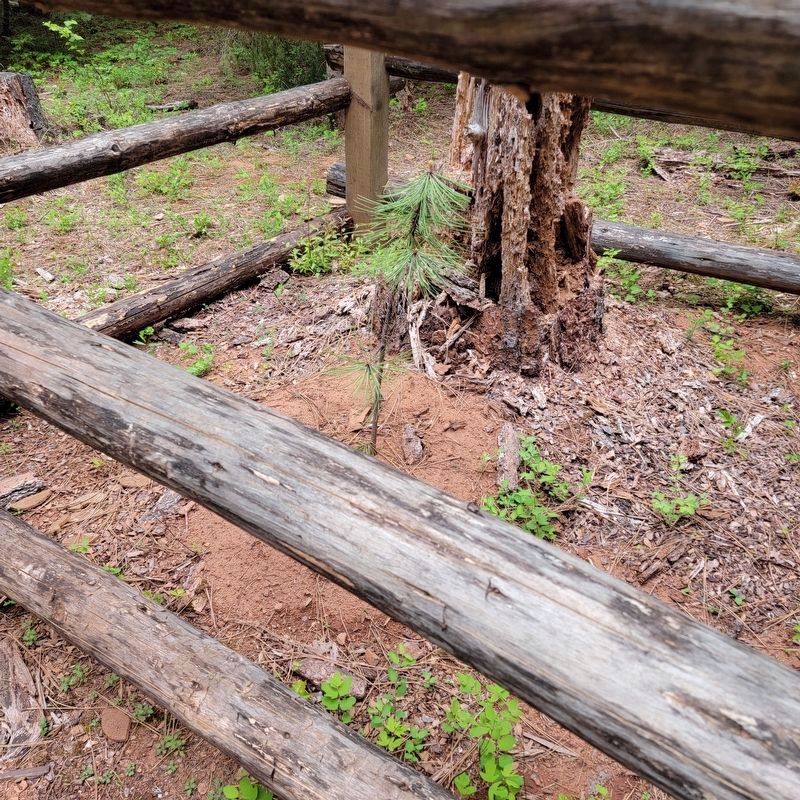
The memory of Douglas C. Ingram and the work he did for the Forest Service will continue to be remembered. Thanks to Morgan Koester (Boy Scout of Troop 01, Central Point, Oregon), who made the restoration of this memorial as his Eagle Project. The Ingram site had been neglected and overgrown for decades. Morgan’s mission, with the help of his fellow Scouts, was to clean up the area and put up a new fence. A new Ponderosa pine seedling has been planted next to the original tree, which
Photographed by Scott Koester, May 25, 2024
5. Ponderosa pine seedling
New access to the Memorial Tree is as follows: Locate the yellow cattle guard on Parker Meadows Road, a short distance North of Fourbit Creek. Park at the cattle guard and walk NE along the fence. Follow the trail and it will soon take a right turn and head East. The Memorial is located through the trees. Note To Editor only visible by Contributor and editor
— Submitted June 21, 2024, by Scott Koester of Central Point, Oregon.
Photographed by Scott Koester, May 25, 2024
6. Douglas C. Ingram Memorial Tree Marker
Credits. This page was last revised on June 22, 2024. It was originally submitted on January 16, 2018, by Douglass Halvorsen of Klamath Falls, Oregon. This page has been viewed 821 times since then and 50 times this year. Photos: 1, 2, 3. submitted on January 16, 2018, by Douglass Halvorsen of Klamath Falls, Oregon. 4, 5. submitted on June 21, 2024, by Scott Koester of Central Point, Oregon. 6. submitted on June 22, 2024, by Scott Koester of Central Point, Oregon. • Bill Pfingsten was the editor who published this page.
