Immigration & Industry
Generations of Workers, Waves of Immigrants
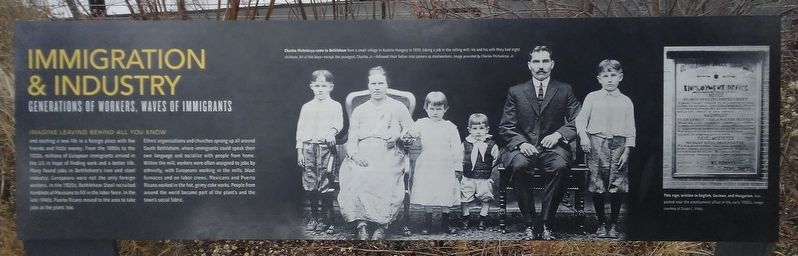
Imagine leaving behind all you know and starting a new life in a foreign place with few friends and little money. From the 1880s to the 1920s, millions of European immigrants arrived in the US in hope of finding work and a better life. Many found jobs in Bethlehem's iron and steel industry. Europeans were not the only foreign workers. In the 1920s, Bethlehem Steel recruited hundreds of Mexicans to fill in the labor force. In the late 1940s, Puerto Ricans moved to the area to take jobs at the plant, too.
Ethnic organizations and churches sprang up all around South Bethlehem, where immigrants could speak their own language and socialize with people from home. Within the mill, workers were often assigned to jobs by ethnicity, with Europeans working in the mills, blast furnaces and on labor crews. Mexicans and Puerto Ricans worked in the hot, grimy coke works. People from around the world became part of the plant's and the town's social fabric.
[Photo captions, from left to right, read]
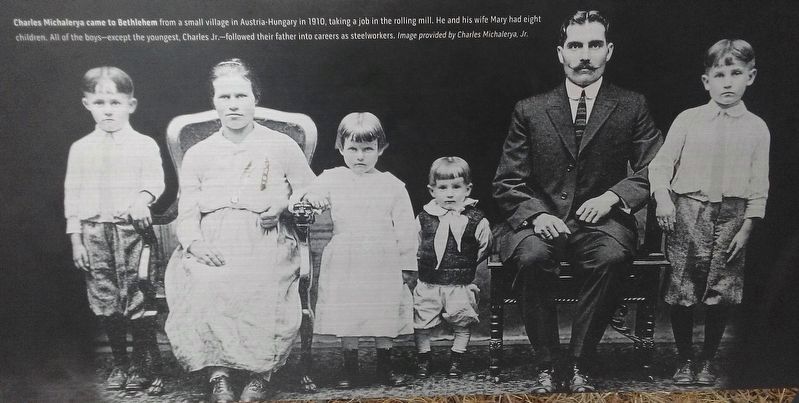
• Charles Michalerya came to Bethlehem from a small village in Austria-Hungary in 1910, taking a job in the rolling mill. He and his
this page online
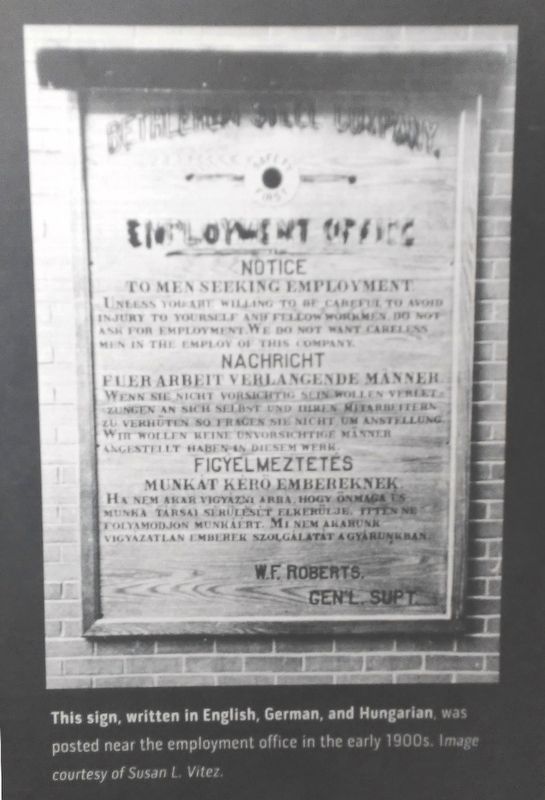
• This sign, written in English, German, and Hungarian, was posted near the employment office in the early 1900s.
Erected by SteelStacks. (Marker Number 6.)
Topics. This historical marker is listed in these topic lists: Industry & Commerce • Settlements & Settlers. A significant historical year for this entry is 1910.
Location. 40° 36.896′ N, 75° 22.087′ W. Marker is in Bethlehem, Pennsylvania, in Northampton County. It can be reached from East 1st Street. Marker is on the Hoover-Mason Trestle at SteelStacks. Touch for map. Marker is at or near this postal address: 711 East 1st Street, Bethlehem PA 18015, United States of America. Touch for directions.
Regionally, this marker is in Southeast Pennsylvania and in Lehigh Valley. It is also in the American Northeast and in the Mid-Atlantic. Globally, it is in North America, the Western Hemisphere, the Western World, and the Anglosphere. Historically, it finds itself in what was once the Haudenosaunee (Iroquois) Confederacy and also one
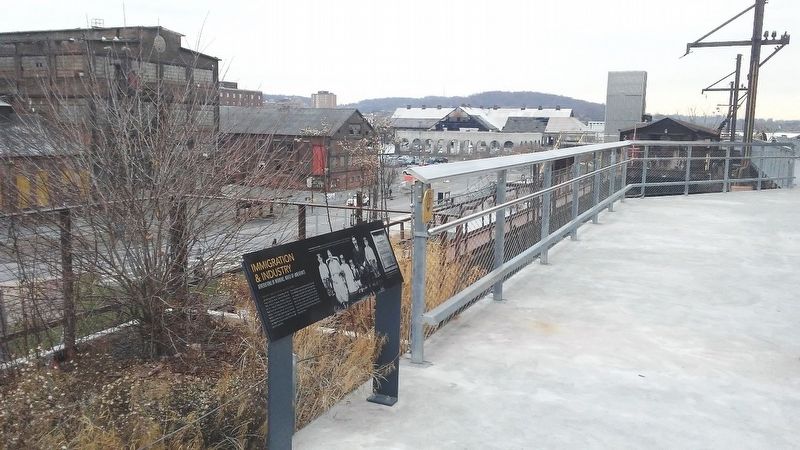
Other nearby markers. At least 8 other markers are within walking distance of this marker: Making Iron (here, next to this marker); Blast Furnace (a few steps from this marker); Hot, Loud, & Dangerous (within shouting distance of this marker); Moving Materials (within shouting distance of this marker); A Community of Workers (within shouting distance of this marker); The Beginnings of Bethlehem Steel (within shouting distance of this marker); Iron and Steel: A History (within shouting distance of this marker); The Blower House (about 300 feet away, measured in a direct line). Touch for a list and map of all markers in Bethlehem.
Also see . . .
1. Making Steel.
2. The Great Steel Strike and its Lessons (Foster, 1920).
3. Bethlehem Steel: Forging America.
4. What is SteelStacks?. (Submitted on February 5, 2018, by William Fischer, Jr. of Reynoldsburg, Ohio.)
Credits. This page was last revised on February 5, 2018. It was originally submitted on February 5, 2018, by William Fischer, Jr. of Reynoldsburg, Ohio. This page has been viewed 1,047 times since then and 99 times this year. Photos: 1, 2, 3, 4. submitted on February 5, 2018, by William Fischer, Jr. of Reynoldsburg, Ohio.
