Downtown Los Angeles in Los Angeles County, California — The American West (Pacific Coastal)
Nuestra Señora la Reina de Los Angeles
Our Lady Queen of Angels
Photographed by Michael Kindig, July 28, 2010
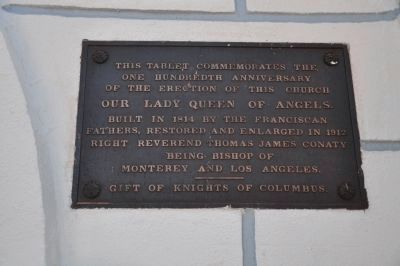
1. Knights of Columbus Marker
This tablet commemorates the one hundredth anniversary of the erection of this church, Our Lady Queen of Angeles.
Built in 1814 by the Franciscan Fathers, restored and enlarged in 1912, Right Reverend Thomas James Conaty being Bishop of Monterey and Los Angeles.
Erected 1914 by Knights of Columbus. (Marker Number 144.)
Topics and series. This historical marker is listed in this topic list: Religion & Religious Structures. In addition, it is included in the California Historical Landmarks, and the Los Angeles Historic-Cultural Monument series lists. A significant historical year for this entry is 1814.
Location. 34° 3.422′ N, 118° 14.362′ W. Marker is in Los Angeles, California, in Los Angeles County. It is in Downtown Los Angeles. It is on Main Street 0.1 miles south of Cesar Chavez Avenue, on the right when traveling south. Touch for map. Marker is at or near this postal address: 535 N Main St, Los Angeles CA 90012, United States of America. Touch for directions.

Regionally, this marker is in the Transverse Ranges. It is also on the American Pacific Coast. Globally, it is in North America, on the Ring
this page online
Other nearby markers. At least 8 other markers are within walking distance of this marker: La Iglesia de Nuestra Señora la Reina de los Angeles (a few steps from this marker); El Camino Real (a few steps from this marker); The Annunciation Mosaic (a few steps from this marker); Historic Los Angeles Cemetery (within shouting distance of this marker); Settlement of a City (within shouting distance of this marker); Land of the Tongva (within shouting distance of this marker); Los Angeles Under Spanish Rule (within shouting distance of this marker); The Aliso Tree (within shouting distance of this marker). Touch for a list and map of all markers in Los Angeles.
Regarding Nuestra Señora la Reina de Los Angeles. This is Los Angeles Historic-Cultural Monument No. 3, designated in 1962, and California Historical Landmark No. 144, designated in 1934.
La Iglesia de Nuestra Señora la Reina de Los Angeles--the Church of Our Lady the Queen
Photographed by Michael Kindig, July 28, 2010
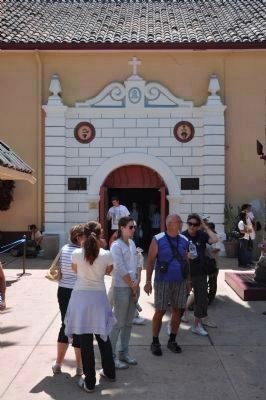
2. Nuestra Señora la Reina de Los Angeles
International Order of the Alhambra marker (left) and Knights of Columbus marker (right).
Additional keywords. Catholic, Mexican, pueblo
Photographed by Michael Kindig, July 28, 2010
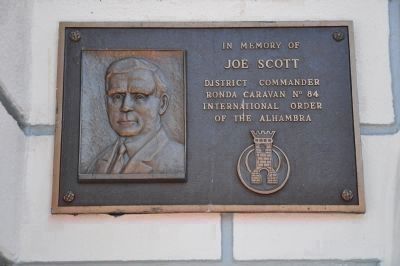
3. International Order of the Alhambra Marker
In memory of
Joe Scott,
District Commander,
Ronda Caravan No 84,
International Order
of the Alhambra.
Photographed by Michael Kindig, July 28, 2010
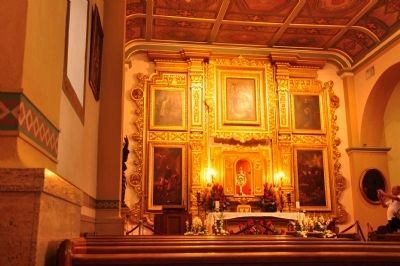
4. Nuestra Señora la Reina de Los Angeles
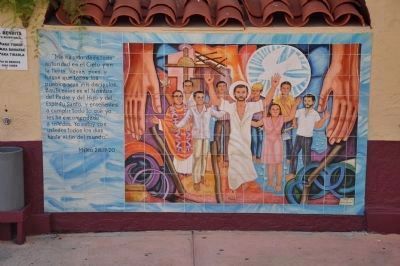
Photographed by Michael Kindig, July 28, 2010
5. Matthew 28:19-20 Mural
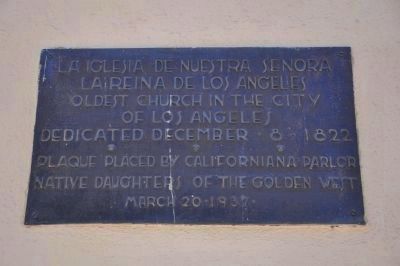
Photographed by Michael Kindig, July 28, 2010
6. NDGW Marker
La Iglesia de Nuestra Señora
la Reina de Los Angeles,
oldest church in the City
of Los Angeles.
Dedicated December 8, 1822.
Plaque placed by California Parlor
Native Daughters of the Golden West,
March 20, 1937.
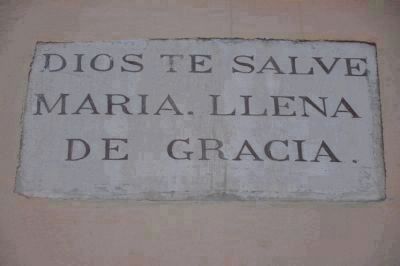
Photographed by Michael Kindig, July 28, 2010
7. Dios te Salve Maria Marker
Dios te Salve Maria. Llena de Gracia.
God Save you Mary. You are full of grace.
God Save you Mary. You are full of grace.
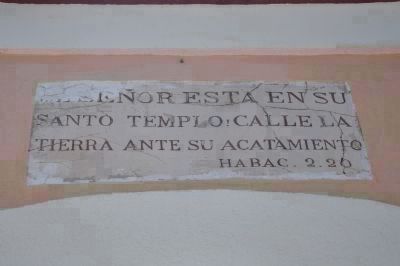
Photographed by Michael Kindig, July 28, 2010
8. Santo Templo Marker
¡El Señor está en su Santo Templo! Calle la Tierra ante su Acatamiento -- Habac. 2.20
But the Lord is in His holy temple! Let all the earth be silent before Him. -- Habakkuk 2:20
But the Lord is in His holy temple! Let all the earth be silent before Him. -- Habakkuk 2:20
Photographed by Michael Kindig, July 28, 2010
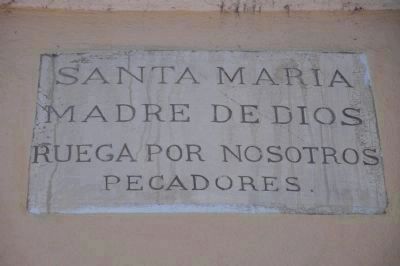
9. Santa Maria Marker
Santa Maria Madre de Dios Ruega por Nosotros Pecadores.
Holy Mary, Mother of God, pray for us sinners
Holy Mary, Mother of God, pray for us sinners
Photographed by Craig Baker, February 6, 2018
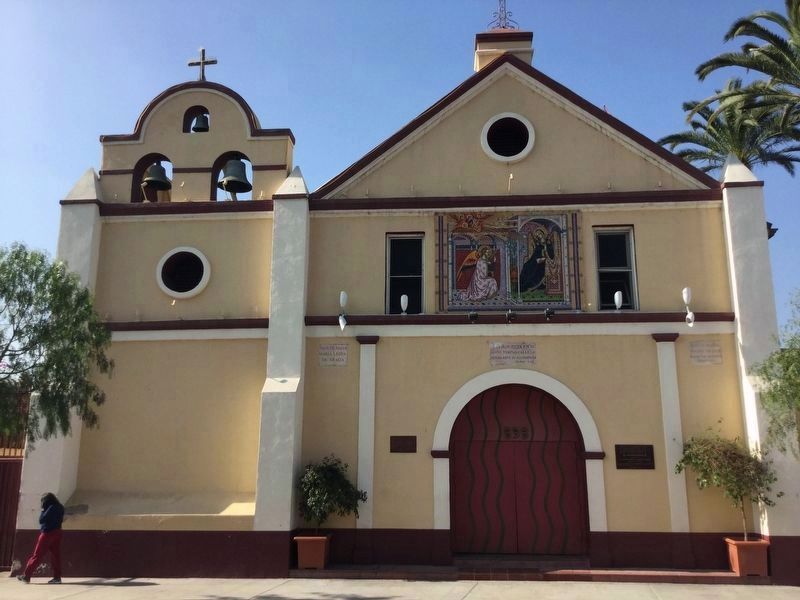
10. Church viewed from Main Street
Photographed by Michael Kindig, July 28, 2010
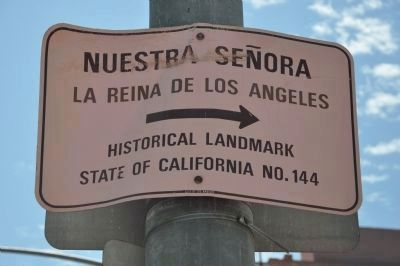
11. Historical Landmark Sign
Nuestra Señora la Reina de Los Angeles
Historical Landmark,
State of California No. 144.
Unknown photographer, via Wikimedia Commons, 1869
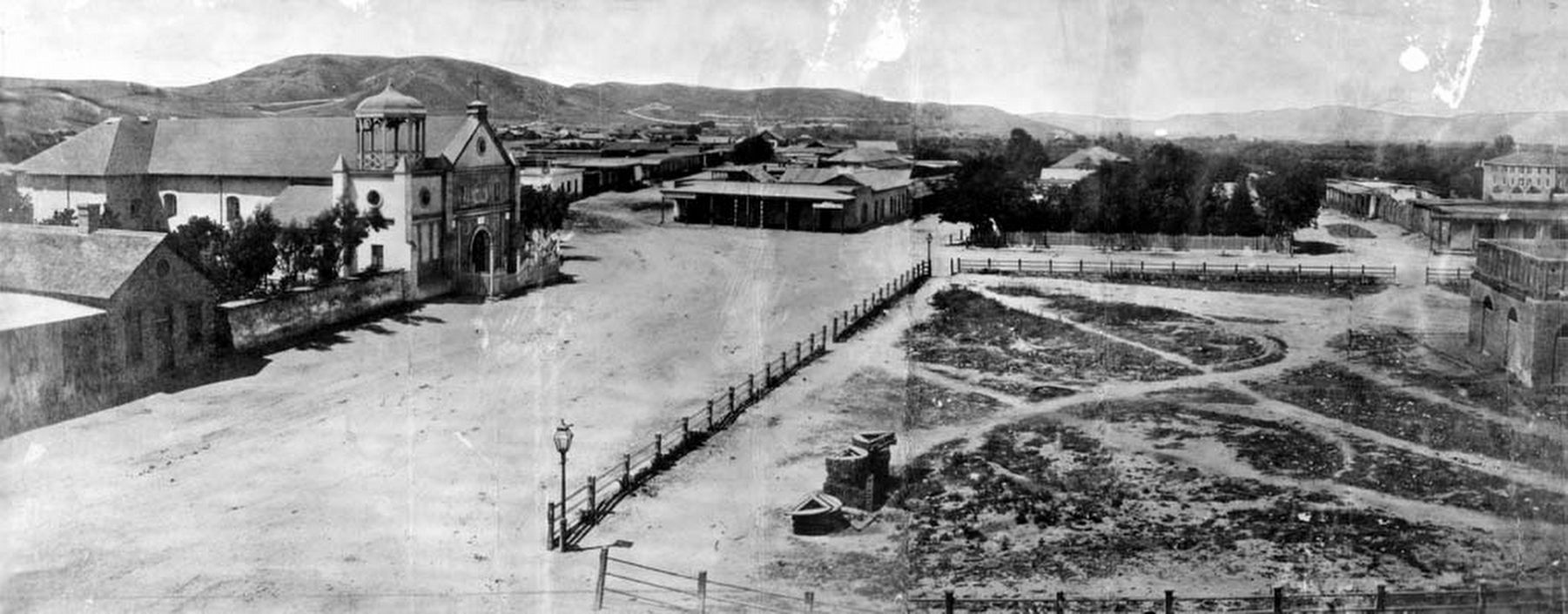
12. Plaza del Pueblo de Los Angeles
Dating from the era of the Pueblo de Los Angeles, The Plaza and "Old Plaza Church" (Mission Nuestra Señora Reina de los Angeles) in 1869. There is a square main brick reservoir in the middle of the Plaza at the right, which was the terminus of the town's historic lifeline: the Zanja Madre. The Plaza itself was rounded and turned into a traditional ornate plaza, with a fountain that later became a bandstand. The building in the top right background was the Lugo House.
Credits. This page was last revised on January 29, 2026. It was originally submitted on December 26, 2011, by Michael Kindig of Elk Grove, California. This page has been viewed 3,031 times since then and 83 times this year. Last updated on February 7, 2018, by Craig Baker of Sylmar, California. Photos: 1, 2, 3, 4, 5, 6, 7, 8, 9. submitted on December 26, 2011, by Michael Kindig of Elk Grove, California. 10. submitted on February 7, 2018, by Craig Baker of Sylmar, California. 11. submitted on December 26, 2011, by Michael Kindig of Elk Grove, California. 12. submitted on December 14, 2020, by J. J. Prats of Powell, Ohio. • Andrew Ruppenstein was the editor who published this page.
