Near Acarlar in Selçuk, Izmir, Turkiye — West Asia or Southeast Europe
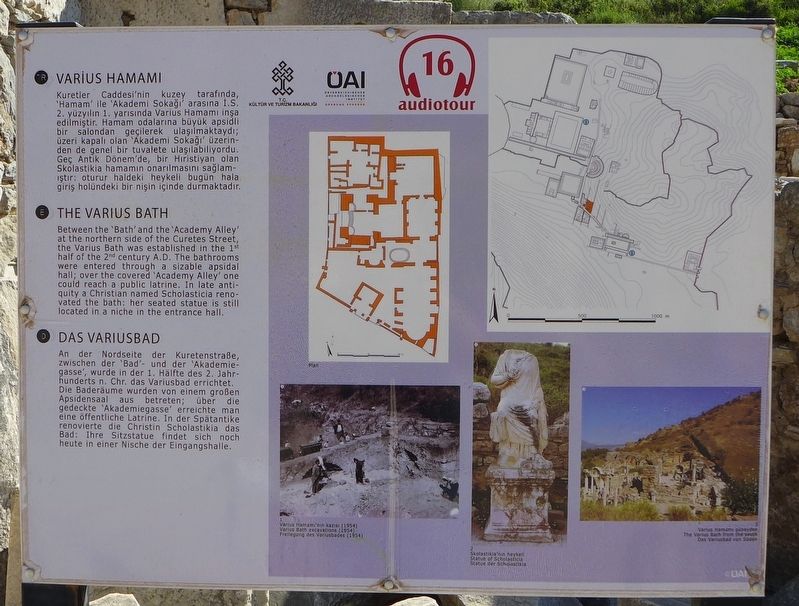
The Varius Bath
Photographed by Dale K. Benington, June 21, 2015
1. The Varius Bath Marker
The Varius Bath
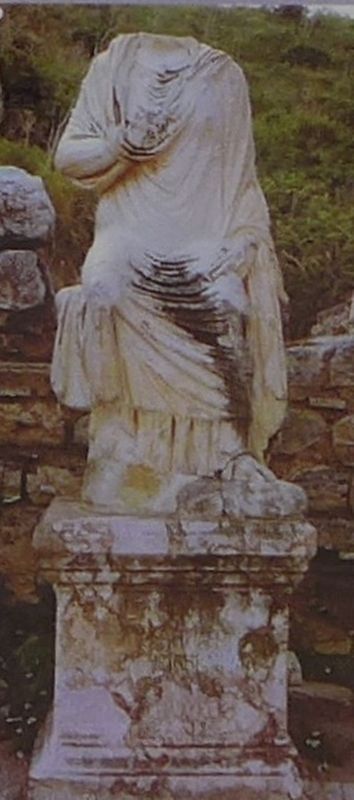
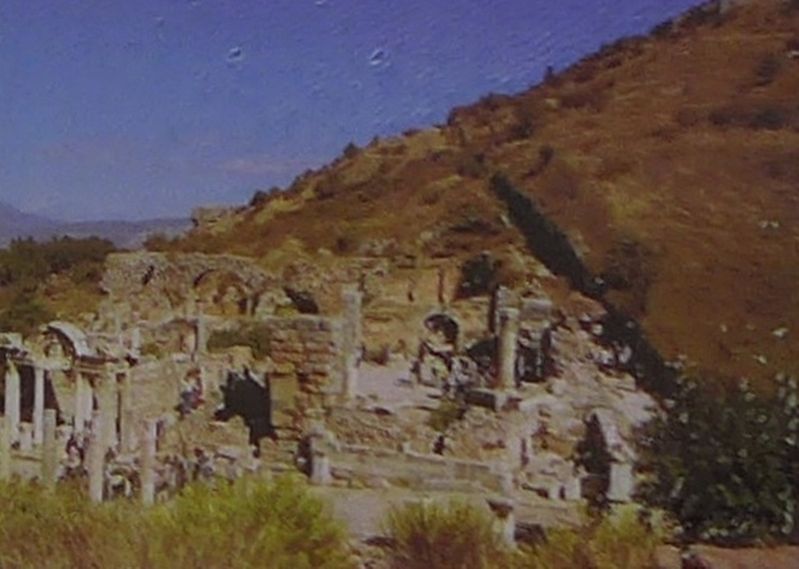
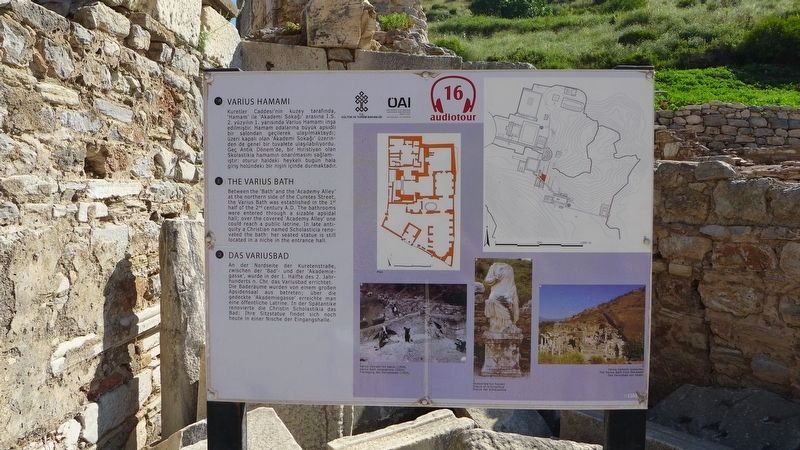
Between the 'Bath' and the 'Academy Alley' at the northern side of the Curetes Street, the Varius Bath was established in the 1st half of the 2nd century A.D. The bathrooms were entered through a sizable apsidal hall; over the covered 'Academy Alley' one could reach a public latrine. In late antiquity a Christian named Scholasticia renovated renovated the bath: her seated statue is still located in a niche in the entrance hall.
Erected by Republic of Turkey Ministry of Culture and Tourism, and the Österreichisches Archaeology Institute.
Topics. This historical marker is listed in this topic list: Settlements & Settlers.
Location. 37° 56.302′ N, 27° 20.529′ E. Marker is near Acarlar, Izmir, in Selçuk. It can be reached from Efes Yolu just south of Dr. Sabri Yayla Boulevard (Route D515) when traveling south. The marker is in an archaeological park that is about 3 km (2 miles) southeast of Selçuk. Touch for map. Marker is in this post office area: Acarlar, Izmir 35920, Turkiye. Touch for directions.

Regionally, this marker is in Turkish Asia Minor —
this page online
Other nearby markers. At least 8 other markers are within walking distance of this marker: Terrace House 1 (a few steps from this marker); The So-Called Alytarchs' Stoa (a few steps from this marker); The Temple of Hadrian (within shouting distance of this marker); The Nymphaeum Traiani (within shouting distance of this marker); The Hellenistic Fountain and the Hexagon (within shouting distance of this marker); Terrace House 2 (within shouting distance of this marker); Peristyle Courtyard of Dwelling Unit 6 (within shouting distance of this marker); The Latrine (within shouting distance of this marker). Touch for a list and map of all markers in Acarlar.
More about this marker. This marker is one of the many markers that are situated at the archaeological park that displays the ruins of the ancient city of Ephesus. One web site boasts that the ruins that one can see and experience at Ephesus are, "better
Photographed by Dale K. Benington, June 21, 2015
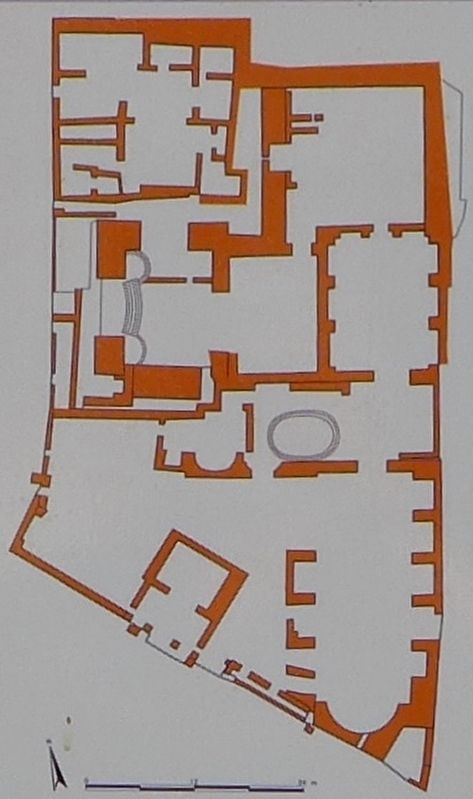
2. The Varius Bath Marker
Close-up view of a drawing of the overhead floor-plan that is displayed on the marker. The English caption simply reads, "Plan."
Photographed by Dale K. Benington, June 21, 2015
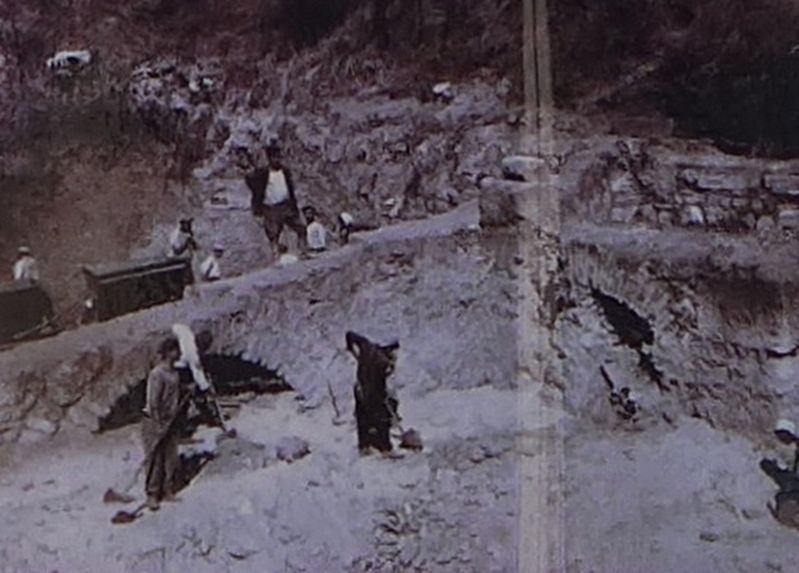
3. The Varius Bath Marker
Close-up view of photograph that is displayed on the marker. The English caption reads, "Varius Bath excavation (1954)."
Photographed by Dale K. Benington, June 21, 2015
4. The Varius Bath Marker
Close-up view of photograph that is displayed on the marker. The English caption reads, "Statue of Scholasticia."
Photographed by Dale K. Benington, June 21, 2015
5. The Varius Bath Marker
Close-up view of photograph that is displayed on the marker. The English caption reads, "The Varius Bath from the south,"
Photographed by Dale K. Benington, June 21, 2015
6. The Varius Bath Marker
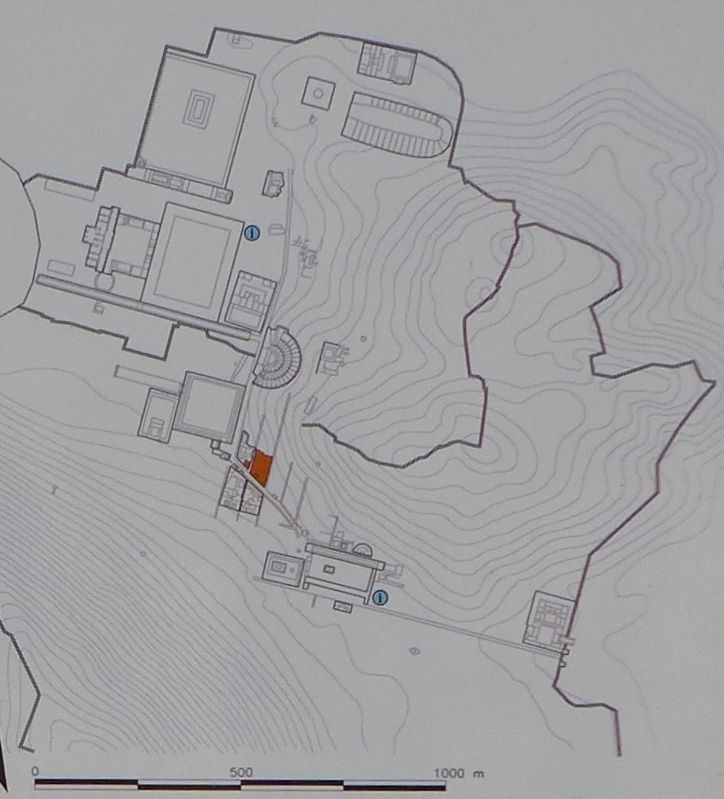
Close-up view of a topographical map that is displayed on the marker. The map shows an overhead view of the layout of the city, with the location of, The 'Varius Bath' being highlighted in orange.
Photographed by Dale K. Benington, June 21, 2015
7. The Varius Bath Marker
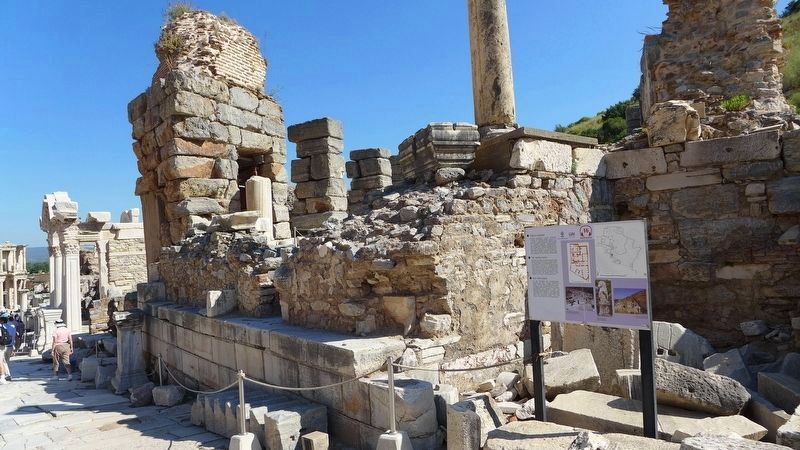
View of the marker looking north along the east side of Curetes Street at some of the ruins in the archaeological park.
Photographed by Dale K. Benington, June 21, 2015
8. The Varius Bath Marker
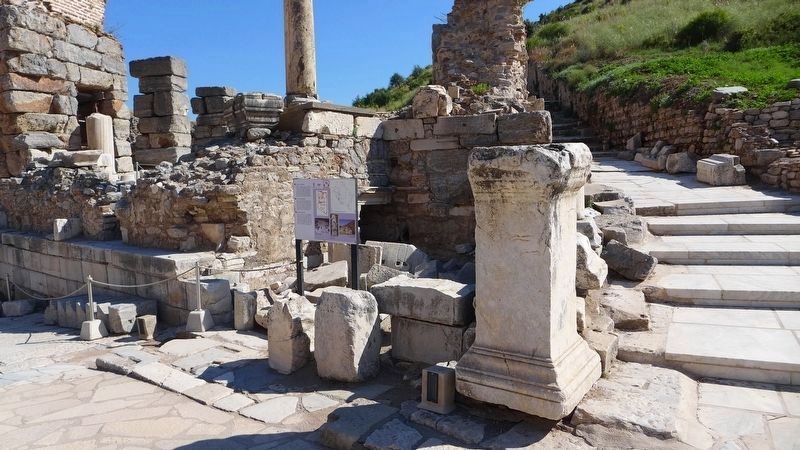
View of the marker looking north along a secondary walkway.
Photographed by Dale K. Benington, June 21, 2015
9. The Varius Bath Marker
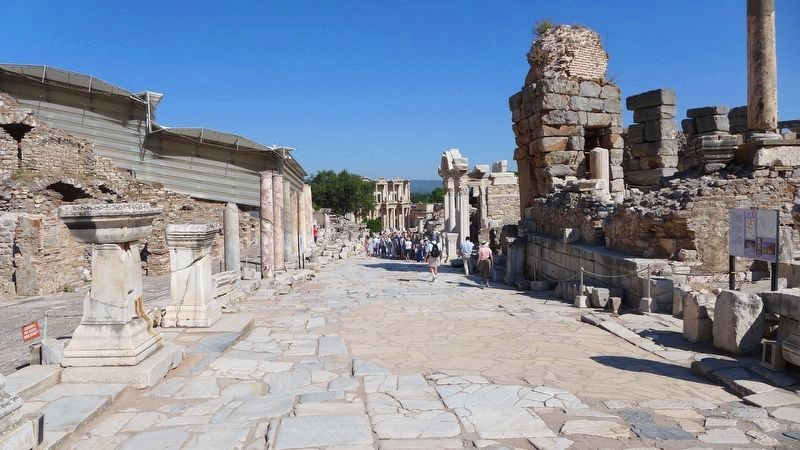
View looking northwest along Curetes Street, from the area in front of the featured marker (seen to the extreme right of picture), towards the Celsus Library.
Photographed by Dale K. Benington, June 21, 2015
10. The Varius Bath Marker
Credits. This page was last revised on February 2, 2022. It was originally submitted on March 22, 2018, by Dale K. Benington of Toledo, Ohio. This page has been viewed 299 times since then and 20 times this year. Photos: 1, 2, 3, 4, 5, 6, 7, 8, 9, 10. submitted on March 22, 2018, by Dale K. Benington of Toledo, Ohio.
