Near Acarlar in Selçuk, Izmir, Turkiye — West Asia or Southeast Europe
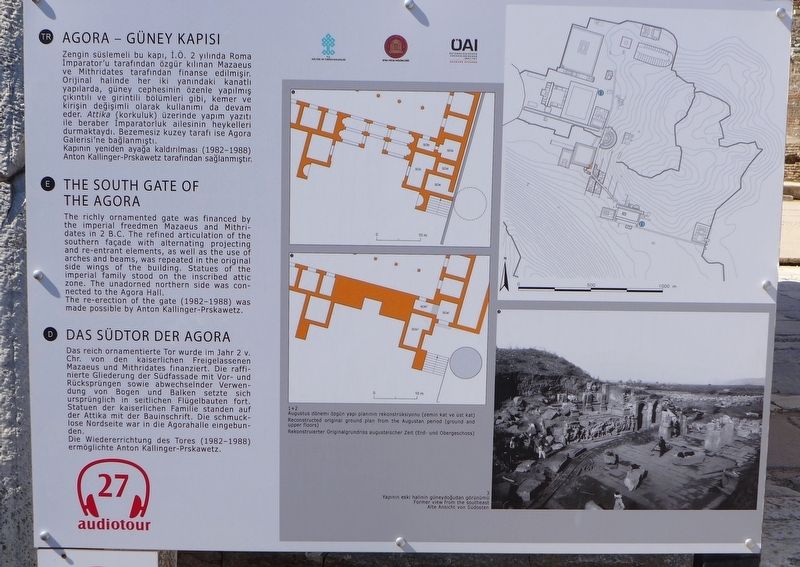
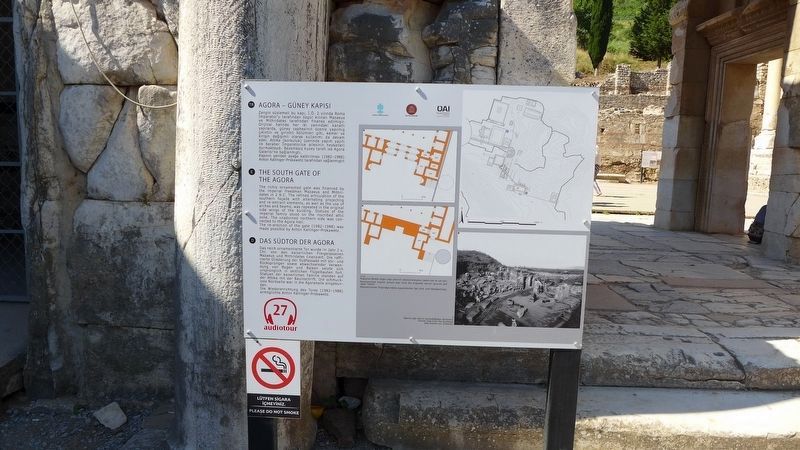
The South Gate of the Agora
Photographed by Dale K. Benington, June 21, 2015
1. The South Gate of the Agora Marker
The re-erection of the gate (1982-1988) was made possible by Anton Kallinger-Prskawetz.
Erected by Republic of Turkey Ministry of Culture and Tourism, and the Österreichisches Archaeology Institute.
Topics. This historical marker is listed in these topic lists: Architecture • Settlements & Settlers.
Location. 37° 56.361′ N, 27° 20.469′ E. Marker is near Acarlar, Izmir, in Selçuk. It can be reached from Efes Yolu just south of Dr. Sabri Yayla Boulevard (Route D515) when traveling south. The marker is in an archaeological park that is about 3 km (2 miles) southeast of Selçuk. Touch for map. Marker is in this post office area: Acarlar, Izmir 35920,
this page online

Regionally, this marker is in Turkish Asia Minor — Anatolia. Globally, it is in West Asia, Mesopotamia, and in a coastal Mediterranean country. Historically, it finds itself in what was once the Byzantine Empire, the Ottoman Empire, and specifically the Roman Empire.
Other nearby markers. At least 8 other markers are within walking distance of this marker: Tetragonos Agora - The Commercial Market (within shouting distance of this marker); The Celsus Library (within shouting distance of this marker); The So-Called House of Pleasure (within shouting distance of this marker); Hadrian's Gate (within shouting distance of this marker); The Archaic-Classical Settlement and the Sepulchre Street (within shouting distance of this marker); The Heroon of Androclos (within shouting distance of this marker); The Latrine (within shouting distance of this marker); Terrace House 2 (about 90 meters away, measured in a direct line). Touch for a list and map of all markers in Acarlar.
More about this marker. This marker is one of the many markers that are situated at the archaeological park that displays the
Photographed by Dale K. Benington, June 21, 2015
2. The South Gate of the Agora Marker
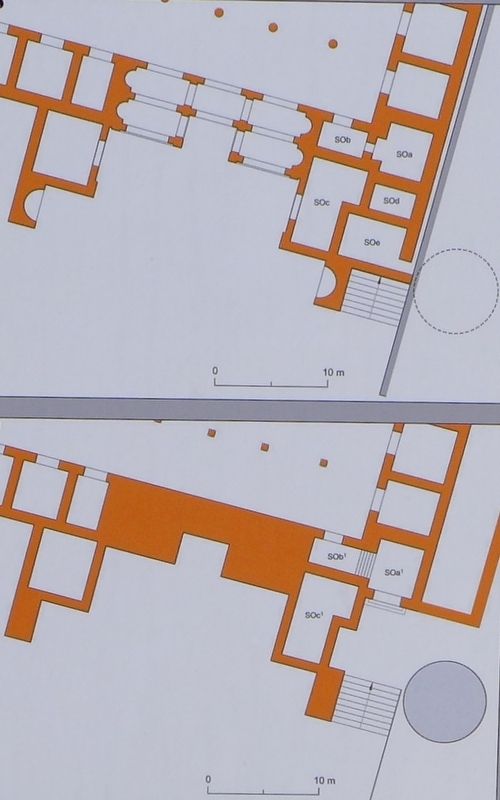
Close-up view of a drawing of the overhead floor-plan that is displayed on the marker. The English caption reads, "Reconstructed original ground plan from the Augustan period (ground and upper floors)."
Photographed by Dale K. Benington, June 21, 2015
3. The South Gate of the Agora Marker
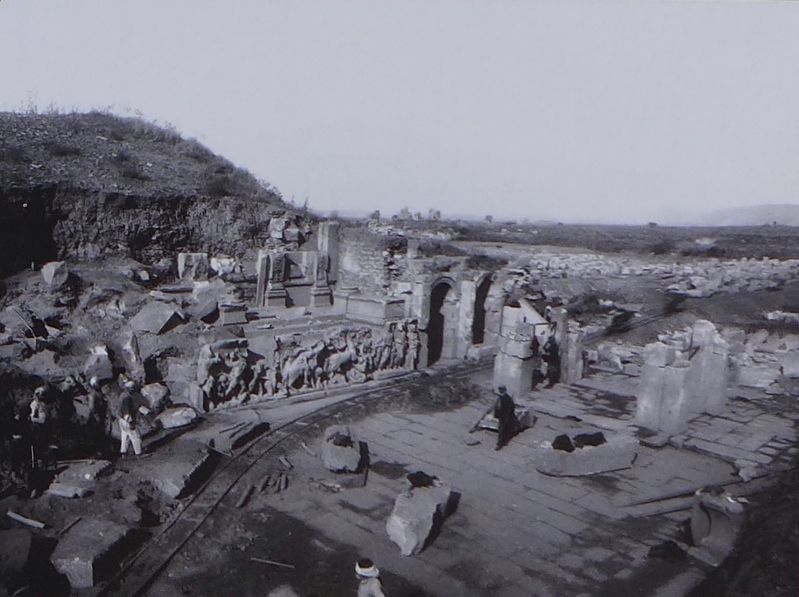
Close-up view of photograph that is displayed on the marker. The English caption reads, "Former view from the southeast."
Photographed by Dale K. Benington, June 21, 2015
4. The South Gate of the Agora Marker
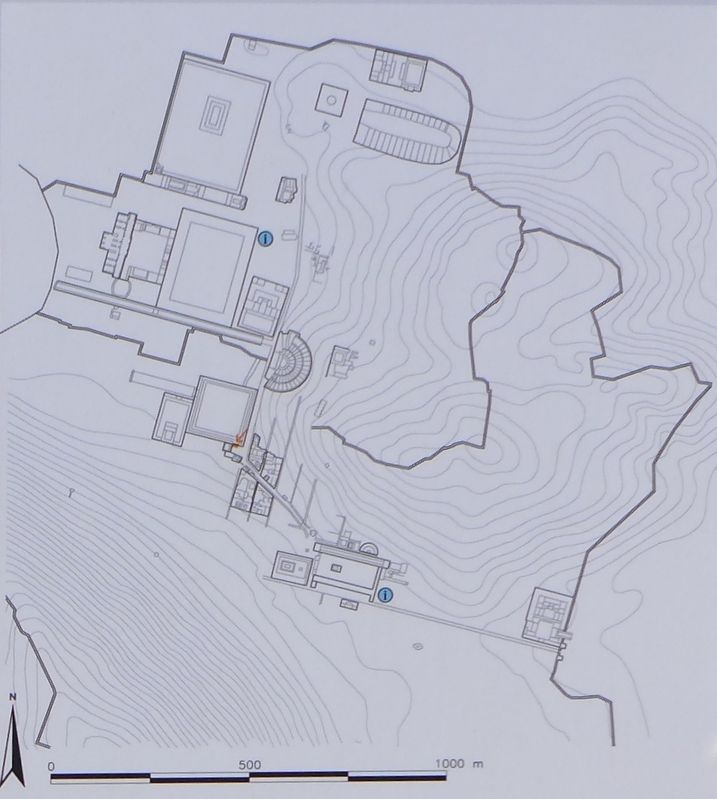
Close-up view of a topographical map that is displayed on the marker. The map shows an overhead view of the layout of the city, with the location of, The 'South Gate of the Agora' being highlighted in orange.
Photographed by Dale K. Benington, June 21, 2015
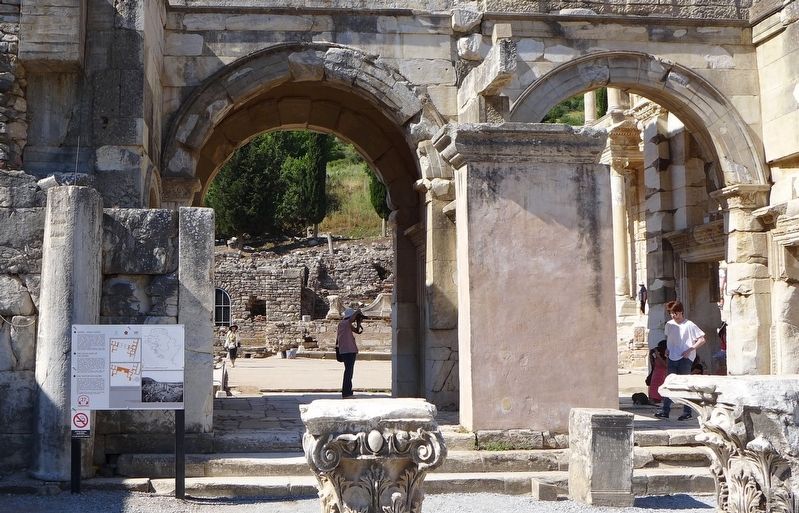
5. The South Gate of the Agora Marker
View of the marker, looking south, situated near the north side of the 'South Gate of the Agora.'
Photographed by Dale K. Benington, June 21, 2015
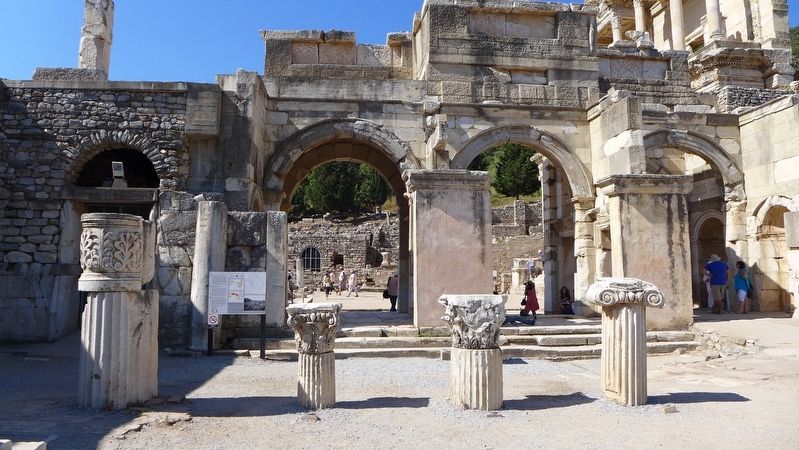
6. The South Gate of the Agora Marker
A more distant view of the marker, looking south, situated near the north side of the 'South Gate of the Agora.'
Photographed by Dale K. Benington, June 21, 2015
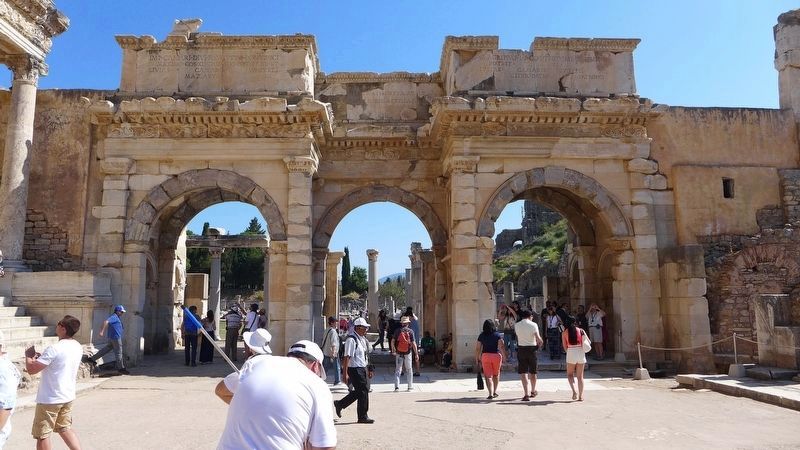
7. The South Gate of the Agora Marker
View of the "South Gate of the Agora,' as seen from the south side of the actual gate, looking north.
Photographed by Dale K. Benington, June 21, 2015
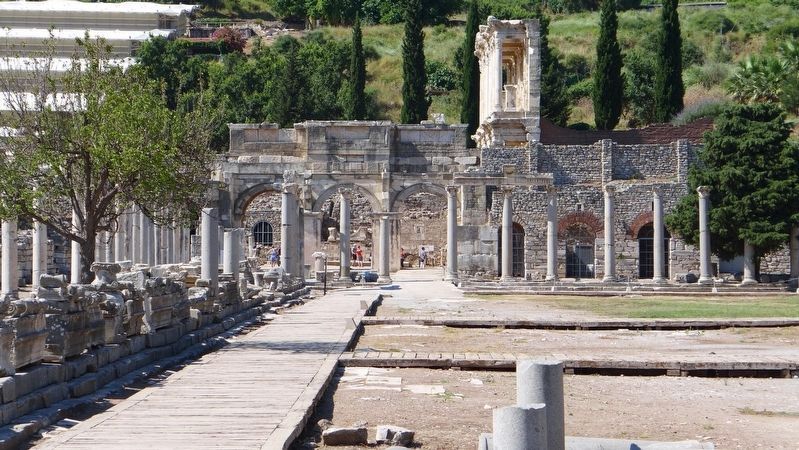
8. The South Gate of the Agora Marker
A more distant view of the 'South Gate of the Agora,' looking south across the ruins of the Agora.
Photographed by Dale K. Benington, June 21, 2015
9. The South Gate of the Agora Marker
Credits. This page was last revised on February 2, 2022. It was originally submitted on March 23, 2018, by Dale K. Benington of Toledo, Ohio. This page has been viewed 778 times since then and 32 times this year. Photos: 1, 2, 3, 4, 5, 6, 7, 8, 9. submitted on March 23, 2018, by Dale K. Benington of Toledo, Ohio.
