Marigny in New Orleans in Orleans Parish, Louisiana — The American South (West South Central)
New Orleans and the Domestic Slave Trade
Photographed by Cosmos Mariner, May 11, 2018
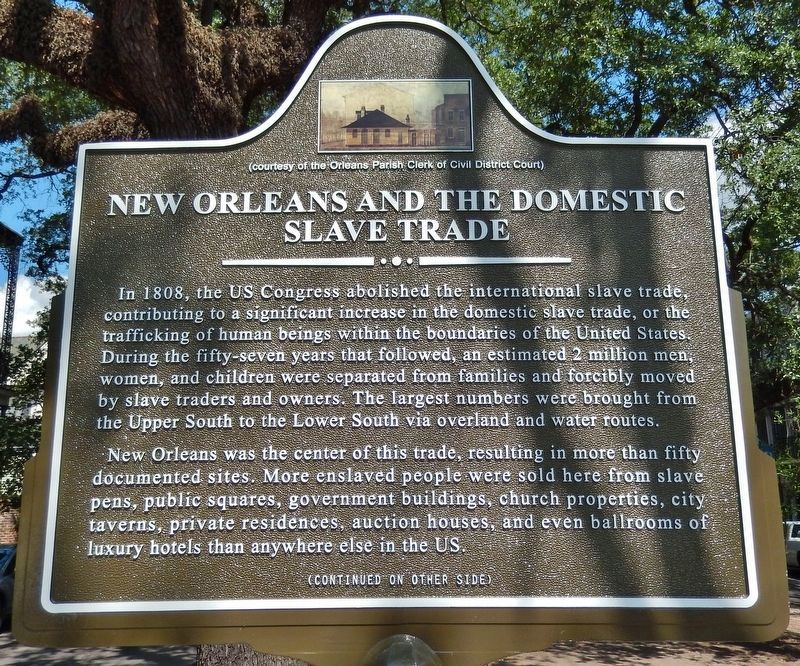
1. New Orleans and the Domestic Slave Trade Marker (front side)
In 1808, the US Congress abolished the international slave trade, contributing to a significant increase in the domestic slave trade, or the trafficking of human beings within the boundaries of the United States. During the fifty-seven years that followed, an estimated 2 million men, women, and children were separated from families and forcibly moved by slave traders and owners. The largest numbers were brought from the Upper South to the Lower South via overland and water routes.
New Orleans was the center of this trade, resulting in more than fifty documented sites. More enslaved people were sold here from slave pens, public squares, government buildings, church properties, city taverns, private residences, auction houses, and even ballrooms of luxury hotels than anywhere else in the US.
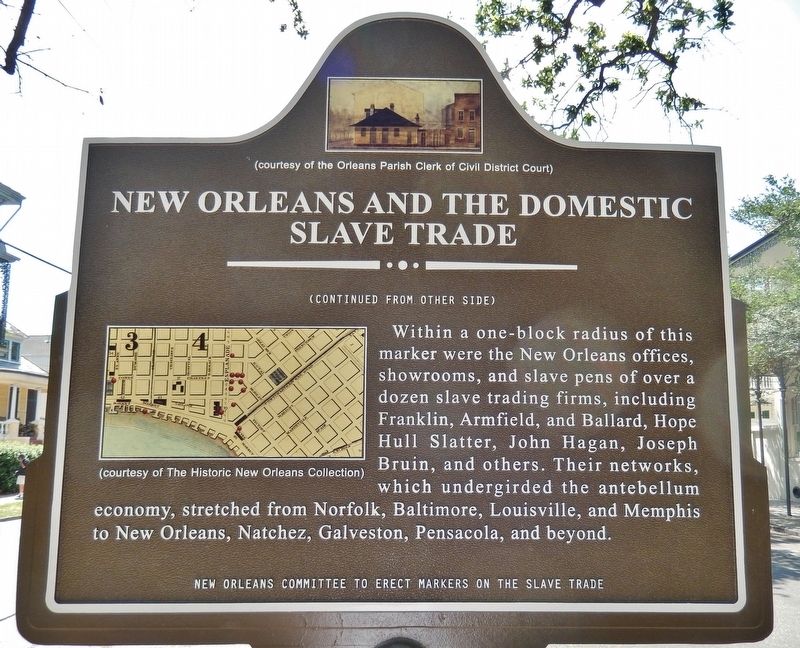
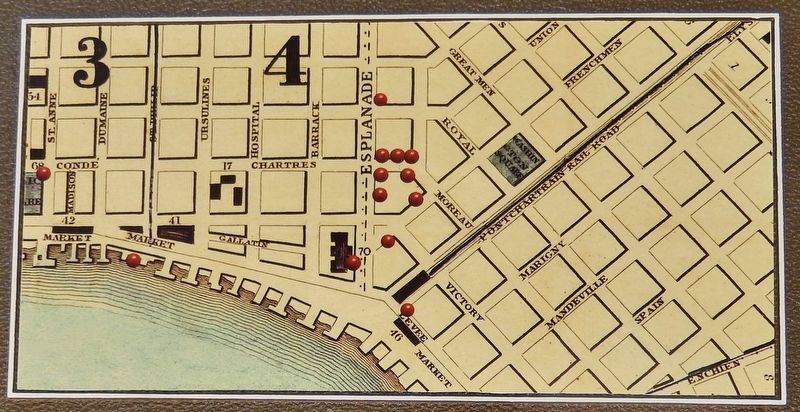
Within a one-block radius of this marker were the New Orleans offices, showrooms, and slave pens of over a dozen slave trading firms, including Franklin, Armfield, and Ballard, Hope Hull Slatter, John Hagan, Joseph Bruin, and others. Their networks, which undergirded the antebellum economy, stretched from Norfolk, Baltimore, Louisville,
this page online
Erected 2018 by New Orleans Committee to Erect Markers on the Slave Trade. (Marker Number Site 5.)
Topics. This historical marker is listed in this topic list: African Americans. A significant historical year for this entry is 1808.
Location. 29° 57.771′ N, 90° 3.547′ W. Marker is in New Orleans, Louisiana, in Orleans Parish. It is in Marigny. It is at the intersection of Esplanade Avenue and Chartres Street, in the median on Esplanade Avenue. Touch for map. Marker is in this post office area: New Orleans LA 70116, United States of America. Touch for directions.

Regionally, this marker is in one of the River Parishes. It is also in the American South, specifically in the Deep South, on the Gulf Coast, and in the Great River Road Region. Globally, it is in North America, a Gulf of Mexico state, the Western Hemisphere, the Western World, and the Anglosphere. Historically, it finds itself in what was once New Spain, the Viceroyalty of New France, the territory of the Mississippian Culture, the Louisiana Purchase, one of the Confederate States of
Photographed by Cosmos Mariner, May 11, 2018
2. New Orleans and the Domestic Slave Trade Marker (back side)
Other nearby markers. At least 8 other markers are within walking distance of this marker: Solomon Northup (a few steps from this marker); Denis House (within shouting distance of this marker); Bringier – Barnett House (within shouting distance of this marker); The Lamothe House (within shouting distance of this marker); Gauche House (about 400 feet away, measured in a direct line); Sicilian Jazz / Sicilian Swing & Rock n’ Roll (about 500 feet away); Faubourg Marigny (about 500 feet away); Calle del Cuartel (about 500 feet away). Touch for a list and map of all markers in New Orleans.
Related markers. Click here for a list of markers that are related to this marker. New Orleans Slave Trade
Also see . . .
1. As New Orleans Turns 300, City to Mark Slave Trade Sites. Between 1804 and 1862, more than 100,000 people were bought and sold in New Orleans. Families were torn apart; one third of the sales were of children younger than 13. (Submitted on May 11, 2018, by Cosmos Mariner of Cape Canaveral, Florida.)
2. Slavery in New Orleans. An 1849 map shows more than 50 slave
courtesy of The Historic New Orleans Collection
3. Marker detail: map of nearby offices, showrooms, and slave pens of over a dozen slave trading firms
Photographed by Cosmos Mariner, May 11, 2018
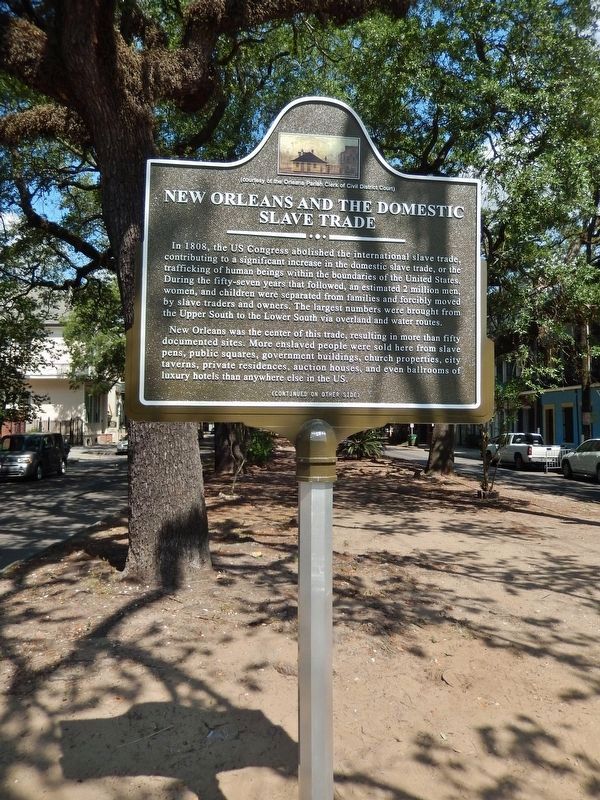
4. Domestic Slave Trade Marker (tall view; Esplanade Avenue median in background)
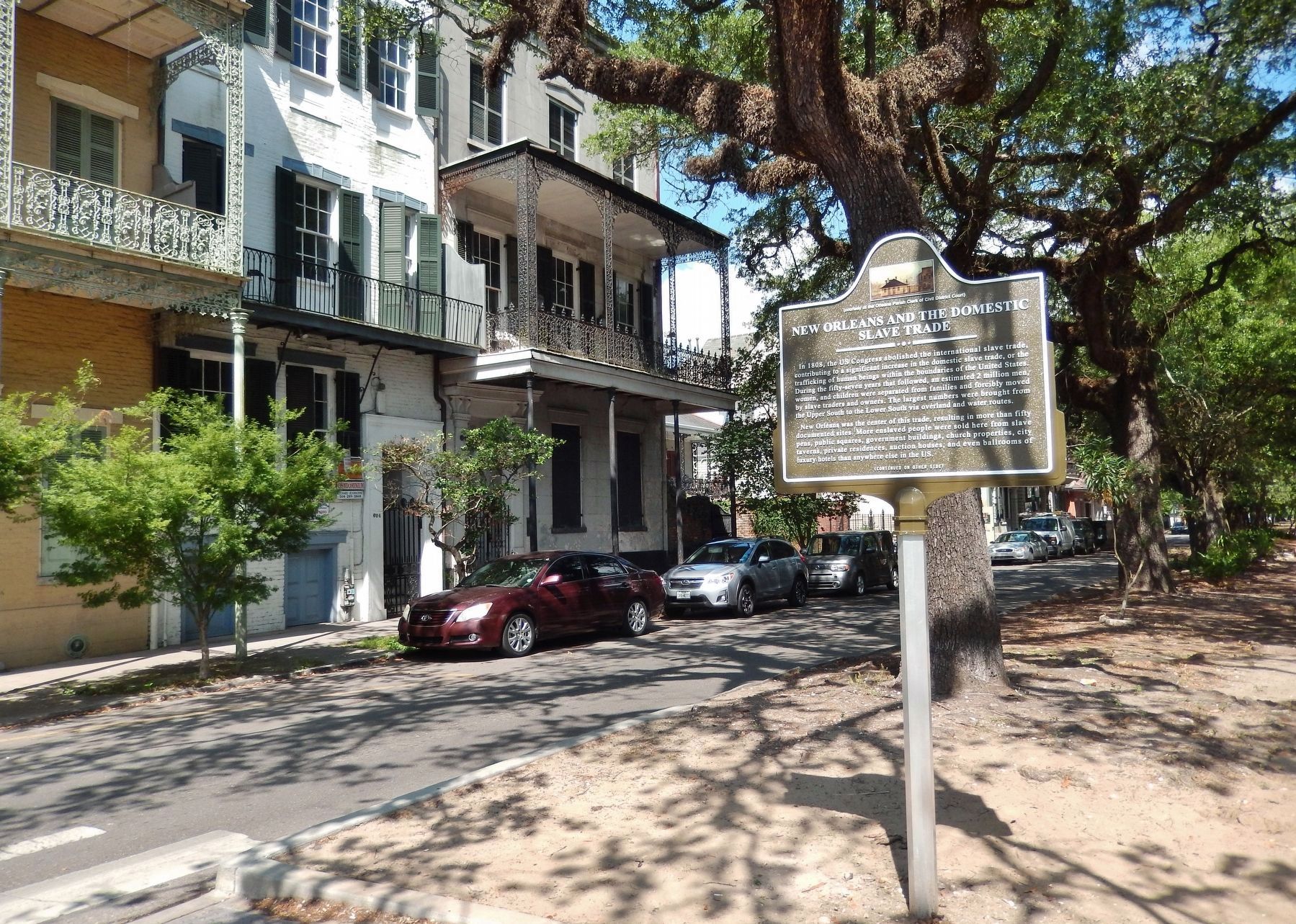
Photographed by Cosmos Mariner, May 11, 2018
5. Domestic Slave Trade Marker (front side; wide view; Esplanade Ave southbound in background)
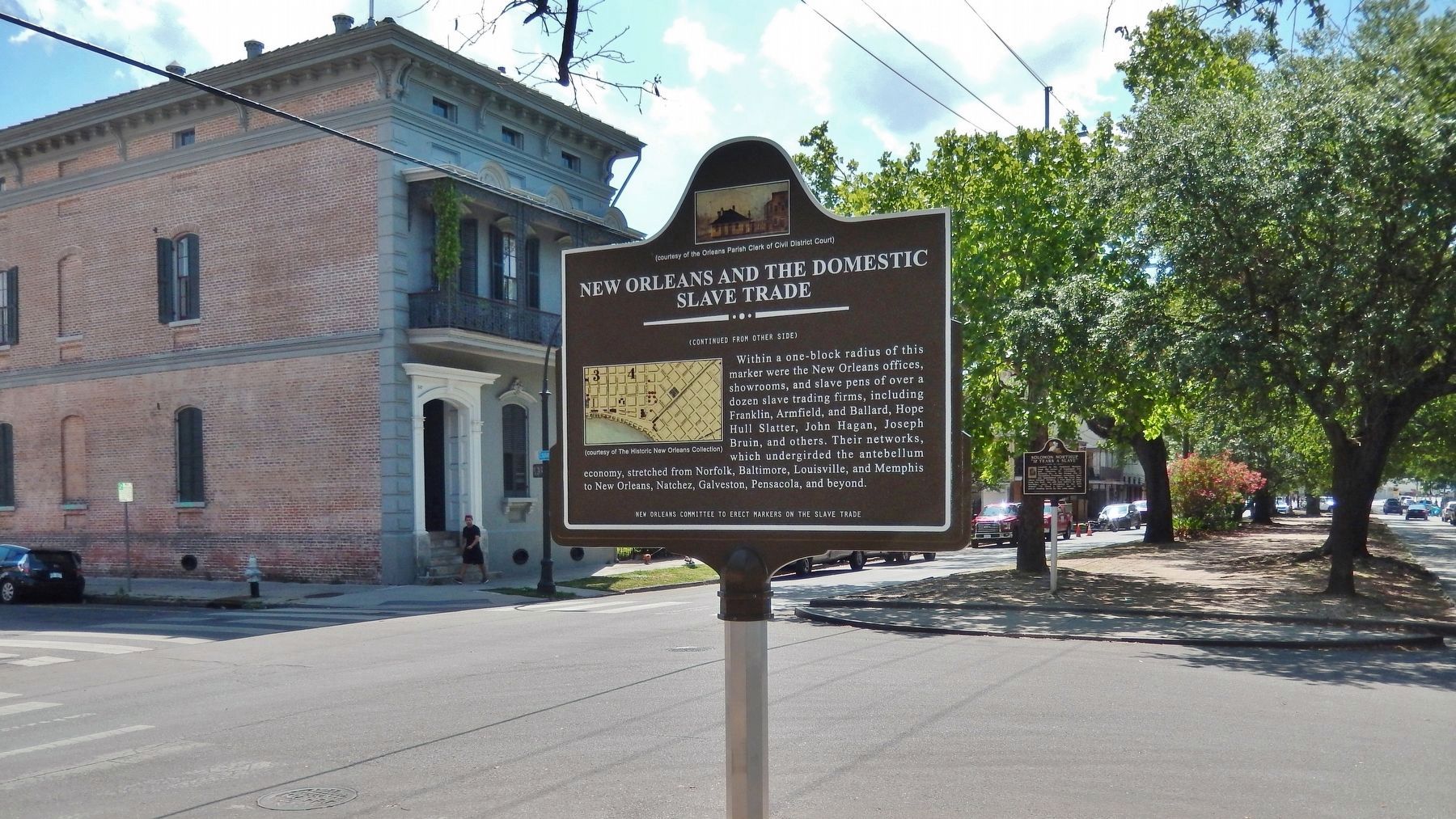
Photographed by Cosmos Mariner, May 11, 2018
6. Domestic Slave Trade Marker (back side; wide view; Esplanade Ave northbound in background)
Credits. This page was last revised on August 7, 2025. It was originally submitted on May 11, 2018, by Cosmos Mariner of Cape Canaveral, Florida. This page has been viewed 5,086 times since then and 413 times this year. Last updated on May 15, 2018, by Cosmos Mariner of Cape Canaveral, Florida. Photos: 1, 2, 3, 4, 5, 6. submitted on May 11, 2018, by Cosmos Mariner of Cape Canaveral, Florida. • Andrew Ruppenstein was the editor who published this page.
