Deadwood in Lawrence County, South Dakota — The American Midwest (Upper Plains)
McGovern Hill
—
A Trail to Deadwood's Past
—
Photographed by Cosmos Mariner, July 12, 2018
1. McGovern Hill Marker
Inscription.
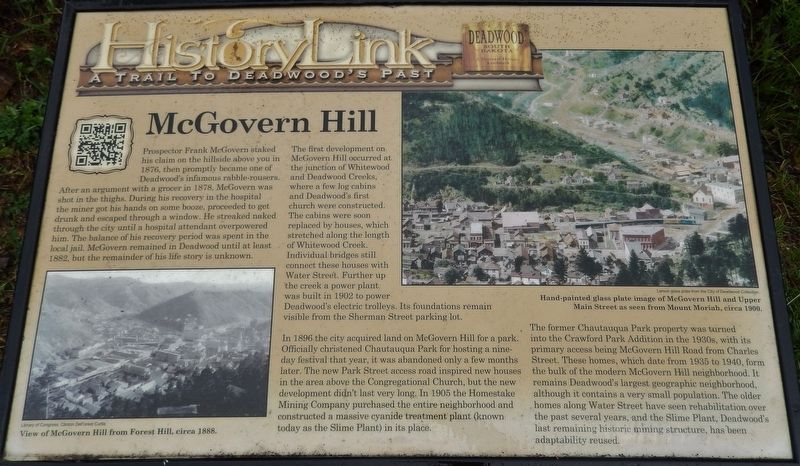
McGovern Hill. . Prospector Frank McGovern staked his claim on the hillside above you in 1876, then promptly became one of Deadwood's infamous rabble-rousers. After an argument with a grocer in 1878, McGovern was shot in the thighs. During his recovery in the hospital the miner got his hands on some booze, proceeded to get drunk and escaped through a window. He streaked naked through the city until a hospital attendant overpowered him. The balance of his recovery period was spent in the local jail. McGovern remained in Deadwood until at least 1882, but the remainder of his life story is unknown. , The first development on McGovern Hill occurred at the junction of Whitewood and Deadwood Creeks, where a few log cabins and Deadwood's first church were constructed. The cabins were soon replaced by houses, which stretched along the length of Whitewood Creek. Individual bridges still connect these houses with Water Street. Further up the creek a power plant was built in 1902 to power Deadwood's electric trolleys. Its foundations visible from the Sherman Street parking lot. , In 1896 the city acquired land on McGovern Hill for a park. Officially christened Chautauqua Park for hosting a nine-day festival that year, it was abandoned only a few months later. The new Park Street access road inspired new houses in the area above the Congregational Church, but the new development didn't last very long. In 1905 the Homestake Mining Company purchased the entire neighborhood and constructed a massive cyanide treatment plant (known today as the Slime Plant) in its place. , The former Chautauqua Park property was turned into the Crawford Park Addition in the 1930s, with its primary access being McGovern Hill Road from Charles Street. These homes, which date from 1935 to 1940, form the bulk of the modern McGovern Hill neighborhood. It remains Deadwood's largest geographic neighborhood, although it contains a very small population. The older homes along Water Street have seen rehabilitation over the past several years, and the Slime Plant, Deadwood's last remaining historic mining structure, has been adaptability reused.
Prospector Frank McGovern staked his claim on the hillside above you in 1876, then promptly became one of Deadwood's infamous rabble-rousers. After an argument with a grocer in 1878, McGovern was shot in the thighs. During his recovery in the hospital the miner got his hands on some booze, proceeded to get drunk and escaped through a window. He streaked naked through the city until a hospital attendant overpowered him. The balance of his recovery period was spent in the local jail. McGovern remained in Deadwood until at least 1882, but the remainder of his life story is unknown.
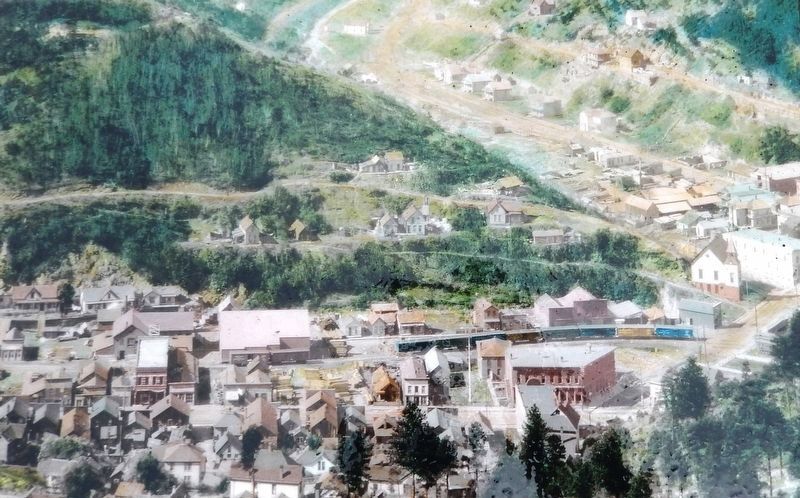
The first development on McGovern Hill occurred at the junction of Whitewood and Deadwood Creeks, where a few log cabins and Deadwood's first church were constructed. The cabins were soon replaced by houses, which stretched along the length of Whitewood Creek. Individual bridges still connect these houses with Water Street. Further up the creek a power plant was built in 1902 to power Deadwood's electric trolleys. Its foundations visible from the Sherman Street parking lot.
In 1896 the city acquired land on McGovern Hill for a park. Officially
Click or scan to see this page online
christened Chautauqua Park for hosting a nine-day festival that year, it was abandoned only a few months later. The new Park Street access road inspired new houses in the area above the Congregational Church, but the new development didn't last very long. In 1905 the Homestake Mining Company purchased the entire neighborhood and constructed a massive cyanide treatment plant (known today as the Slime Plant) in its place.
The former Chautauqua Park property was turned into the Crawford Park Addition in the 1930s, with its primary access being McGovern Hill Road from Charles Street. These homes, which date from 1935 to 1940, form the bulk of the modern McGovern Hill neighborhood. It remains Deadwood's largest geographic neighborhood, although it contains a very small population. The older homes along Water Street have seen rehabilitation over the past several years, and the Slime Plant, Deadwood's last remaining historic mining structure, has been adaptability reused.
Erected by The Deadwood Historic Preservation Commission.
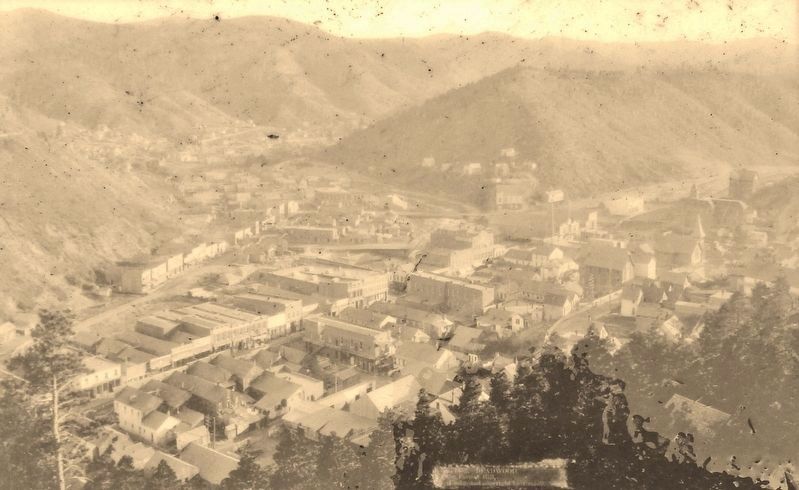
2. Marker detail: View of McGovern Hill from Forest Hill, circa 1888
103° 43.754′ W. Marker is in Deadwood, South Dakota, in Lawrence County. It can be reached from the intersection of Charles Street (CanAm Highway) (U.S. 85) and Cedar Lane, on the right when traveling south. Marker is located a few yards from the George S. Mickelson Rail Trail, just south of the trailhead and parking lot, on the north/west side of the trail. Touch for map. Marker is at or near this postal address: 32 Charles Street, Deadwood SD 57732, United States of America. Touch for directions.
Regionally, this marker is in West River. It is also in the American Black Hills, in the Lewis & Clark Corridor, on the prairies, and on the Northern Plains. Globally, it is in North America, the Western Hemisphere, the Western World, and the Anglosphere. Historically, it finds itself in what was once Rupert’s Land and also the Louisiana Purchase.
Related markers. Click here for a list of markers that are related to this marker.
Also see . . . Rough & Tumble Deadwood, South Dakota. Legends of America website entry (Submitted on October 4, 2025, by Larry Gertner of New York, New York.)
Photographed by Cosmos Mariner, July 12, 2018
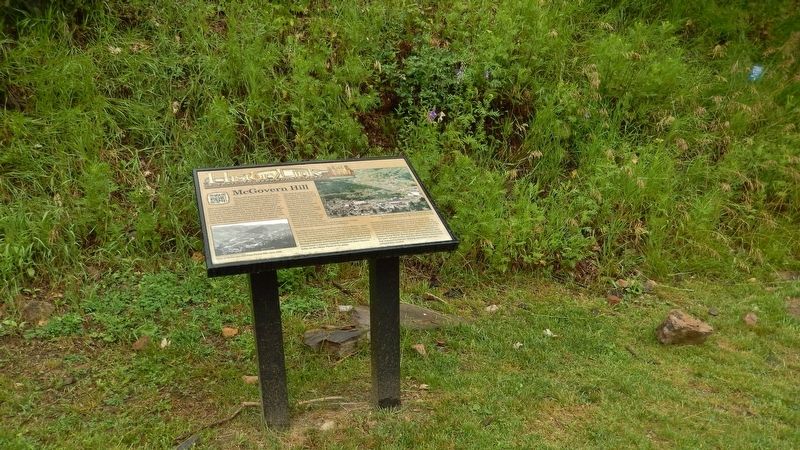
4. McGovern Hill Marker (wide view)
Credits. This page was last revised on October 4, 2025. It was originally submitted on August 3, 2018, by Cosmos Mariner of Cape Canaveral, Florida. This page has been viewed 731 times since then and 38 times this year. Photos:1. submitted on August 3, 2018, by Cosmos Mariner of Cape Canaveral, Florida. 2, 3, 4. submitted on August 4, 2018, by Cosmos Mariner of Cape Canaveral, Florida. • Bill Pfingsten was the editor who published this page.