
Murray in Salt Lake County, Utah — The American Mountains (Southwest)
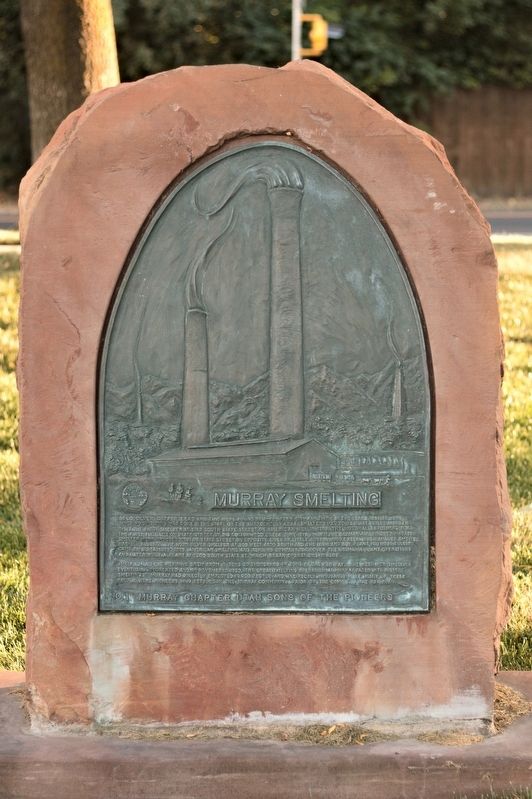
Murray Smelting
Photographed by Andrew Johnson, September 25, 2018
1. Murray Smelting Marker
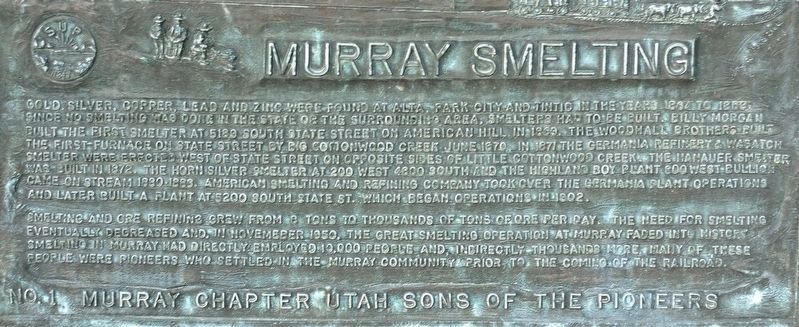
Smelting and ore refining grew from 8 tons to thousands of tons of ore per day. The need for smelting eventually decreased and in November 1950, the great smelting operation at Murray faded into history. Smelting in Murray had directly employed 10,000 people and, indirectly thousands more. Many of these people were pioneers who settled in the Murray community prior to the coming of the railroad.
Erected by Murray Chapter Utah Sons of the Pioneers. (Marker Number 1.)
Topics and series. This historical marker is listed in this topic list: Industry & Commerce. In addition, it is included in the Sons of Utah Pioneers series list. A significant historical year for this entry is 1869.
Location. 40° 39.372′ N, 111° 52.662′ W. Marker is in Murray, Utah, in Salt Lake County. It can be reached from 5300 South, on the right when traveling west. Touch for map. Marker is in this post office area: Salt Lake City UT 84107, United States of America. Touch for directions.

Regionally, this marker is in the
this page online
Other nearby markers. At least 8 other markers are within walking distance of this marker: Pony Express Station (about 300 feet away, measured in a direct line); Mahonri Moriancumer Cahoon (approx. 0.4 miles away); South Cottonwood Temple Granite Rest Camp (approx. 0.6 miles away); 205 East Vine Street (approx. 0.6 miles away); South Cottonwood (approx. 0.7 miles away); The Old Rock Granary (approx. 0.7 miles away); South Cottonwood Campground (approx. 0.7 miles away); John P. Cahoon House (approx. 0.9 miles away). Touch for a list and map of all markers in Murray.
Photographed by Andrew Johnson, September 25, 2018
2. Murray Smelting Marker Inscription
Photographed by Andrew Johnson, September 25, 2018
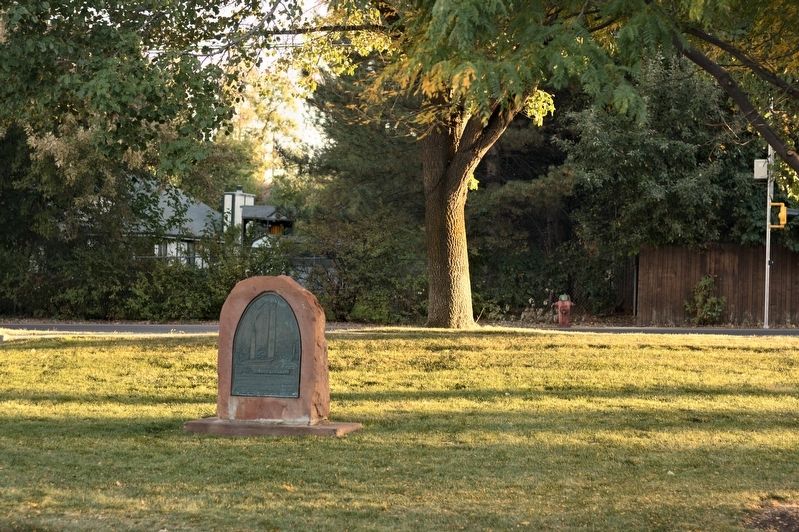
3. Murray Smelting Marker
Credits. This page was last revised on October 3, 2018. It was originally submitted on September 30, 2018, by Andrew Johnson of Salt Lake City, Utah. This page has been viewed 838 times since then and 46 times this year. Photos: 1, 2, 3. submitted on September 30, 2018, by Andrew Johnson of Salt Lake City, Utah. • Bill Pfingsten was the editor who published this page.
