St. Augustine in St. Johns County, Florida — The American South (South Atlantic)
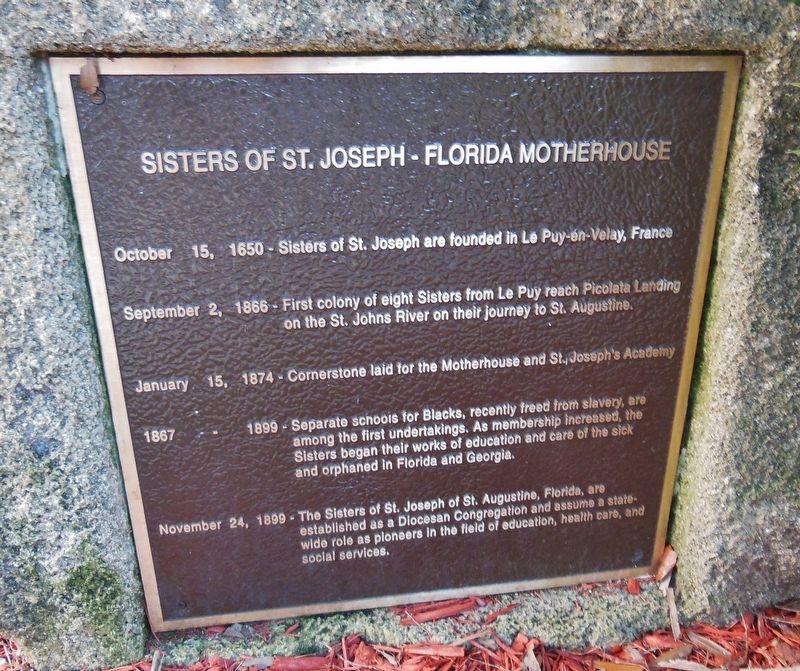
Sisters of St. Joseph - Florida Motherhouse
Photographed by Cosmos Mariner, December 18, 2013
1. Sisters of St. Joseph - Florida Motherhouse Marker
October 15, 1650 - Sisters of St. Joseph are founded in
Le Puy-en-Velay, France
September 2, 1866 - First colony of eight Sisters from Le Puy reach Picolata Landing on the St. Johns River on their journey to St. Augustine
January 15, 1874 - Cornerstone laid for the Motherhouse and St. Joseph’s Academy
1867-1877 - Separate schools for Blacks, recently freed from slavery, are among the first undertakings. As membership increased, the Sisters began their works of education and care of the sick and orphaned in Florida and Georgia.
November 24, 1899 - The Sisters of St. Joseph of St. Augustine, Florida, are established as a Diocesan Congregation and assume a statewide role as pioneers in the field of education, health care, and social services.
Topics. This historical marker is listed in these topic lists: Education • Religion & Religious Structures • Settlements & Settlers • Women.
Location. 29° 53.415′ N, 81° 18.726′ W. Marker is in St. Augustine, Florida, in St. Johns County. It is on St. George Street south of Cadiz Street, on the left when traveling south.
this page online

Regionally, this marker is in First Coast and in Greater Jacksonville. It is also in the American South and on the Eastern Seaboard. Globally, it is in the North Atlantic Region, North America, a Gulf of Mexico state, the Western Hemisphere, the Western World, and the Anglosphere. Historically, it finds itself in what was once New Spain, the territory of the Mississippian Culture, one of the Confederate States of America, and the Antebellum South.
Other nearby markers. At least 8 other markers are within walking distance of this marker: Nuestra Señora de la Soledad (within shouting distance of this marker); First Colonial Houses (within shouting distance of this marker); Freedom Bell (within shouting distance of this marker); Canova-Prince Murat House (within shouting distance of this marker); Colonial Defense Line (within shouting distance of this marker); Canova-Dow and Canova-de Medicis Houses
Photographed by Cosmos Mariner, December 12, 2018
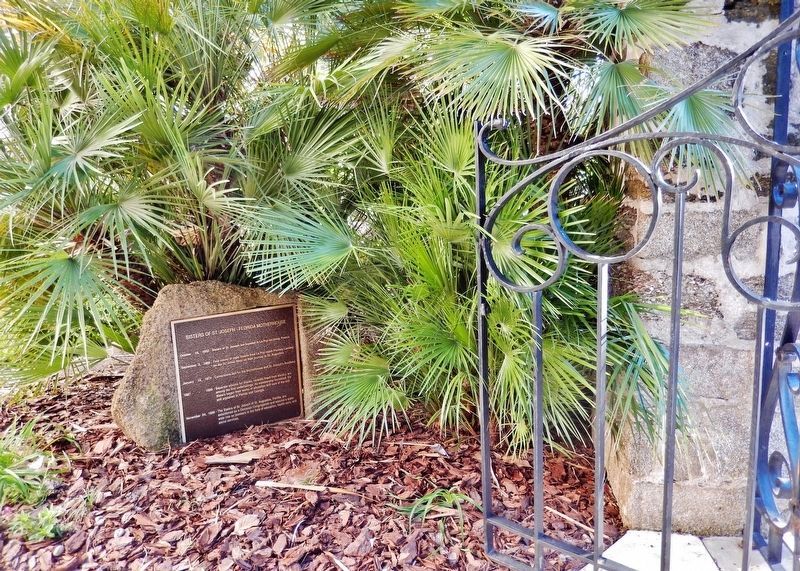
2. Sisters of St. Joseph - Florida Motherhouse Marker (wide view)
More about this marker. Marker is a large metal plaque, mounted vertically, at ground-level, on a large boulder inside the gate.
Also see . . . Sisters of St. Joseph of St. Augustine, Florida. At the close of the American Civil War, the most Reverend Augustin Verot, Bishop of Savannah and Administrator Apostolic of Florida, visited his native city of LePuy where he challenged the Sisters of St. Joseph to come to St. Augustine. Many sisters volunteered. The chosen eight were Sister Marie Sidonie Rascle, Superior: and Sisters Marie Julie Roussel, Marie Josephine Deleage, Marie Clemence Freycenon, St. Pierre Borie, Marie Joseph Cortial, Julie Clotilde Arsac, and Marie Celenie Joubert. The sisters from France adjusted heroically to a different language, culture, and climate with joy and faith. They welcomed new members as they mourned the disproportionate number of those who succumbed to disease
Photographed by Cosmos Mariner, December 18, 2013
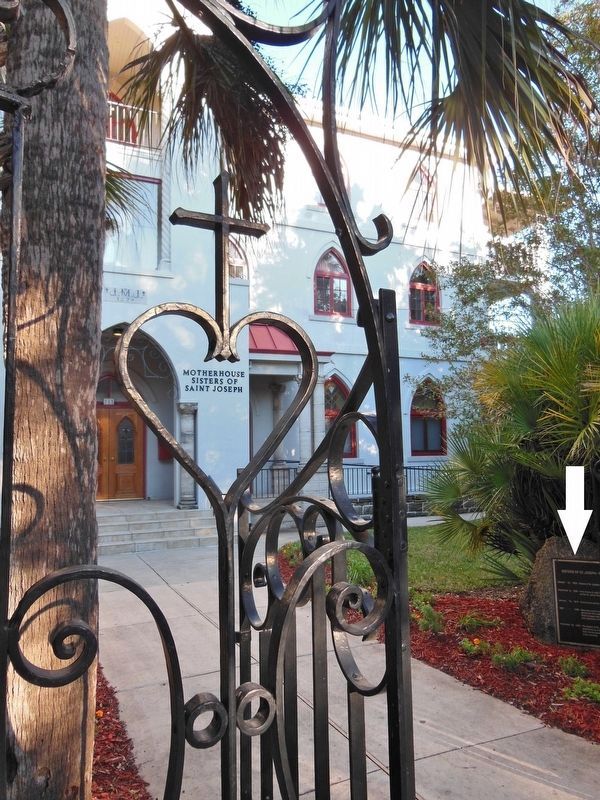
3. Sisters of St. Joseph - Florida Motherhouse Entrance (marker visible on right side)
Photographed by Cosmos Mariner, December 18, 2013
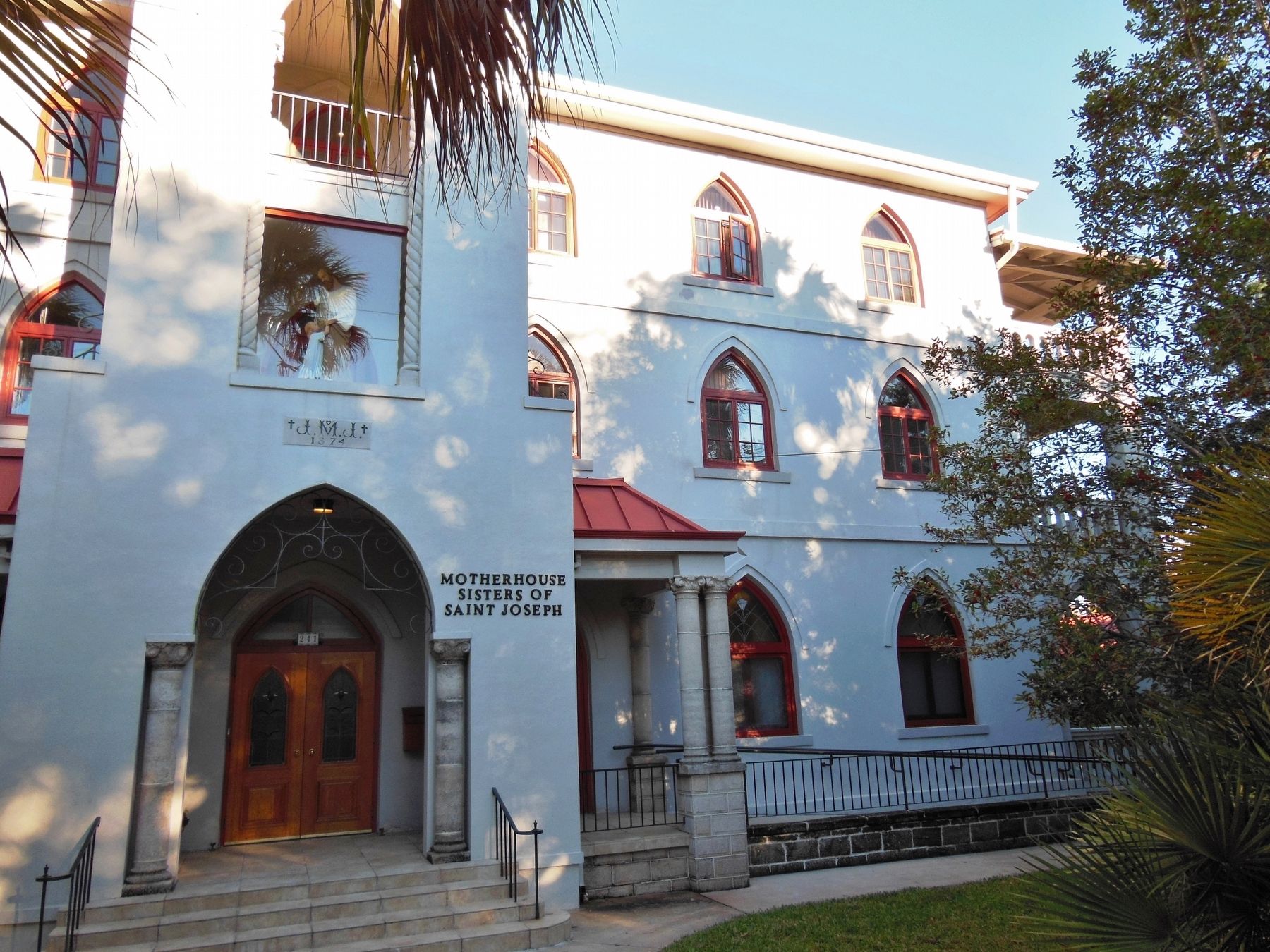
4. St Joseph's Convent - Sisters of St. Joseph Motherhouse (wide view from near marker)
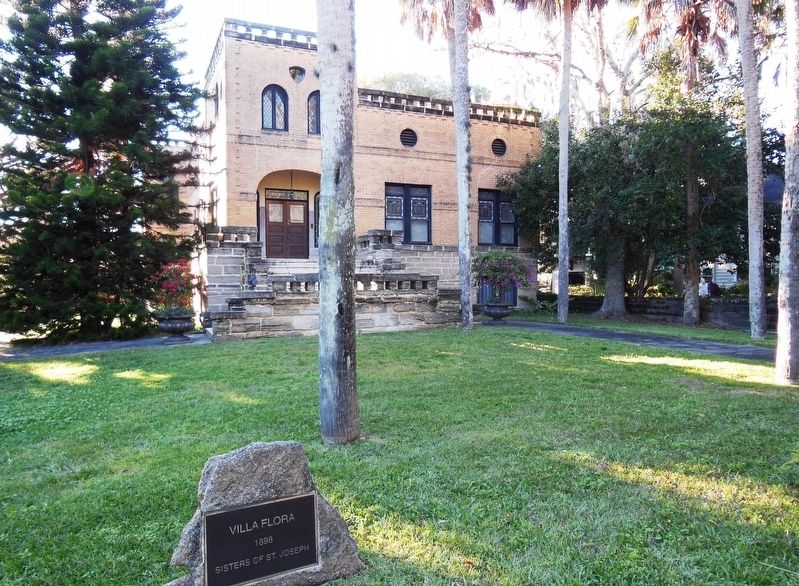
Photographed by Cosmos Mariner, December 18, 2013
5. Villa Flora, 1898, Sisters of St. Joseph (located across St. George Street from marker)
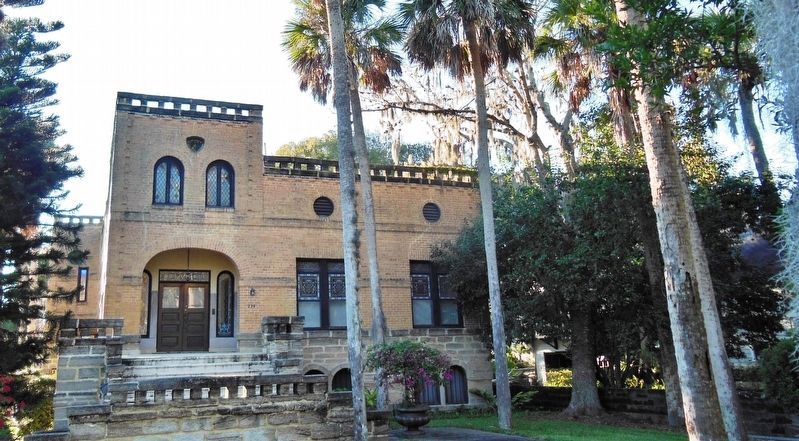
Photographed by Cosmos Mariner, December 18, 2013
6. Villa Flora, 1898, Sisters of St. Joseph (located across St. George Street from marker)
Credits. This page was last revised on March 20, 2019. It was originally submitted on November 22, 2018, by Cosmos Mariner of Cape Canaveral, Florida. This page has been viewed 1,250 times since then and 77 times this year. Photos: 1. submitted on November 22, 2018, by Cosmos Mariner of Cape Canaveral, Florida. 2. submitted on March 18, 2019, by Cosmos Mariner of Cape Canaveral, Florida. 3, 4, 5, 6. submitted on November 22, 2018, by Cosmos Mariner of Cape Canaveral, Florida. • Andrew Ruppenstein was the editor who published this page.
