
Ransom Place in Indianapolis in Marion County, Indiana — The American Midwest (Great Lakes)
Historic Ransom Place
Photographed by J. J. Prats, October 20, 2018
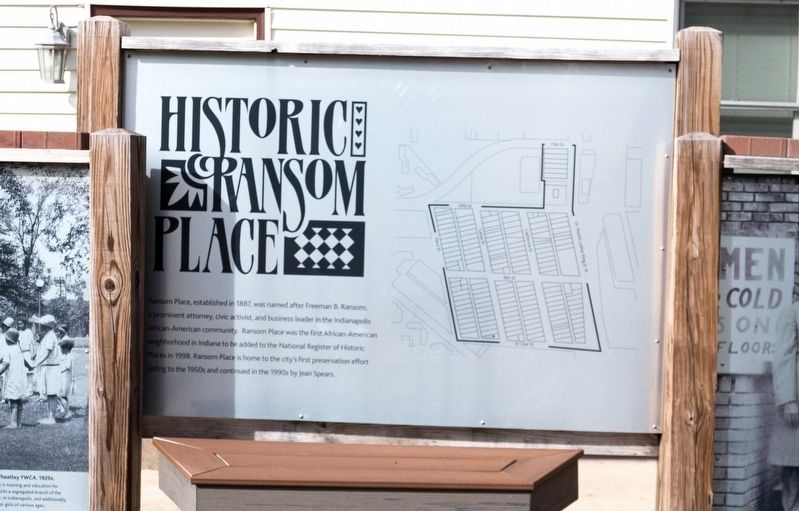
1. Historic Ransom Place Marker, center panel
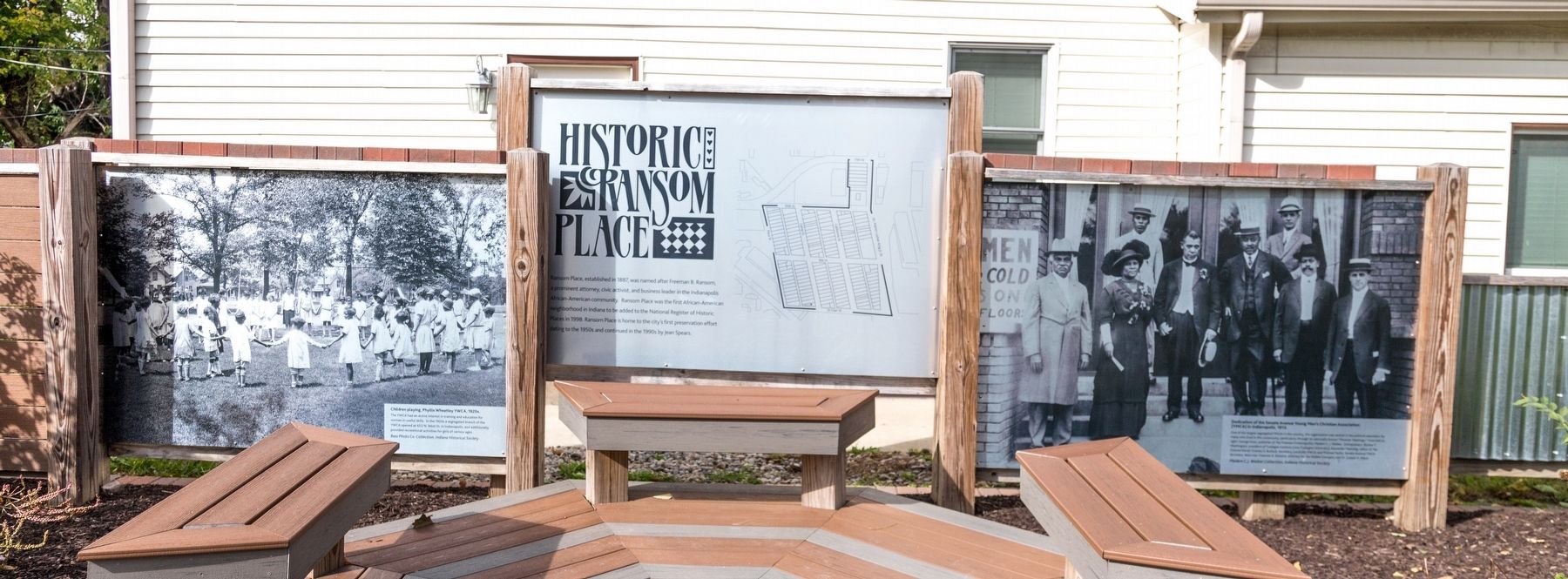
Ransom Place, established in 1887, was named after Freeman B. Ransom, prominent attorney, civic activist, and business leader in the Indianapolis African-American community. Ransom Place was the first African-American neighborhood in Indiana to be added to the National Register of Historic Places in 1998. Ransom Place is home to the city’s first preservation effort dating to the 1950s and continued in the 1990s by Jean Spears.
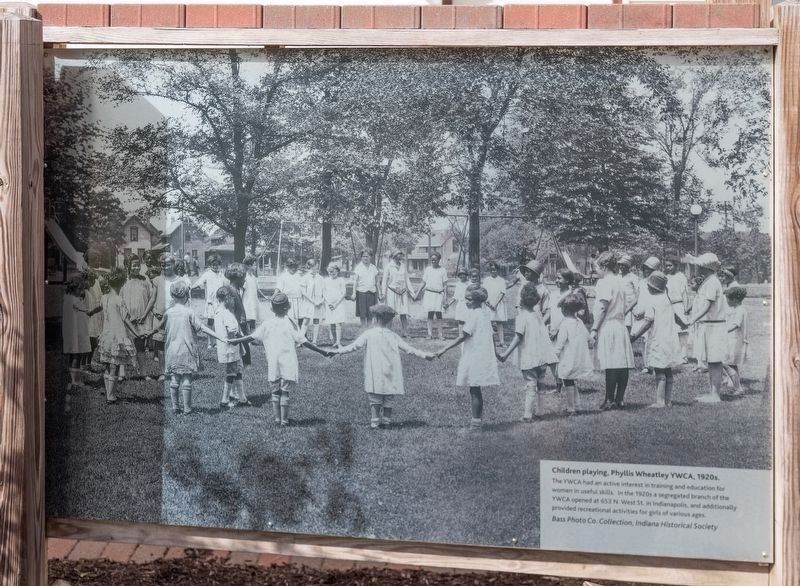
(left panel)
The YWCA had an active interest in training and education for women in useful skills. In the 1920s a segregated branch of the YWCA opened at 653 N. West St. in Indianapolis, and additionally provided recreational activities for girls of various ages.
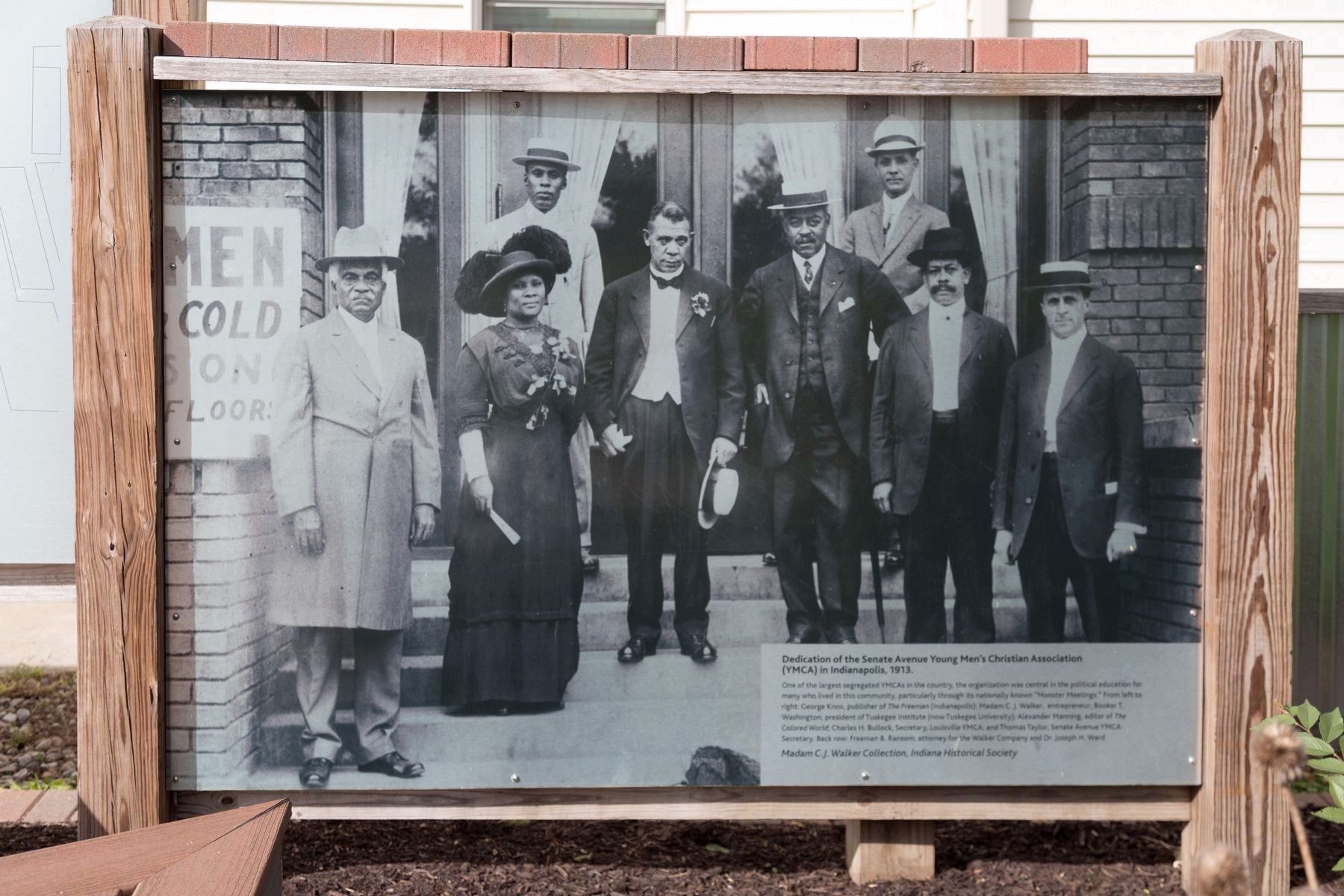
(right panel)
One of the largest segregated YMCAs in the country, the organization was central in the political education for many who lived in this community, particularly through its nationally known “Monster Meetings.”
Topics. This historical marker is listed in these topic lists: African Americans • Notable Places. A significant historical year for this entry is 1887.
Location. 39° 46.708′ N, 86° 10.216′ W. Marker is in Indianapolis,
this page online

Regionally, this marker is in Central Indiana. It is also in the American Midwest and in the Corn Belt. Globally, it is in North America, the Western Hemisphere, the Western World, and the Anglosphere. Historically, it finds itself in what was once the territory of the Mississippian Culture and also the Northwest Territory.
Other nearby markers. At least 8 other markers are within walking distance of this marker: Ransom Place Historic District (a few steps from this marker); Phyllis Wheatley YWCA (approx. 0.2 miles away); Black Lives Matter Mural (approx. 0.2 miles away); Madam C.J. Walker (approx. 0.2 miles away); Madam C.J. Walker Building (approx. 0.2 miles away); Sigma Theta Tau International (approx. 0.2 miles away); Madame C.J. Walker Timeline (approx. 0.2 miles away); Talking Wall (approx.
Photographed by J. J. Prats, October 20, 2018
2. Historic Ransom Place Marker
Also see . . .
1. Ransom Place Historic District. Wikipedia enter:
Links to National Register of Historic Places Nomination Form (Submitted on May 22, 2024, by Larry Gertner of New York, New York.)
2. Freeman Ransom. Wikipedia entry (Submitted on January 14, 2021, by Larry Gertner of New York, New York.)
3. Madam C.J. Walker. “Many of the 20th century's most influential entrepreneurs overcame tremendous odds in their quests for success. But none faced greater obstacles than Madam C.J. Walker. The daughter of former slaves, she was orphaned at the age of 7, married at 14, a mother at 17 and a widow at 20. Yet she was determined to build a better life for herself and her daughter. Starting with a meager investment of only $1.50, she built one of the most successful black-owned businesses of the early 20th century and became the nation's first woman self-made millionaire.” (Submitted on December 30, 2018.)
Original photograph in the Bass Photo Co. Collection, Indiana Historical Society
3. Historic Ransom Place Marker, left panel
Children playing, Phyllis Weatley YWCA, 1920s. The YWCA had an active interest in training and education for women in useful skills. In the 1920s a segregated branch of the YWCA opened at 653 N. West St. in Indianapolis, and additionally provided recreational activities for girls of various ages.
Original photograph in the Madam C. J. Walker Collection, Indiana Historical Society
4. Historic Ransom Place Marker, left panel
Dedication of the Senate Avenue Young Men’s Christian Association(YMCA) in Indianapolis, 1913. One of the largest segregated YMCAs in the country, the organization was central in the political education for many who lived in this community, particularly through its nationally known “Monster Meetings.” From left to right, George Knox, publisher of The Freeman (Indianapolis); Madam C. J. Walker, entrepreneur; Booker T. Washington, president of Tuskegee Institute (now Tuskegee University); Alexander Manning, editor of the Colored World; Charles H. Bullock, Secretary, Louisville YMCA; and Thomas Taylor, Senate Avenue YMCA Secretary. Back Row: Freeman B. Ransom, attorney for the Walker Company and Dr. Joseph H. Ward.
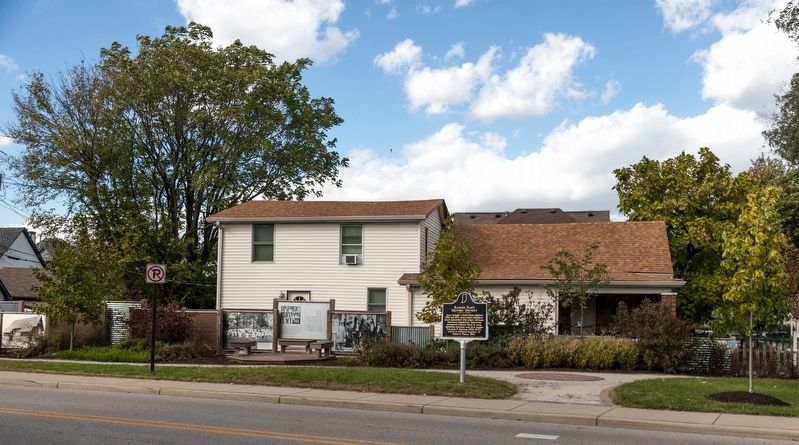
Photographed by J. J. Prats, October 20, 2018
5. Ransom Place Pocket Park and Markers
via Black Moment, unknown
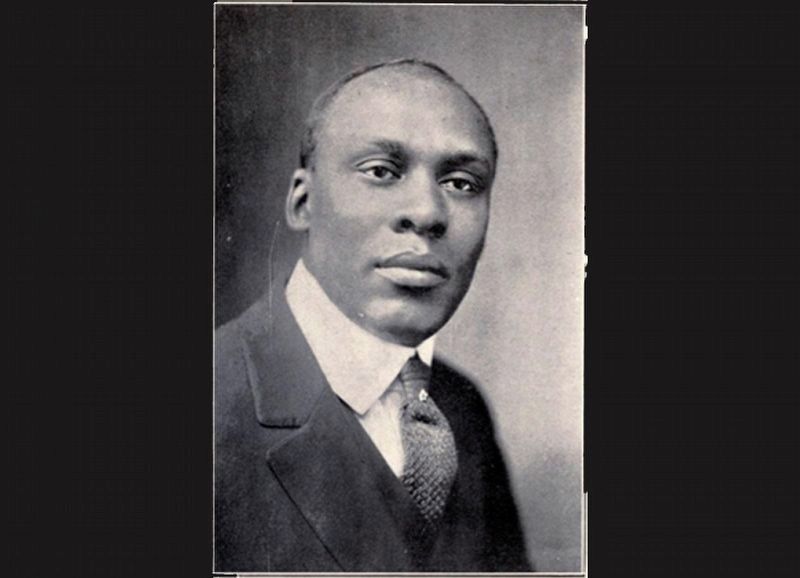
6. Freeman B. Ransom
Credits. This page was last revised on May 22, 2024. It was originally submitted on December 30, 2018, by J. J. Prats of Powell, Ohio. This page has been viewed 887 times since then and 57 times this year. Photos: 1, 2, 3, 4, 5. submitted on December 30, 2018, by J. J. Prats of Powell, Ohio. 6. submitted on January 14, 2021, by Larry Gertner of New York, New York.
