Near South Webster in Lawrence County, Ohio — The American Midwest (Great Lakes)
Olive Furnace
Photographed by J. J. Prats, April 16, 2019
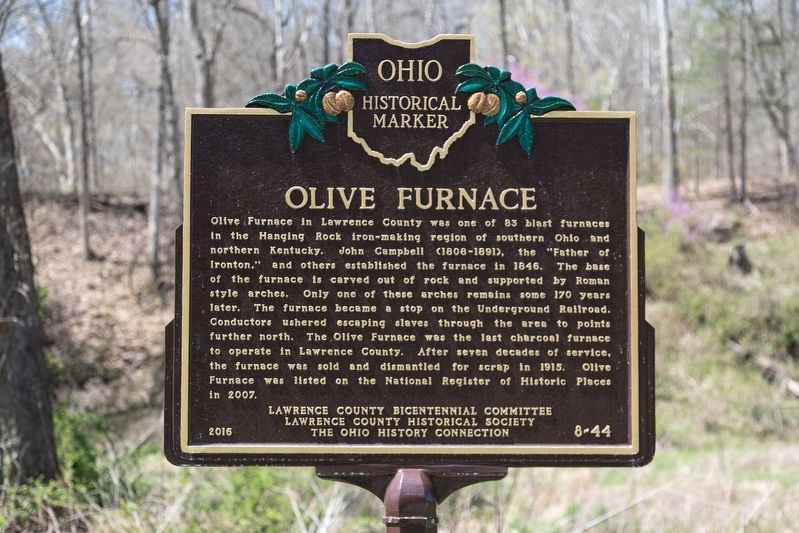
1. Olive Furnace Marker
Olive Furnace in Lawrence County was one of the 83 blast furnaces in the Hanging Rock iron-making region of southeastern Ohio and northern Kentucky. John Campbell (1808–1891), the “Father of Ironton,” and others established the furnace in 1846. The base of the furnace is carved out of rock and supported by Roman-style arches. Only one of these arches remain some 170 years later. The furnace became a stop on the Underground Railroad. Conductors ushered escaping slaves through the area to points further north. The Olive Furnace was the last charcoal furnace to operate in Lawrence County. After seven decades of service, the furnace was sold and dismantled for scrap in 1915. Olive Furnace was listed on the National Register of Historic Places in 2007.
Erected 2016 by Lawrence County Bicentennial Committee, Lawrence County Historical Society, and The Ohio History Connection. (Marker Number 8-44.)
Topics and series. This historical marker is listed in these topic lists: Industry & Commerce • Natural Resources. In addition, it is included in the Appalachian Iron Furnaces, and the Ohio Historical Society / The Ohio History Connection
this page online
Location. 38° 45.745′ N, 82° 37.792′ W. Marker is near South Webster, Ohio, in Lawrence County. It is on Route 93 north of Kimble Creek Road (County Route 258), on the left when traveling north. It is across from the Mt. Olive Community Church. Touch for map. Marker is in this post office area: Pedro OH 45659, United States of America. Touch for directions.

Regionally, this marker is in the Kyova Tri-State Region. It is also in the American Midwest, in the Ohio River Valley, in Appalachia, and specifically in Northern Appalachia. Globally, it is in North America, the Western Hemisphere, the Western World, and the Anglosphere. Historically, it finds itself in what was once the Haudenosaunee (Iroquois) Confederacy, the territory of the Mississippian Culture, and the Northwest Territory.
Other nearby markers. At least 8 other markers are within 10 miles of this marker, measured as the crow flies: Historic Mt. Olive Charcoal Iron Furnace (within shouting distance of this marker); Union Baptist Church (approx. 4½ miles away); The Waterloo Wonders (approx. 9.3 miles
Photographed by J. J. Prats, April 16, 2019
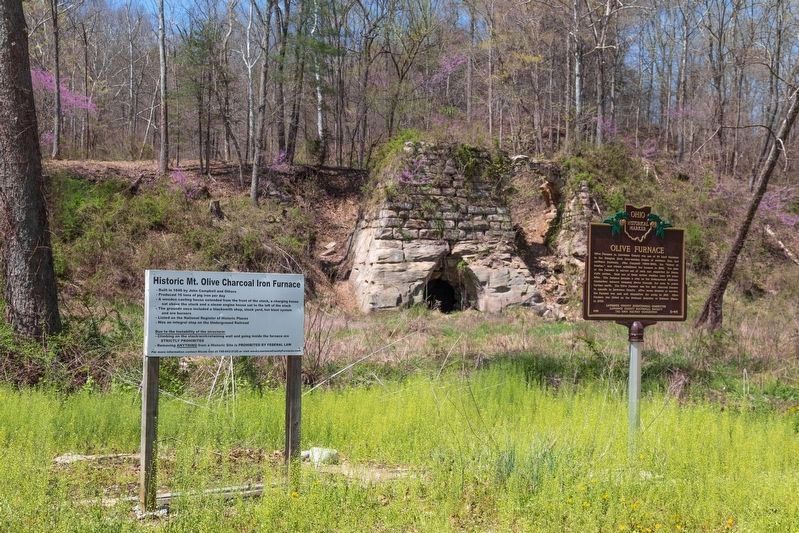
2. Olive Furnace and Marker
The white sign reads, “Historic Mt. Olive Charcoal Iron Furnace. Built in 1846 by John Campbell and others • Produces 16 tons of pig iron per day • A wooden casting house extended from the front of the stack, a charging house sat above the stack and a steam engine house sat to the left of the stack • The grounds once included a blacksmith shop, stock yard, hot blast system and ore burners • Listed on the National Register of Historic Places • Was in integral stop on the Underground Railroad. Due to the Instability of the structure: Climbing on the stack/arch/retaining wall and going inside the furnace are STRICTLY PROHIBITED • Removing ANYTHING from a Historic Site is PROHIBITED BY FEDERAL LAW.
Also see . . . Olive Furnace. The Clio website entry (Submitted on February 13, 2023, by Larry Gertner of New York, New York.)
Additional keywords. Mt. Olive Furnace
Photographed by J. J. Prats, April 16, 2019
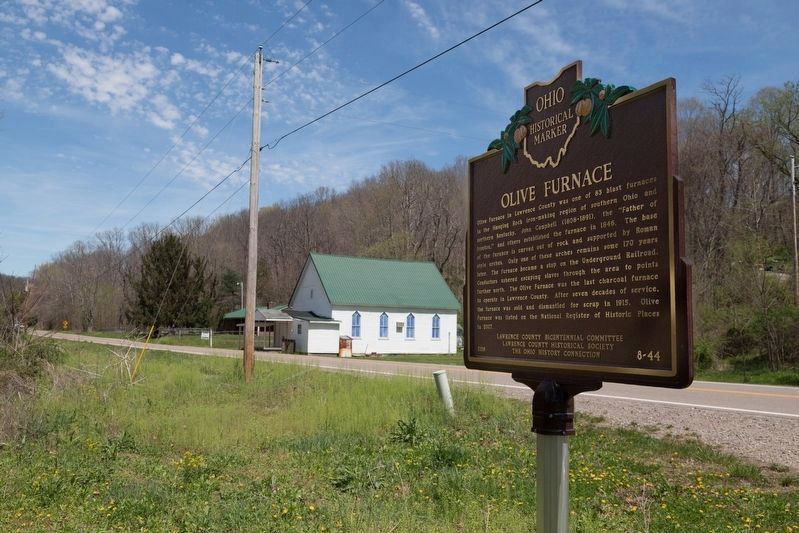
3. Olive Furnace Marker
Mt. Olive Community Church in the distance.
Photographed by J. J. Prats, April 16, 2019
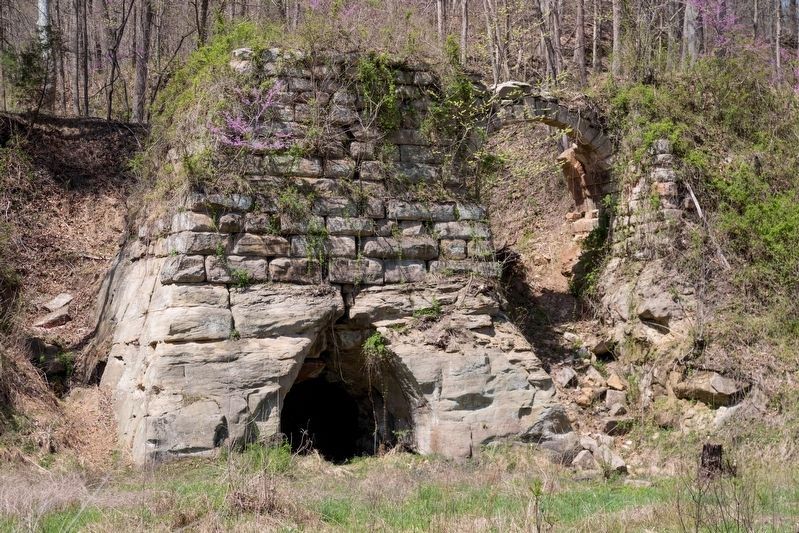
4. Olive Furnace
The remaining stone arch can be seen on the left of the furnace. Click on image, then click again for full screen.
Credits. This page was last revised on February 13, 2023. It was originally submitted on April 22, 2019, by J. J. Prats of Powell, Ohio. This page has been viewed 2,001 times since then and 148 times this year. Photos: 1, 2. submitted on April 22, 2019, by J. J. Prats of Powell, Ohio. 3, 4. submitted on April 23, 2019, by J. J. Prats of Powell, Ohio.
