Dressing a Millstone
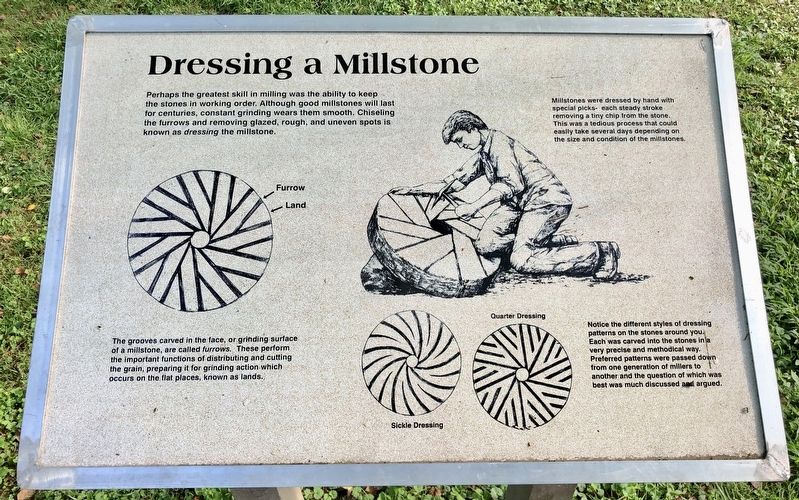
The grooves carved in the face, or grinding surface of a millstone, are called furrows. These perform the important functions of distributing and cutting the grain, preparing it for grinding action which occurs on the flat places, known as lands.
Millstones were dressed by hand with special picks- each steady stroke removing a tiny chip from the stone. This was a tedious process that could easily take several days depending on the size and condition of the millstones.
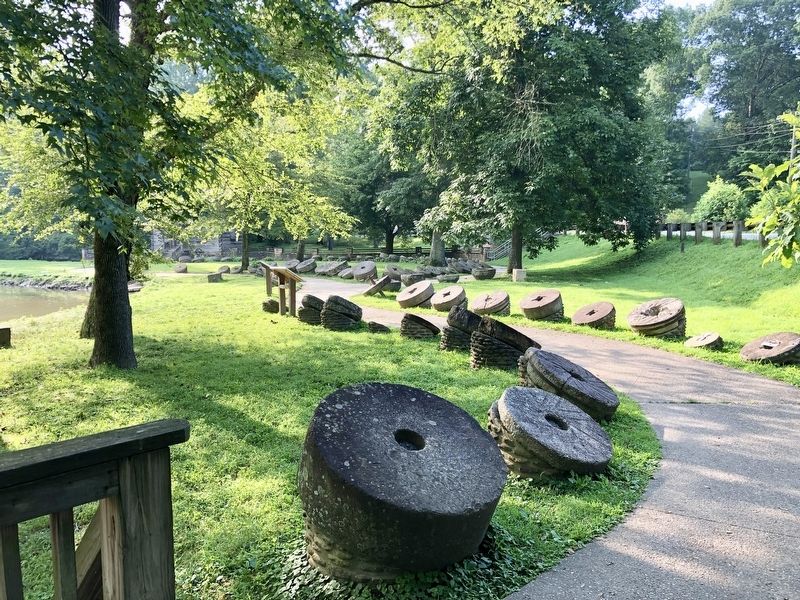
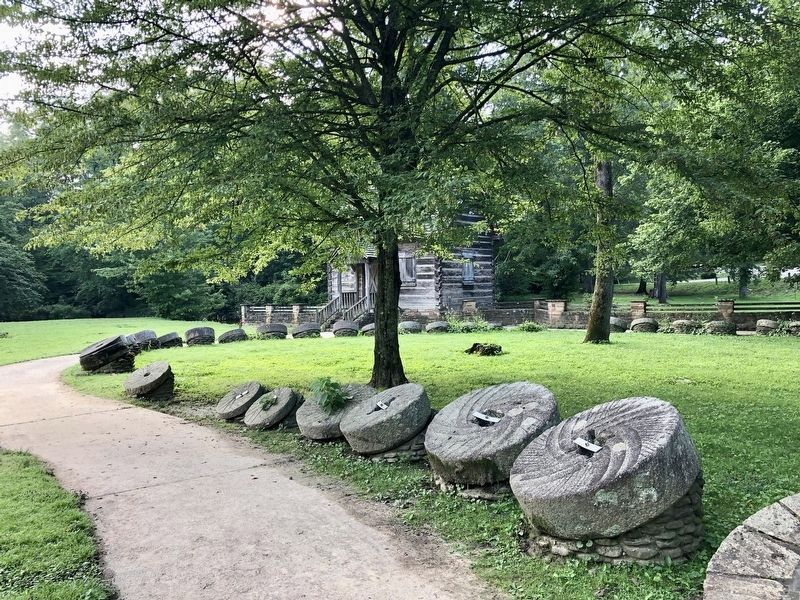
Notice the different styles of dressing patterns on the stones around you. Each was carved into the stones in a very precise and methodical way. Preferred patterns were passed down from one generation of millers to another and the question of which was best was much discussed and argued.
Topics. This historical marker is listed in these topic lists: Industry & Commerce
this page online
Location. 37° 5.05′ N, 84° 3.306′ W. Marker is near London, Kentucky, in Laurel County. It can be reached from Levi Jackson Road (Kentucky Route 1006) west of Mountain Life Museum Road, on the left when traveling west. Located at Levi Jackson Park Mill. Touch for map. Marker is at or near this postal address: Levi Jackson Road, London KY 40744, United States of America. Touch for directions.

Regionally, this marker is in Eastern Kentucky and in the Cumberland Plateau. It is also in the American South, specifically in the Upper South, in Appalachia, and specifically in Southern Appalachia. Globally, it is in North America, the Western Hemisphere, the Western World, and the Anglosphere. Historically, it finds itself in what was once the territory of the Mississippian Culture and also the Antebellum South.
Other nearby markers. At least 8 other markers are within walking distance of this marker: Where did Millstones Come From? (here, next to this marker); Millstones Through The Ages (within shouting distance of this marker);
Credits. This page was last revised on August 18, 2019. It was originally submitted on August 18, 2019, by Mark Hilton of Montgomery, Alabama. This page has been viewed 2,097 times since then and 123 times this year. Photos: 1, 2, 3, 4. submitted on August 18, 2019, by Mark Hilton of Montgomery, Alabama.
