Urbana in Champaign County, Ohio — The American Midwest (Great Lakes)
Dayton, Springfield, and Urbana Electric Railway
Photographed by William Fischer, Jr., November 9, 2008
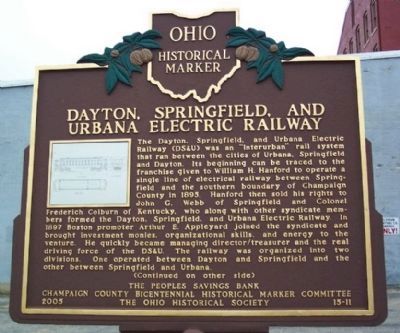
1. Dayton, Springfield, and Urbana Electric Railway Marker (front)
The Dayton, Springfield, and Urbana Electric Railway (DS&U) was an “Interurban” rail system that ran between the cities of Urbana, Springfield and Dayton. Its beginning can be traced to the franchise given to William H. Hanford to operate a single line of electrical railway between Springfield and the southern boundary of Champaign County in 1895. Hanford then sold his rights to John G. Webb of Springfield and Colonel Frederich Colburn of Kentucky, who along with other syndicate members formed the Dayton, Springfield, and Urbana Electric Railway. In 1897 Boston promoter Arthur E. Appleyard joined the syndicate and brought investment monies, organizational skills, and energy to the venture. He quickly became managing director/treasurer and the real driving force of the DS&U. The railway was organized into two divisions. One operated between Dayton and Springfield and the other between Springfield and Urbana.
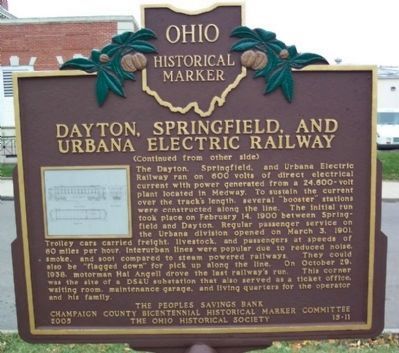
The Dayton, Springfield, and Urbana Electric Railway ran on 600 volts of direct electrical current with power generated from a 24,600-volt plant located in Medway. To sustain the current over the track's length,
this page online
Erected 2005 by The Peoples Savings Bank, Champaign County Bicentennial Historical Marker Committee, and The Ohio Historical Society. (Marker Number 15-11.)
Topics and series. This historical marker is listed in these topic lists: Industry & Commerce • Railroads & Streetcars. In addition, it is included in the Ohio Historical Society / The Ohio History Connection series list. A significant historical date for this entry is February 14, 1900.
Location. 40° 6.429′ N,
Photographed by William Fischer, Jr., November 9, 2008
2. Dayton, Springfield, and Urbana Electric Railway Marker (reverse)

Regionally, this marker is in the Till Plains. It is also in the American Midwest and in the Corn Belt. Globally, it is in North America, the Western Hemisphere, the Western World, and the Anglosphere. Historically, it finds itself in what was once the Haudenosaunee (Iroquois) Confederacy, the territory of the Mississippian Culture, and the Northwest Territory.
Other nearby markers. At least 8 other markers are within walking distance of this marker: The Dayton, Springfield & Urbana Electric Railway (a few steps from this marker); Champaign County Civil War Memorial (about 400 feet away, measured in a direct line); Billy “Single” Clifford / Clifford Theater (about 400 feet away); The Adam Mosgrove House (about 400 feet away); Site of Doolittle's Tavern (about 500 feet away); Simon Kenton (about 500 feet

Drawing by A. W. Maginnis
3. Dayton, Springfield, and Urbana Electric Railway Marker Drawing
The drawing on the marker is by A. W. Maginnis of Lansdale, PA. It appeared in the book The Uncertain Trolley. A history of the Dayton, Springfield and Urbana Electric Railway by Jack Keegan, published in 1992 by Cam-Tech Publishing.
Also see . . . The Uncertain Trolley: A History of the Dayton, Springfield and Urbana Electric Railway. 1992 Ohio Railroad Heritage Series book by Jack Keenan. (Submitted on November 26, 2008.)
Additional commentary.
1. 26,400 Volt Power Plant
Two digits were transposed on the voltage listed on this marker. At that time power was generated in increments of 13,200 volts. Twice that number is 26,400, not the 24,600 volts shown on the marker.
— Submitted February 20, 2009, by Clifford R. Scholes of Beavercreek, Ohio.
2. Railway Name as Shown is in Error
The official name of this railway was the “Dayton, Springfield and Urbana Electric Railway.” There is no comma after the word “Springfield” in the corporate name.
— Submitted February 20, 2009, by Clifford R. Scholes of Beavercreek, Ohio.
Photographed by William Fischer, Jr., November 9, 2008
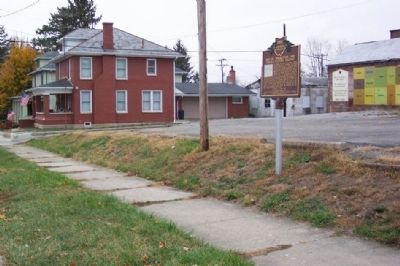
4. Dayton, Springfield, and Urbana Electric Railway Marker
Looking west along Market Street.
Photographed by Craig Doda, September 6, 2025
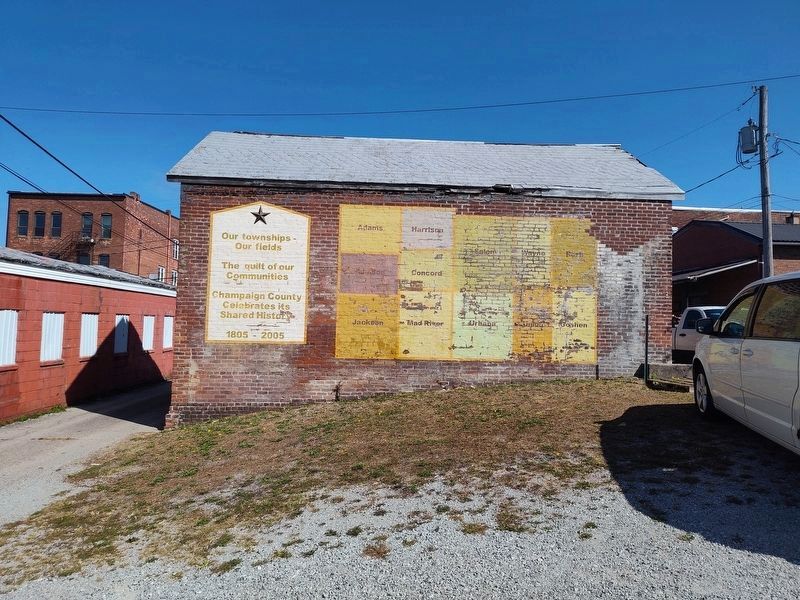
5. Dayton, Springfield, and Urbana Electric Railway Freight Depot
Credits. This page was last revised on September 13, 2025. It was originally submitted on November 23, 2008, by William Fischer, Jr. of Reynoldsburg, Ohio. This page has been viewed 4,284 times since then and 137 times this year. Photos: 1, 2, 3, 4. submitted on November 23, 2008, by William Fischer, Jr. of Reynoldsburg, Ohio. 5. submitted on September 10, 2025, by Craig Doda of Napoleon, Ohio. • Kevin W. was the editor who published this page.
