
Bloomingburg in Sullivan County, New York — The American Northeast (Mid-Atlantic)
Bloomingburgh
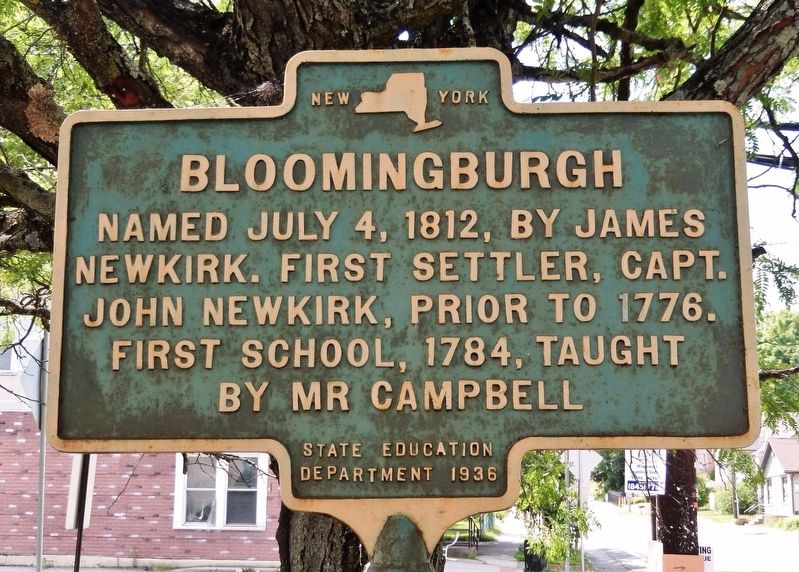
Photographed by Cosmos Mariner, June 29, 2019
1. Bloomingburgh Marker
Erected 1936 by New York State Education Department.
Topics. This historical marker is listed in these topic lists: Colonial Era • Education • Settlements & Settlers. A significant historical date for this entry is July 4, 1812.
Location. 41° 33.253′ N, 74° 26.368′ W. Marker is in Bloomingburg, New York, in Sullivan County. It is on Main Street east of Winterton Road (South Road) (County Route 62), on the right when traveling east. Marker is located beside the sidewalk, near the southeast corner of the intersection. Touch for map. Marker is at or near this postal address: 3 Winterton Road, Bloomingburg NY 12721, United States of America. Touch for directions.

Regionally, this marker is in Upstate New York and in the Hudson Valley. It is also in the American Northeast, in the Mid-Atlantic, in Appalachia, and specifically in Northern Appalachia. Globally, it is in North America, the Western Hemisphere, the Western World, and the Anglosphere. Historically, it finds itself in what
this page online
Other nearby markers. At least 8 other markers are within 3 miles of this marker, measured as the crow flies: Corner Post of Inn Burned on Feb. 24, 1922 (within shouting distance of this marker); Dutch Reformed Church (approx. 0.2 miles away); Rear-Admiral Silas Horton Stringham (approx. 0.3 miles away); Wurtsboro (approx. 2.6 miles away); Canal Bridge (approx. 2.6 miles away); Canal Office (approx. 2.6 miles away); Original Snubbing (approx. 2.6 miles away); a different marker also named Wurtsboro (approx. 2.6 miles away). Touch for a list and map of all markers in Bloomingburg.
Also see . . . Bloomingburg, New York (Wikipedia). Bloomingburg, previously Bloomingburgh, was the first county seat of Sullivan County. It prospered, first, as a center of commerce along the Newburgh–Cochecton Turnpike, then as a railway town serving vacationers in the mountains. Many guesthouses in the village were not rebuilt after the devastating fire of February 1922, and the village has been primarily an agricultural center ever since. (Submitted on August 31, 2019, by Cosmos Mariner of Cape Canaveral, Florida.)
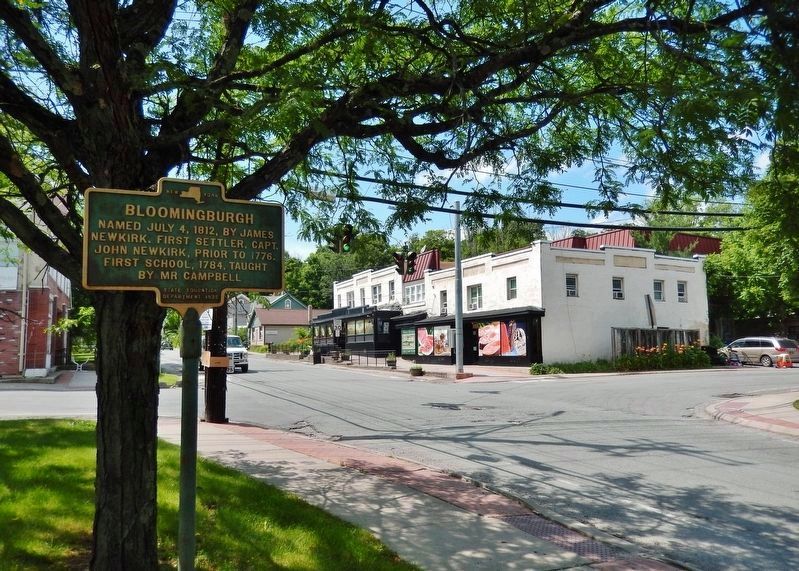
Photographed by Cosmos Mariner, June 29, 2019
2. Bloomingburgh Marker
(wide view looking west along Main Street)
(wide view looking west along Main Street)
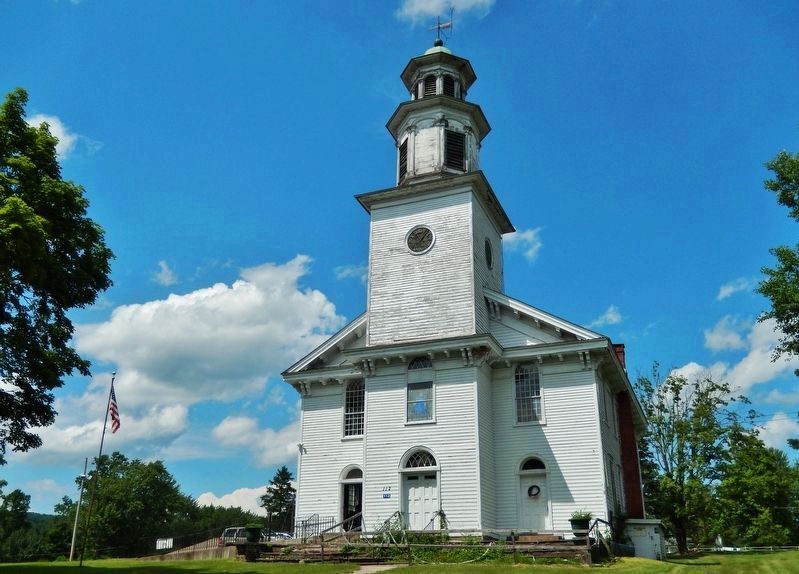
Photographed by Cosmos Mariner, June 29, 2019
3. Bloomingburg Dutch Reformed Church
(also Bloomingburg Reformed Protestant Dutch Church)
(also Bloomingburg Reformed Protestant Dutch Church)
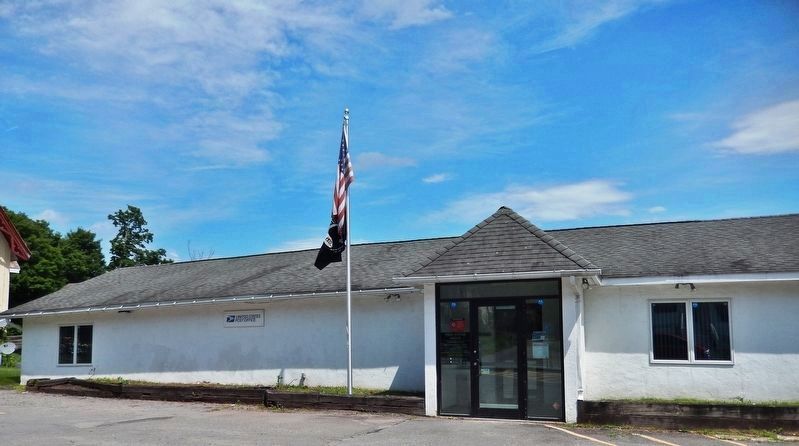
Photographed by Cosmos Mariner, June 29, 2019
4. U.S. Post Office Bloomingburg, New York
Credits. This page was last revised on August 31, 2019. It was originally submitted on August 30, 2019, by Cosmos Mariner of Cape Canaveral, Florida. This page has been viewed 840 times since then and 111 times this year. Photos: 1. submitted on August 30, 2019, by Cosmos Mariner of Cape Canaveral, Florida. 2, 3, 4. submitted on August 31, 2019, by Cosmos Mariner of Cape Canaveral, Florida.
