Nazareth in Jezreel, Northern District, Israel — West Asia (the Levant in the Middle East)
Byzantine Mosaics
Photographed by Dale K. Benington, April 4, 2019
1. Byzantine Mosaics Marker
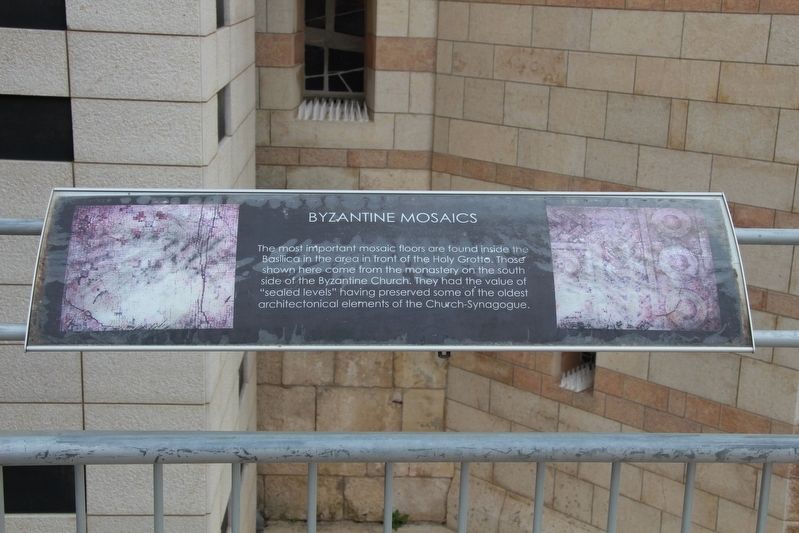
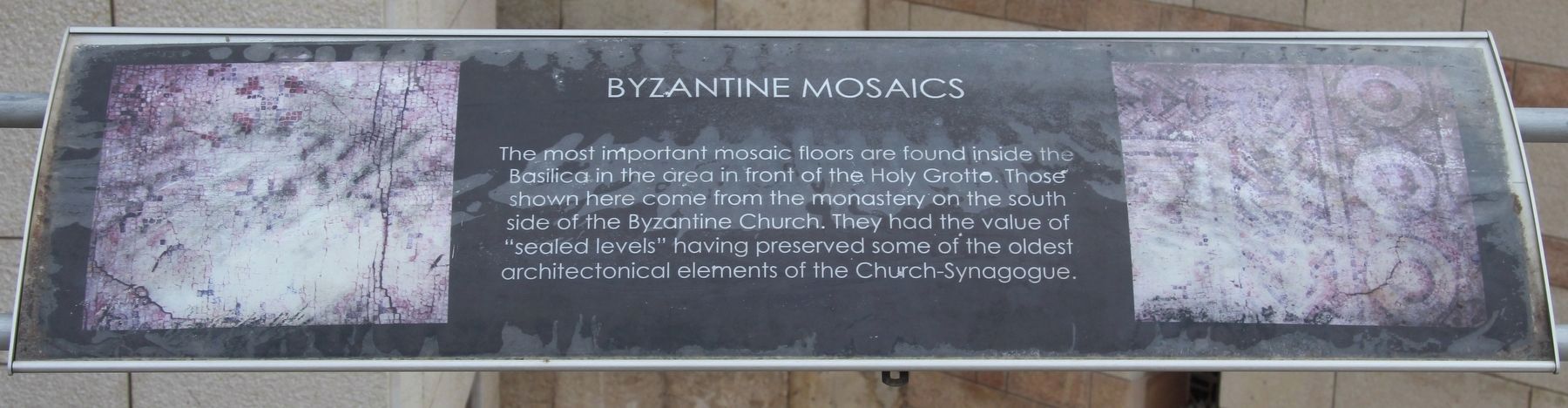
The most important mosaic floors are found inside the Basilica in the area in front of the Holy Grotto. Those shown here come from the monastery on the south side of the Byzantine Church. They had the value of "sealed levels" having preserved some of the oldest architectonical elements of the Church-Synagogue.
Topics. This historical marker is listed in these topic lists: Architecture • Religion & Religious Structures.
Location. 32° 42.138′ N, 35° 17.855′ E. Marker is in Nazareth, Northern District, in Jezreel. It can be reached from Al-Bishara Street just north of Paulus ha-Shishi Street, on the right when traveling north. This marker is located on the grounds of the Basilica of the Annunciation. Touch for map. Marker is at or near this postal address: Al-Bishara Street 12, Nazareth, Northern District, Israel. Touch for directions.

Regionally, it is in Asia, specifically in West Asia, in the Middle East, in The Levant, on the Red Sea, in a coastal Mediterranean country, and in the Western World. Historically, it finds itself in what was once the Byzantine
this page online
Other nearby markers. At least 8 other markers are within 14 kilometers of this marker, measured as the crow flies: Architectural Elements of the Church-Synagogue (a few steps from this marker); The Ancient Village of Nazareth (a few steps from this marker); Basilica of the Annunciation (a few steps from this marker); The Church of St. Joseph (about 120 meters away, measured in a direct line); Mount of Precipice (approx. 2.4 kilometers away); The Citadel (approx. 5.9 kilometers away); The Theater (approx. 5.9 kilometers away); Ancient Yodfat (approx. 14.6 kilometers away). Touch for a list and map of all markers in Nazareth.
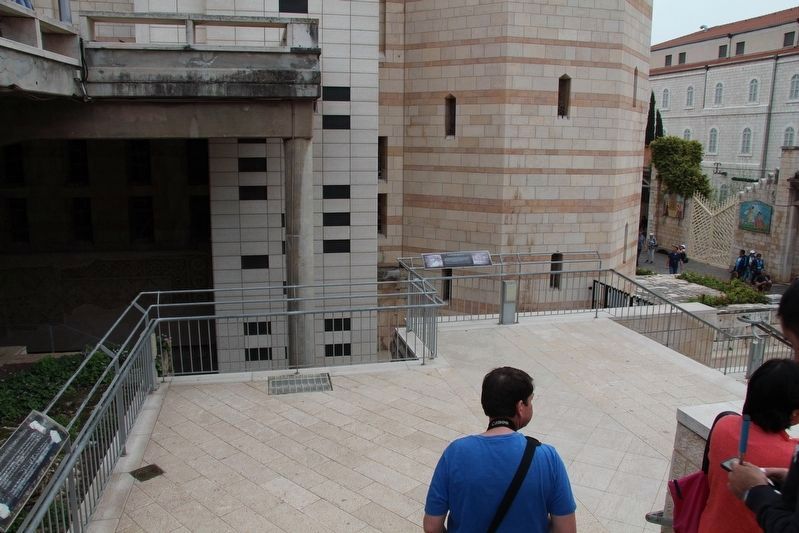
More about this marker. This marker is situated along the backside (north side) of the basilica, and is attached to the railing along the outside steps, that come down from the back, elevated plaza, and allows visitors to see the archaeological ruins beneath the basilica's plaza. In fact, it is part of a modest display of an archaeological excavation, that is covered by the upper level outdoor plaza of the basilica.
Photographed by Dale K. Benington, April 4, 2019
2. Byzantine Mosaics Marker
A close-up view of the text and displays on the marker.
Photographed by Dale K. Benington, April 4, 2019
3. Byzantine Mosaics Marker
A distant view of the marker, attached to the railing of the walkway, that enables visitor's to get from the elevated plaza to the ground level entrance to the basilica.
Photographed by Dale K. Benington, April 4, 2019
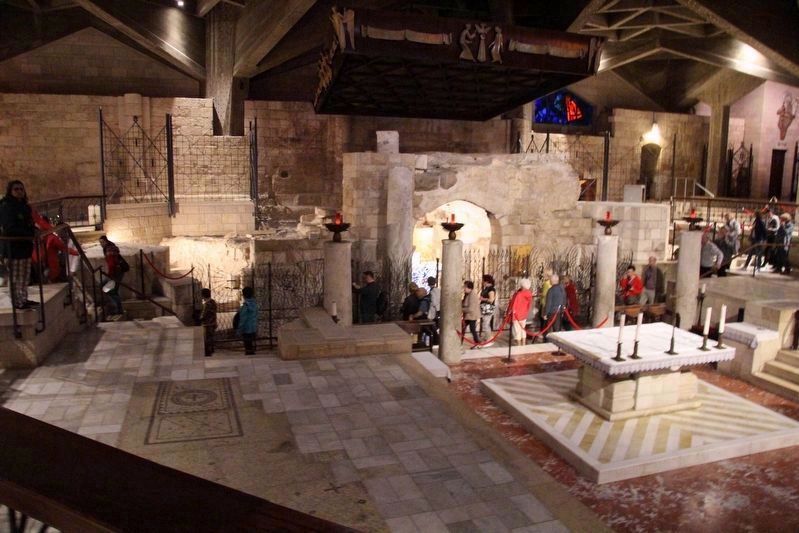
4. Byzantine Mosaics that are Inside Basilica
View of the mosaic floors (left-center side of picture) that are found inside the Basilica in the area in front of the "Holy Grotto." This was referenced in the text of this marker.
Photographed by Dale K. Benington, April 4, 2019
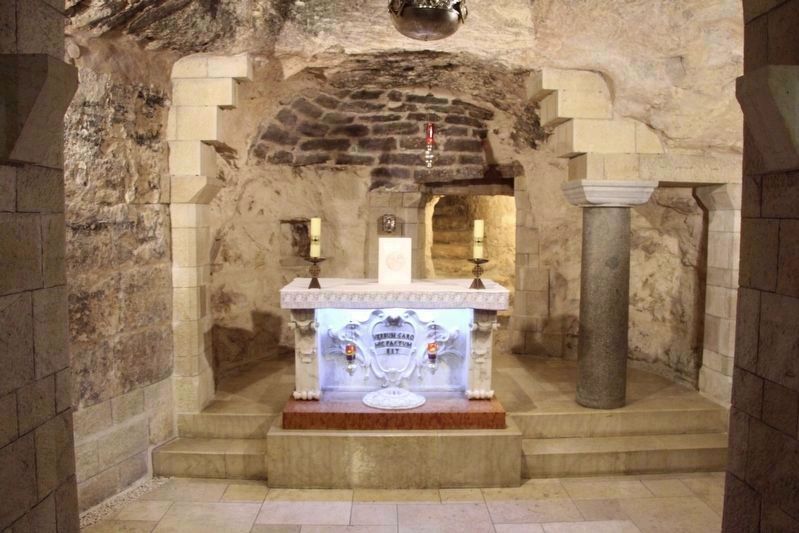
5. the "Holy Grotto"
View of the "Holy Grotto," that is referenced in the text of this marker.
Credits. This page was last revised on March 16, 2026. It was originally submitted on September 9, 2019, by Dale K. Benington of Toledo, Ohio. This page has been viewed 3,180 times since then and 2,887 times this year. Photos: 1, 2, 3, 4, 5. submitted on September 9, 2019, by Dale K. Benington of Toledo, Ohio.
