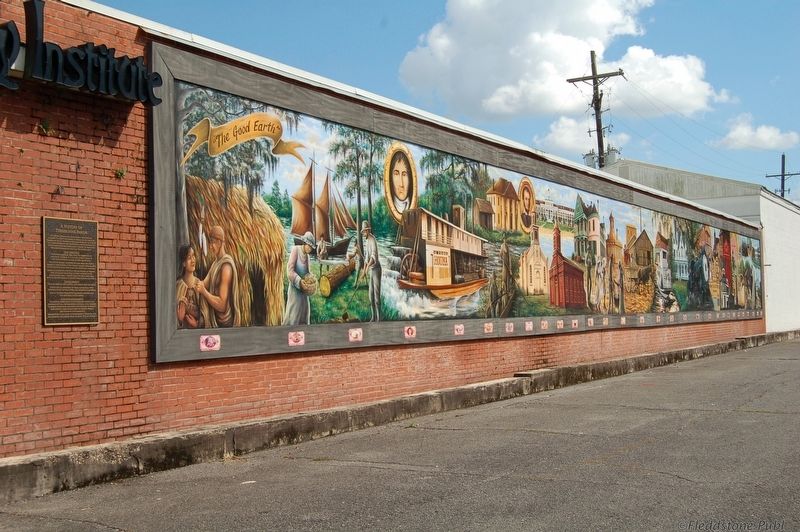
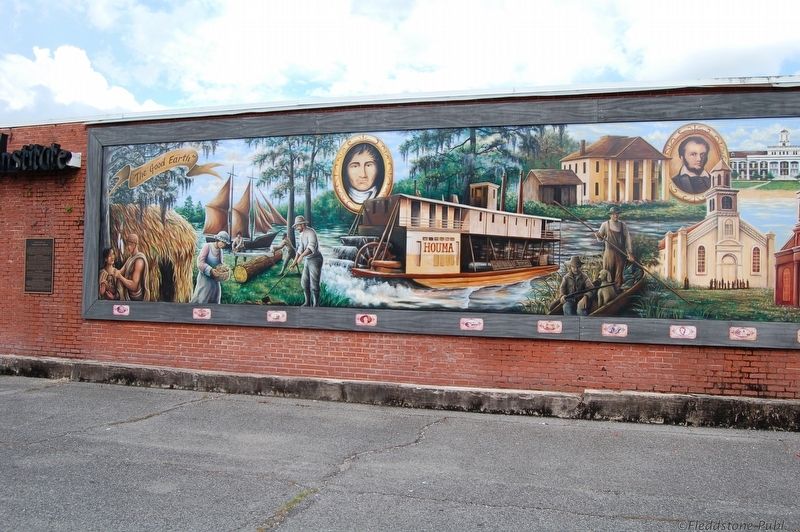
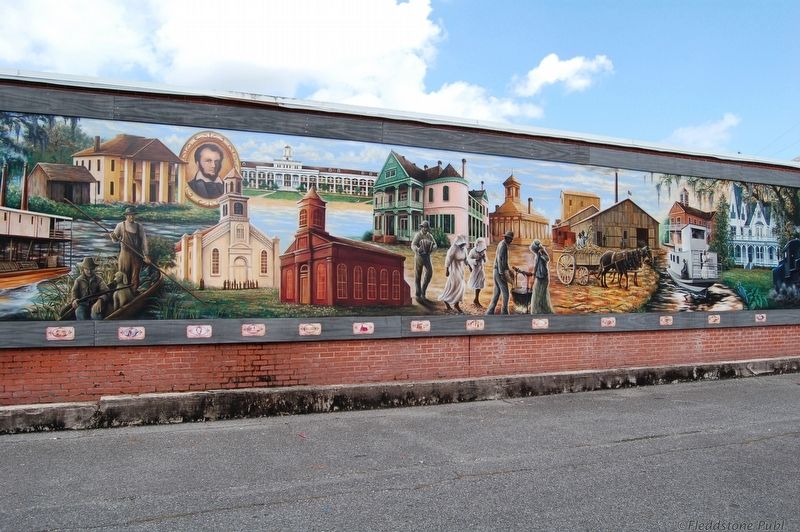
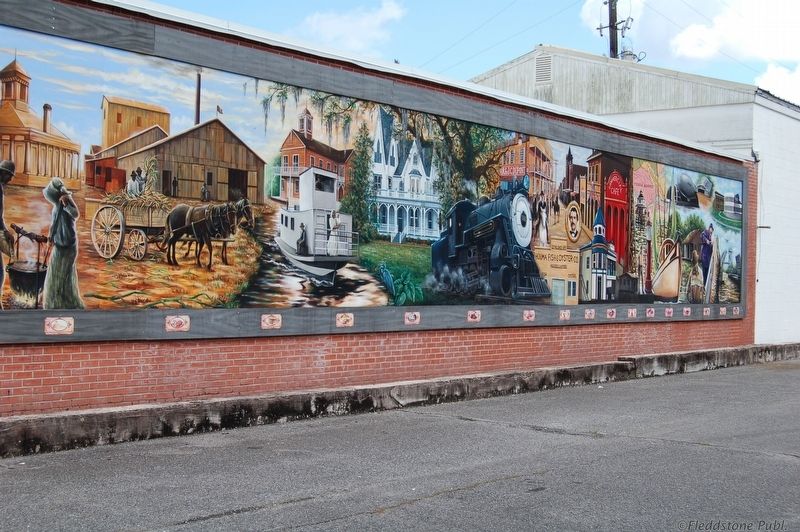
A History of Terrebonne Parish
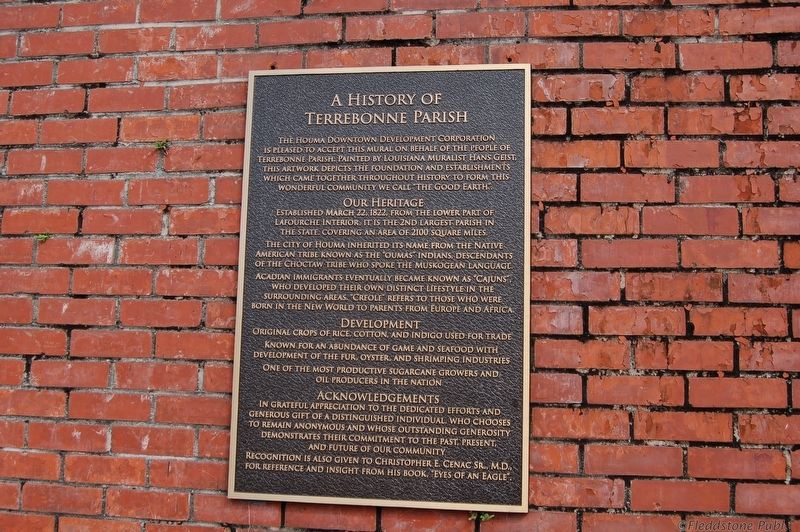
Our Heritage
Established March 22 1822, from the lower part of
Lafourche interior, it is the 2nd largest parish in
the state, covering an area of 2100 square miles.
The City of Houma inherited its name from the Native
American tribe known as the "Oumas” Indians, descendants
of the Choctaw tribe who spoke the Muskogean language.
Acadian immigrants eventually became known as "Cajuns"
who developed their own distinct lifestyle in the
surrounding areas. "Creole" refers to those who were
born in the new world to parents from Europe and Africa.
Development
Original crops of rice, cotton, and indigo used for trade.
Known for an abundance of game and seafood with
development of the fur, oyster, and shrimping industries.
One of the most productive sugarcane growers and
oil producers in the nation.
Acknowledgements
In
this page online
Topics. This historical marker is listed in this topic list: Political Subdivisions.
Location. 29° 35.865′ N, 90° 43.189′ W. Marker is in Houma, Louisiana, in Terrebonne Parish. It is on West Main Street south of Roussell Street, on the right when traveling south. Touch for map. Marker is in this post office area: Houma LA 70364, United States of America. Touch for directions.

Regionally, this marker is in Acadiana — Cajun Country and specifically in Bayou Country. It is also in the American South, specifically in the Deep South, and on the Gulf Coast. Globally, it is in North America, a Gulf of Mexico state, the Western Hemisphere, the Western World, and the Anglosphere. Historically, it finds itself in what
Other nearby markers. At least 8 other markers are within walking distance of this marker: Bayou Terrebonne (about 300 feet away, measured in a direct line); When Oysters Were King (about 300 feet away); The Great Acadian Upheaval (about 300 feet away); The Grand Dérangement / Le Grand Dérangement (about 400 feet away); New Acadia / Nouvelle Acadie (about 400 feet away); 1834-1934 (about 700 feet away); Terrebonne Parish Courthouse Square Oaks (about 800 feet away); Magnolia Cemetery (approx. 0.2 miles away). Touch for a list and map of all markers in Houma.
Another marker is no longer nearby. St. Matthew's Episcopal Church (was about 500 feet away but has been confirmed missing).
Credits. This page was last revised on May 10, 2023. It was originally submitted on October 2, 2019, by Cajun Scrambler of Assumption, Louisiana. This page has been viewed 1,143 times since then and 99 times this year. Photos: 1, 2, 3, 4, 5. submitted on October 2, 2019, by Cajun Scrambler of Assumption, Louisiana.
