Near Chinook in Blaine County, Montana — The American West (Mountains)
McWhorter Stakes
Bear Paw Battlefield
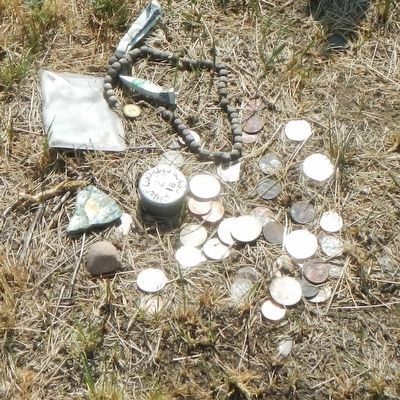
Photographed by Barry Swackhamer, August 15, 2019
1. Chief Looking Glass 2 / 18 stake
Erected by L.V. McWhorter, Yellow Wolf, White Hawk, Black Eagle, Many Wounds, Peo Peo Tholekt et al.
Topics. This memorial is listed in this topic list: Wars, US Indian. A significant historical date for this entry is September 30, 1877.
Location. 48° 22.787′ N, 109° 12.521′ W. Memorial is near Chinook, Montana, in Blaine County. It can be reached from Cleveland Road (Montana Route 240) near S-B Road. Touch for map. Memorial is in this post office area: Chinook MT 59523, United States of America. Touch for directions.

Regionally, this memorial is in Missouri River Country. It is also in the American Mountain West, in the Lewis & Clark Corridor, on the prairies, on the Great Plains, and specifically on the Northern Plains. Globally, it is in North America, the Western Hemisphere, the Western World, and the Anglosphere. Historically, it finds itself in what was once Rupert’s Land and also the Louisiana Purchase.
Other nearby markers. At least 8 other markers are within walking distance of this marker: Brave Warriors Chief Joseph's Band (here, next to this marker); No Place to Hide (a few steps from this marker); Nez Perce Encampment
this page online
More about this memorial. About 150 stakes are located on the Bear Paw Battlefield.
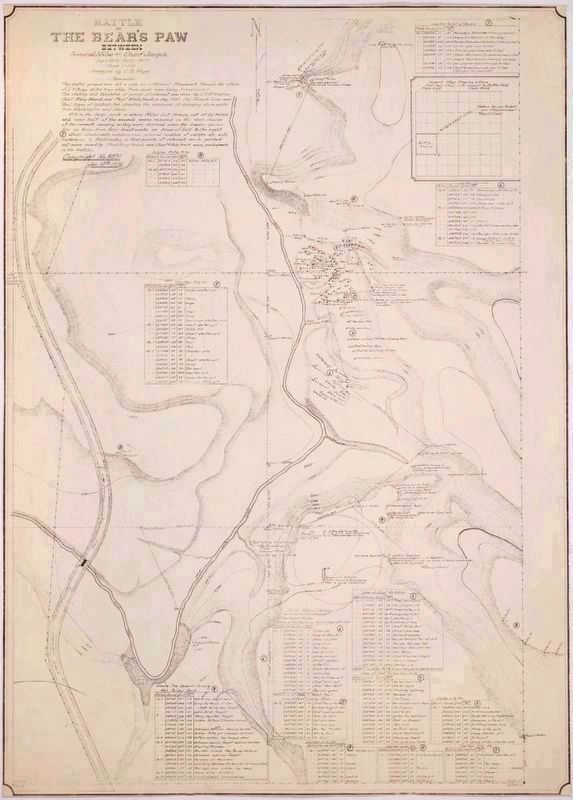
Regarding McWhorter Stakes. "...One of the easiest ways to explain the (McWhorter) markers is to show the Noyes Map. However, what I have is a large format paper copy. Thankfully we found that Montana State has a digital copy on their Montana Memory Project website.
https://cdm16013.contentdm.oclc.org/digital/collection/p15018coll5/id/173
The original markers were wooden stakes. Yellow Wolf, White Hawk, Black Eagle, Many Wounds, and Peo Peo Tholekt, all survivors of the war returned with McWhorter a couple of times in the 20s and 30s to place the markers. They marked what was significant in their memory; where people camped before the attack, where people fought during the
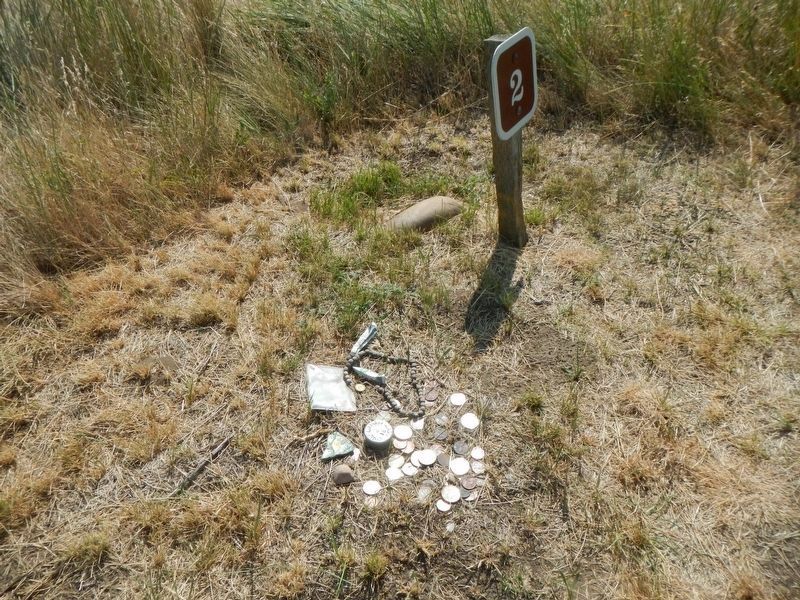
Photographed by Barry Swackhamer, August 15, 2019
2. Chief Looking Glass 2 / 18 stake
Between the battle and those folks returning, the new settlers in the area worked to ensure that the battlefield was preserved. The local surveyor, C.R. Noyes, produced a survey map of the entire battlefield in the 30s incorporating the stakes placed by the Nez Perce and surveying the soldier positions. They probably worked together on a couple of occasions but that is just my own speculation, I cannot recall if I've read that.
The metal stakes replaced the original markers. Noyes marked over 150 spots on his survey map. I believe the numbers on the stakes denote the survey station on top, and the stake number on the bottom. There are legends on his map for what each stake marks.
There are a few spots where you can still find a wooden stake burned down to ground level near the survey markers." -- Casey Overturf, Lead Ranger, Bear Paw Battlefield, Nez Perce National Historic Park
Also see . . .
1. Commemoration and Preservation: An Administrative History of Big Hole National Battle. Internet Archive website entry
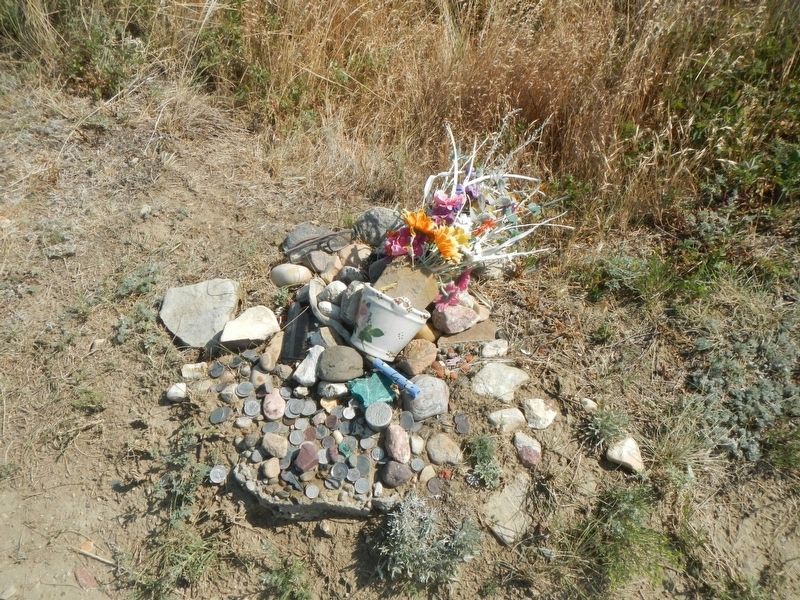
Photographed by Barry Swackhamer, August 15, 2019
3. Looking Glass Killed 6 / 116 stake
2. Lucullus Virgil McWhorter. Lucullus Virgil McWhorter McWhorter.gif Born January 29, 1860 Harrison County, West Virginia Died October 10, 1944 Prosser (North Yakima), Washington Occupation Farmer, Writer, Native-American-civil-rights advocate Language English Nationality US Education Self-educated Genre History, Anthropology Subject Nez Perce War, Yakama Nation's culture and spiritualism, Nez Perce culture Notable works Hear Me, My Chiefs Yellow Wolf, His Own Story Notable awards Was given a name by the Yakama Nation, "Big Foot".[1] Adopted into the Yakima Nation and given another name, Hemene Ka-Wan (Old Wolf).[2] Spouse Adelia A. Swisher (married 1883)[1] C. Annie Bowman (married 1895)[1] Children Ovid Tullius McWhorter (born 1884)[1] Iris Oresta McWhorter (born 1886)[1] Virgil Oneco McWhorter (born 1888)[1] Lucullus Virgil McWhorter ... was an American farmer and frontiersman who documented the historical Native American tribes in West Virginia and the modern-day Plateau Native Americans in Washington state. ...he moved
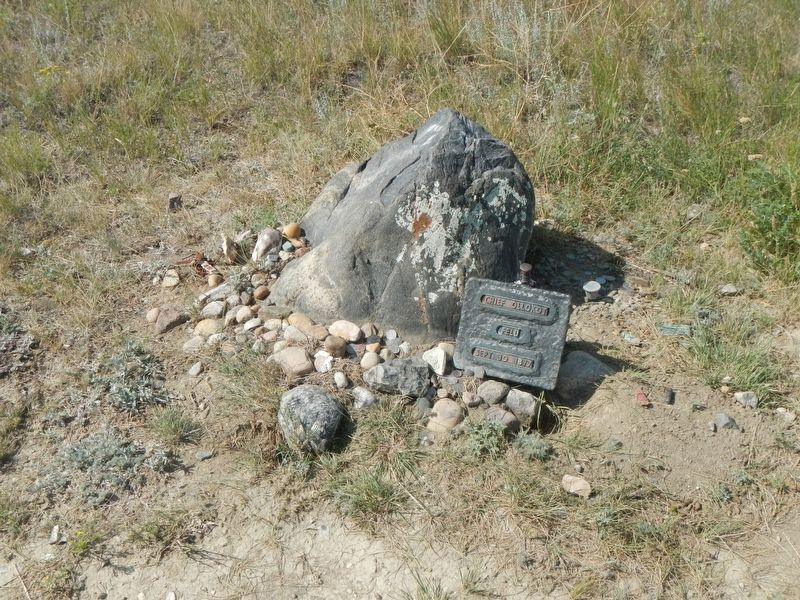
Photographed by Barry Swackhamer, August 15, 2019
4. Chief Ollokot Fell September 30 1877 (stake 6 / 117)
Photographed by Barry Swackhamer, August 15, 2019
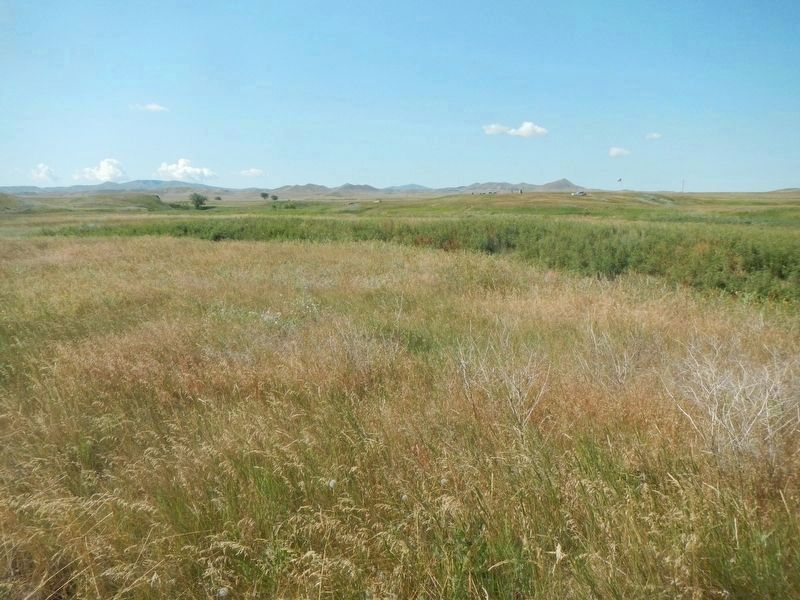
5. Bear Paw Battlefield
Photographed by Montana Memory Project
6. Noyes Map of the Bear Paw Battlefield
Go to the website for the best copy of this map.
Photographed by Unknown
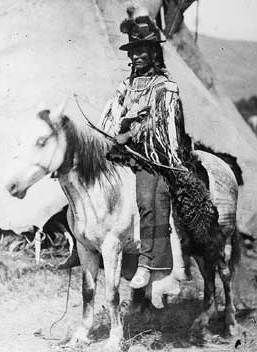
7. Chief Looking Glass
Photographed by Unknown
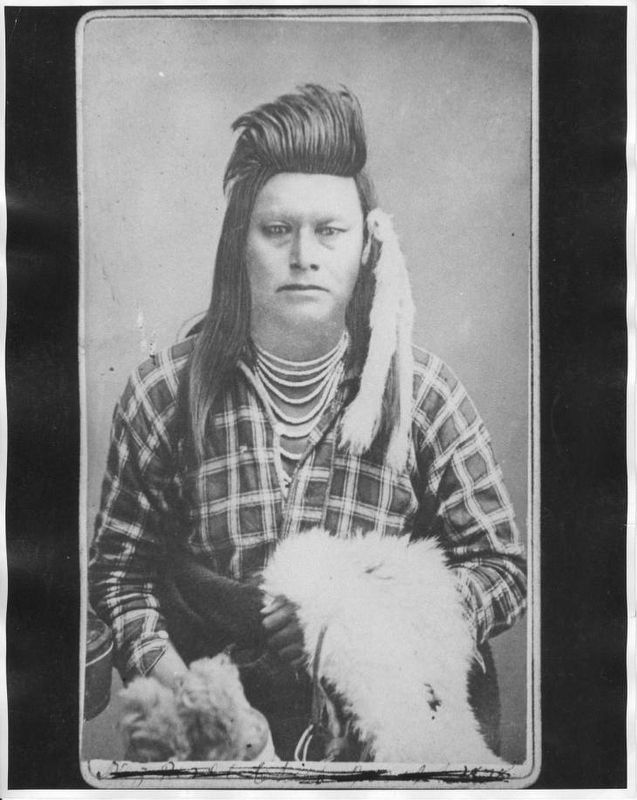
8. Chief Ollokot
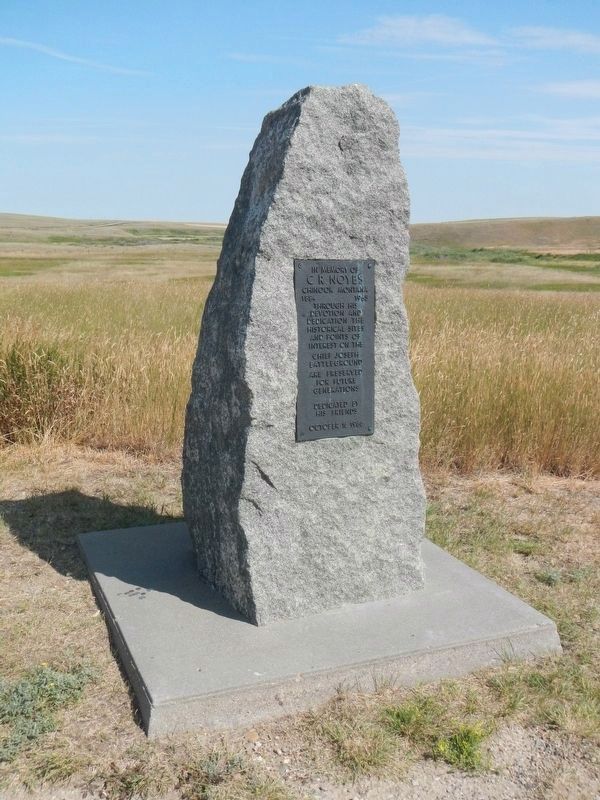
Photographed by Barry Swackhamer, August 15, 2019
9. C.R. Noyers Monument
C.R. Noyers
Chinook Montana
1884 - 1965
Through his devotion and dedication the historical site and points of interest on the
Chief Joseph Battlefield
are preserved for future generations.
Dedicated by his friends
October 16, 1966
Photographed by Unknown
10. Lucullus V. McWhorter
Credits. This page was last revised on November 10, 2025. It was originally submitted on November 15, 2019, by Barry Swackhamer of Brentwood, California. This page has been viewed 616 times since then and 78 times this year. Photos: 1, 2, 3, 4, 5, 6. submitted on November 15, 2019, by Barry Swackhamer of Brentwood, California. 7, 8, 9. submitted on November 20, 2019, by Barry Swackhamer of Brentwood, California. 10. submitted on November 16, 2019, by Barry Swackhamer of Brentwood, California.
