Great Falls in Cascade County, Montana — The American West (Mountains)
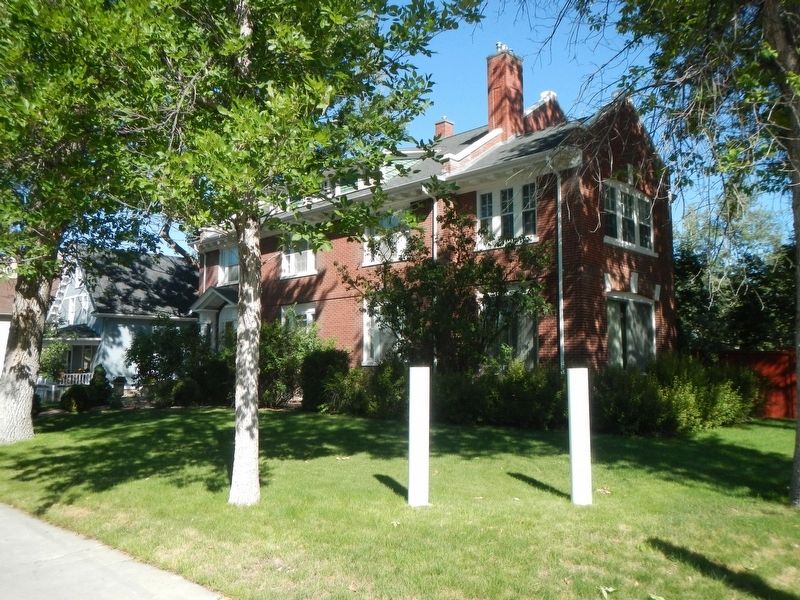
W.K. Floweree House
Northside Residential Historic District
Photographed by Barry Swackhamer, August 19, 2019
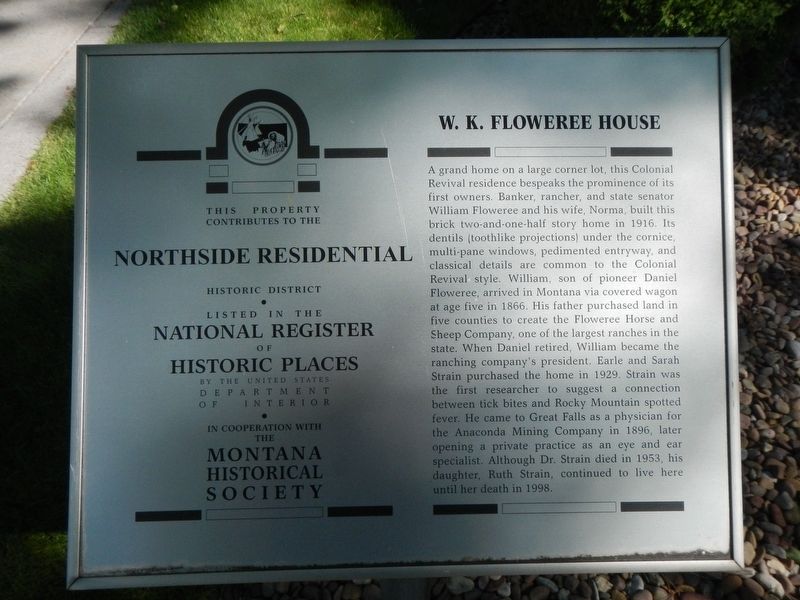
1. W.K. Floweree House Marker
Inscription.
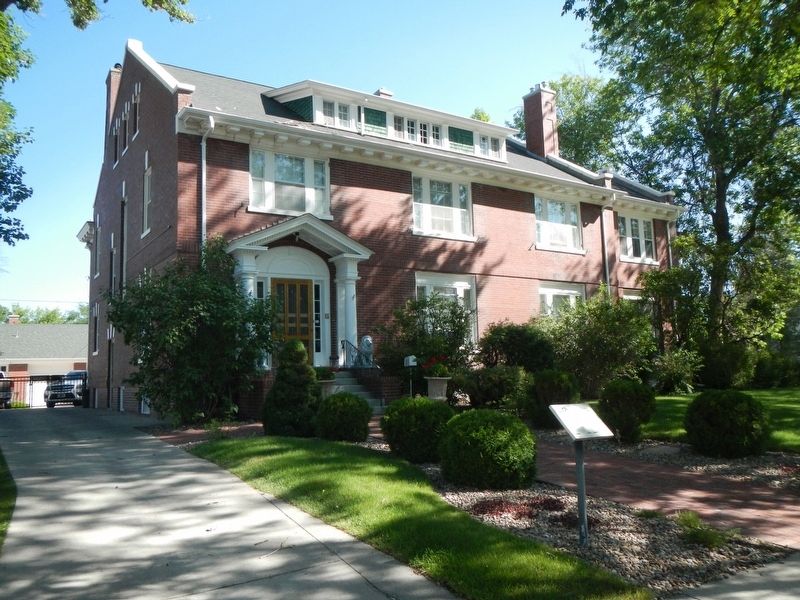
W.K. Floweree House. Northside Residential Historic District. A grand home on a large corner lot, this Colonial Revival residence bespeaks the prominence of its first owners. Banker, rancher, and state senator William Floweree and his wife, Norma, built this brick two-and-one-half-story home in 1916. Its dentils (toothlike projections) under the cornice, multi-pane windows, pedimented entryway, and classical details are common to the Colonial Revival style. William, son of pioneer Daniel Floweree, arrived in Montana via covered wagon at age five in 1866. His father purchased land in five counties to create the Floweree Horse and Sheep Company, one of the largest ranches in the state. When Daniel retired, William became the ranching companys president. Earle and Sarah Strain purchased the home in 1929. Strain was the first researcher to suggest a connection between tick bites and Rocky Mountain spotted fever. He came to Great Falls as a physician for the Anaconda Mining Company in 1896, later opening a private practice as an eye and ear specialist. Although Dr. Strain died in 1953, his daughter, Ruth Strain, continued to live here until her death in 1998.
A grand home on a large corner lot, this Colonial Revival residence bespeaks the prominence of its first owners. Banker, rancher, and state senator William Floweree and his wife, Norma, built this brick two-and-one-half-story home in 1916. Its dentils (toothlike projections) under the cornice, multi-pane windows, pedimented entryway, and classical details are common to the Colonial Revival style. William, son of pioneer Daniel Floweree, arrived in Montana via covered wagon at age five in 1866. His father purchased land in five counties to create the Floweree Horse and Sheep Company, one of the largest ranches in the state. When Daniel retired, William became the ranching companys president. Earle and Sarah Strain purchased the home in 1929. Strain was the first researcher to suggest a connection between tick bites and Rocky Mountain spotted fever. He came to Great Falls as a physician for the Anaconda Mining Company in 1896, later opening a private practice as an eye and ear specialist. Although Dr. Strain died in 1953, his daughter, Ruth Strain, continued to live here until her death in 1998.
Location. 47° 30.587′ N, 111° 17.539′ W. Marker is in Great Falls, Montana, in Cascade County. It is on 4th Avenue North near 9th Street North, on the right when traveling west. Touch for map. Marker is at or near this postal address: 825 4th Avenue North, Great Falls MT 59401, United States of America. Touch for directions.

Regionally, this marker is in andspecifically entral Montana in Russell Country. It is also in the American Mountain West and in the Lewis & Clark Corridor. Globally, it is in North America, the Rocky Mountains, the Western Hemisphere, the Western World, and the Anglosphere. Historically, it finds itself in what was once Ruperts Land and also the Louisiana Purchase.
Other nearby markers. At least 8 other markers are within walking distance of this marker: C.E. Davis Residence
Credits. This page was last revised on December 19, 2020. It was originally submitted on December 25, 2019, by Barry Swackhamer of Brentwood, California. This page has been viewed 421 times since then and 22 times this year. Photos:1, 2, 3. submitted on December 25, 2019, by Barry Swackhamer of Brentwood, California.