Near Helper in Carbon County, Utah — The American Mountains (Southwest)
Castle Gate Mine Disaster
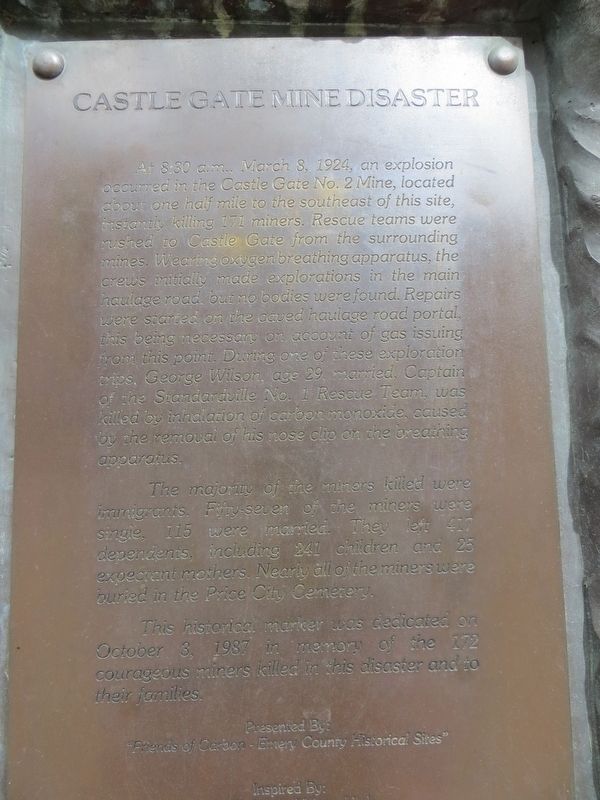
Photographed by Bill Kirchner, September 30, 2018
1. Castle Gate Mine Disaster Marker
The majority of the miners killed were immigrants. Fifty-seven of the miners were single, 115 were married. They left 417 dependents, including 241 children and 25 expectant mothers. Nearly all of the miners were buried in the Price City Cemetery.
This historical marker was dedicated on October 3, 1987 in memory of the 172 courageous miners killed in this disaster and to their families.
Erected 1987 by Friends
this page online
Topics. This historical marker is listed in this topic list: Disasters. A significant historical date for this entry is March 8, 1924.
Location. 39° 43.917′ N, 110° 52.228′ W. Marker is near Helper, Utah, in Carbon County. It is on U.S. 6 half a mile north of U.S. 191, on the right when traveling north. Touch for map. Marker is in this post office area: Helper UT 84526, United States of America. Touch for directions.

Regionally, this marker is in Canyon Country. It is also in the American Mountain West, on the Colorado Plateau, and at the Four Corners. Globally, it is in North America, the Western Hemisphere, the Western World, and the Anglosphere. Historically, it finds itself in what was once New Spain and also Mexico’s Alta California.

Other nearby markers. At least 8 other markers are within 4 miles of this marker, measured as the crow flies: Willow Creek Mine Explosion (a few steps from this marker); Utah's Coal Industry (within shouting distance of this marker); Carbon Plant (within shouting distance of this marker); Pleasant Valley Coal Company (within shouting distance of
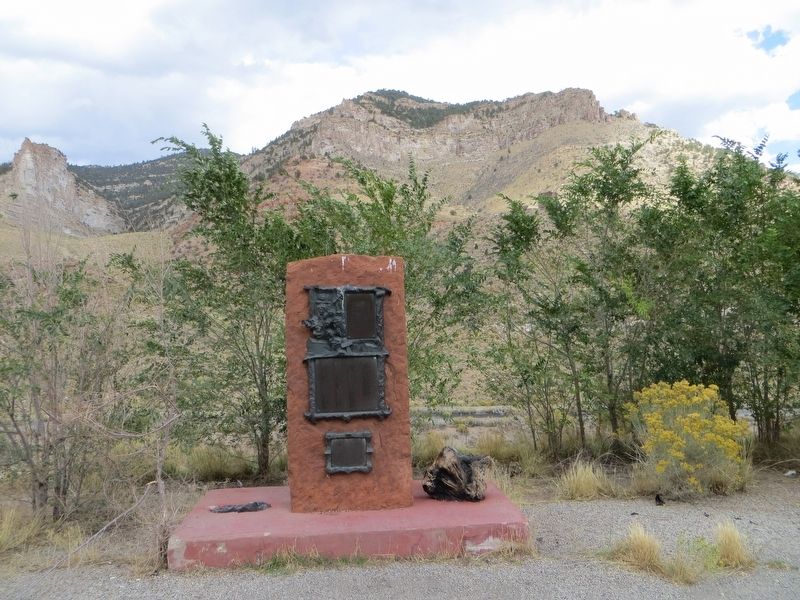
Photographed by Bill Kirchner, September 30, 2018
2. Castle Gate Mine Disaster Marker
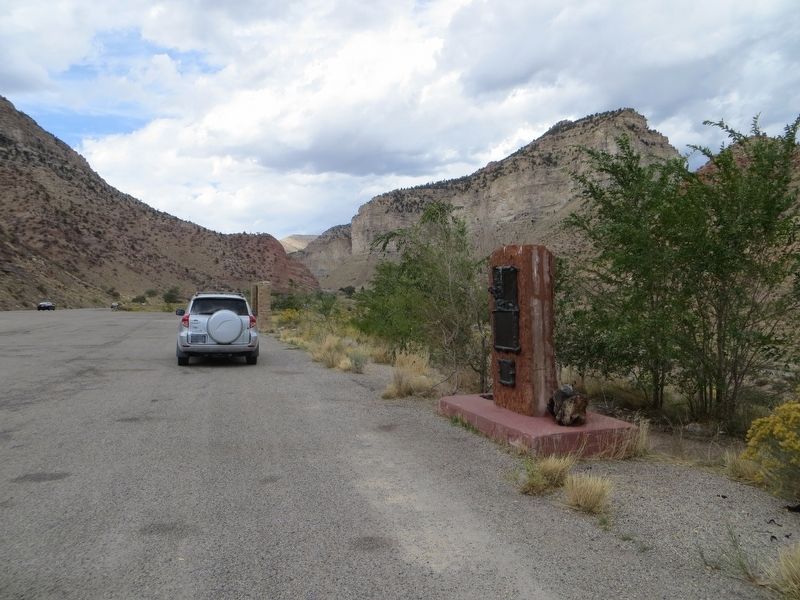
Photographed by Bill Kirchner, September 30, 2018
3. Castle Gate Mine Disaster Marker
Credits. This page was last revised on April 16, 2020. It was originally submitted on April 16, 2020, by Bill Kirchner of Tucson, Arizona. This page has been viewed 850 times since then and 51 times this year. Photos: 1, 2, 3. submitted on April 16, 2020, by Bill Kirchner of Tucson, Arizona.
