University of Tennessee in Knoxville in Knox County, Tennessee — The American South (East South Central)
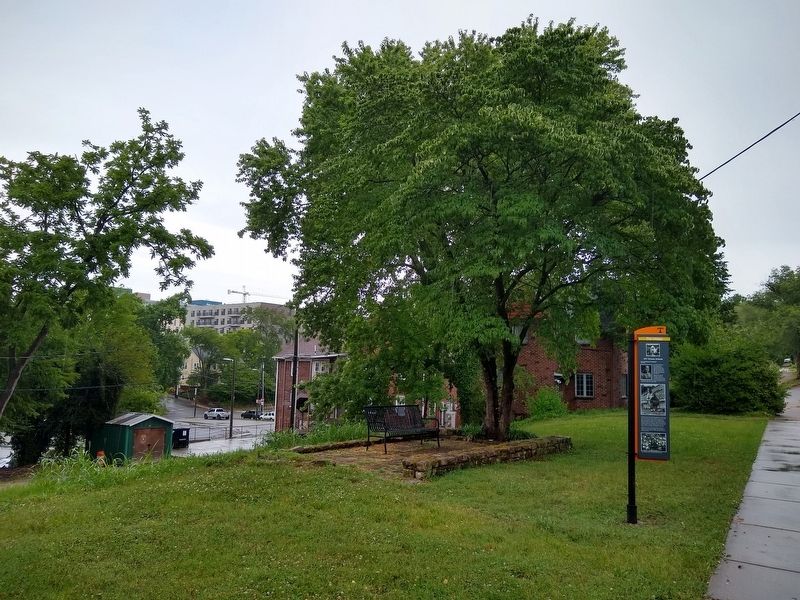
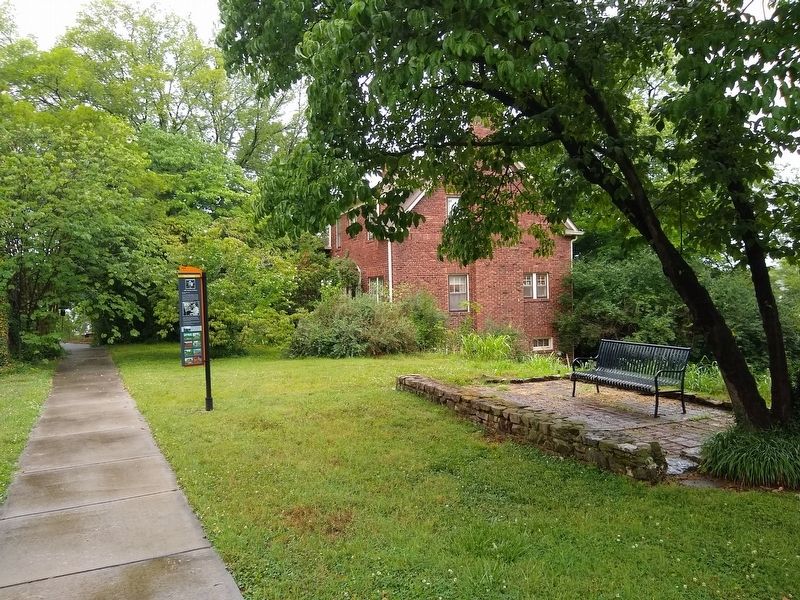
2111 Terrace Avenue
The Village
Photographed by Tom Bosse, June 28, 2020
1. 2111 Terrace Avenue Marker
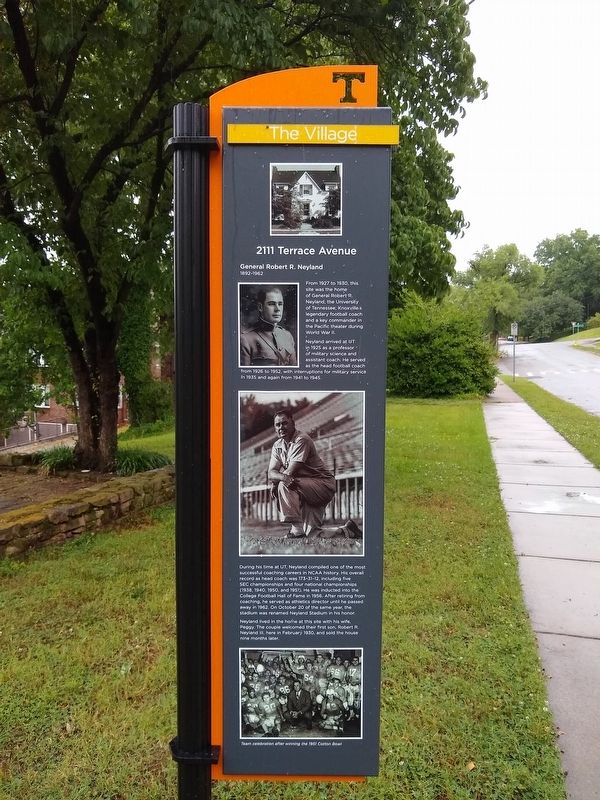
General Robert R. Neyland
1892~1962
From 1927 to 1930, this site was the home of General Robert R. Neyland, the University of Tennessee, Knoxville’s legendary football coach and a key commander in the Pacific theater during World War II.
Neyland arrived at UT in 1925 as a professor of military science and assistant coach. He served as the head football coach from 1926 to 1952, with interruptions for military service in 1935 and again from 1941 to 1945.
During his time at UT, Neyland compiled one of the most successful coaching careers in NCAA history. His overall record as head coach was 173-31-12, including five SEC championships and four national championships (1938, 1940, 1950, and 1951). He was inducted into the College Football Hall of Fame in 1956. After retiring from coaching, he served as athletics director until he passed away in 1962. On October 20 of the same year, the stadium was renamed Neyland Stadium in him honor.
Neyland lived in the home at this site with his wife, Peggy. The couple welcomed their first son, Robert R. Neyland III, here in February 1930, and sold the house nine months later.
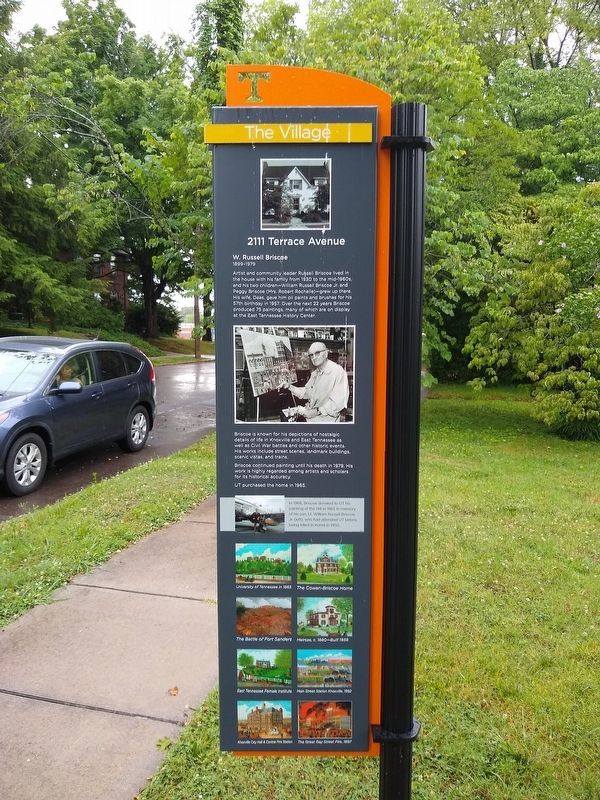
W. Russell Briscoe
1899-1979
Artist
this page online
Briscoe is known for his depictions of nostalgic details of life in Knoxville and East Tennessee as well as Civil War battles and other historic events. His works include street scenes, landmark buildings, scenic vistas, and trains.
Briscoe continued painting until his death in 1979. His work is highly regarded among artists and scholars for its historical accuracy.
UT purchased the home in 1965.
[Caption:]
In 1968, Briscoe donated to UT his painting of the Hill in 1865 in memory of his son, Lt. William Russell Briscoe Jr. (left), who had attended UT before being killed in Korea in 1950.
Topics. This historical marker is listed in these topic lists: Arts, Letters, Music • Education • Sports. A significant historical month for this entry is February 1930.
Location. 35° 57.142′ N,
Photographed by Tom Bosse, June 28, 2020
2. 2111 Terrace Avenue Marker

Regionally, this marker is in East Tennessee. It is also in the American South, specifically in the Upper South, in Appalachia, and specifically in Southern Appalachia. Globally, it is in North America, the Western Hemisphere, the Western World, and the Anglosphere. Historically, it finds itself in what was once the original Cherokee Nation, the territory of the Mississippian Culture, one of the Confederate States of America, and the Antebellum South.
Other nearby markers. At least 8 other markers are within walking distance of this marker: Votes for Women (approx. 0.3 miles away); Fort Sanders U.D.C. Monument (approx. half a mile away); The Assault Upon Fort Sanders (approx. half a mile away); War Dog Memorial (approx. half a mile away); Fort Sanders (approx. half a mile away);
Photographed by Tom Bosse, June 28, 2020
3. 2111 Terrace Avenue Marker
Another marker is no longer nearby. Fort Sanders (was approx. half a mile away but has been confirmed missing).
More about this marker.
[Additional captions:]
Team celebration after winning the 1951 Cotton Bowl
The University of Tennessee in 1865
The Cowan-Briscoe Home
The Battle of Fort Sanders
Melrose, c. 1880 – Built 1858
East Tennessee Female Institute
Main Street Station Knoxville, 1892
Knoxville City Hall & Central Fire Station
The Great Gay Street Fire, 1897
Photographed by Tom Bosse, June 28, 2020
4. 2111 Terrace Avenue Marker
Credits. This page was last revised on September 17, 2024. It was originally submitted on June 29, 2020, by Tom Bosse of Jefferson City, Tennessee. This page has been viewed 494 times since then and 46 times this year. Photos: 1, 2, 3, 4. submitted on June 29, 2020, by Tom Bosse of Jefferson City, Tennessee. • Devry Becker Jones was the editor who published this page.
