Seagoville in Dallas County, Texas — The American South (West South Central)
Seagoville Enemy Alien Detention Station, World War II
Photographed by Kayla Harper, September 6, 2020
1. Seagoville Enemy Alien Detention Station, World War II Marker
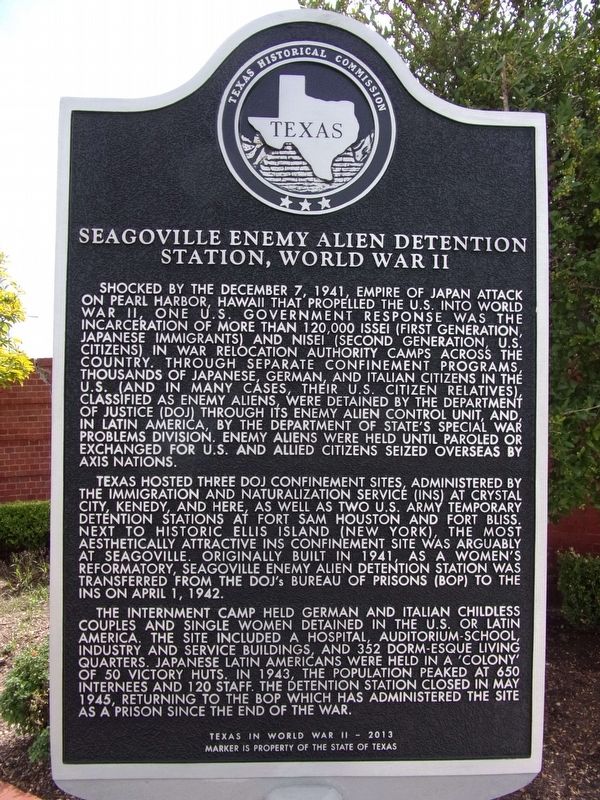
Shocked by the December 7, 1941, Empire of Japan attack on Pearl Harbor, Hawaii that propelled the U.S. into World War II, one U.S. government response was the incarceration of more than 120,000 Issei (first generation, Japanese immigrants) and Nisei (second generation, U.S. citizens) in war relocation authority camps across the country. Through separate confinement programs, thousands of Japanese, German, and Italian citizens in the U.S. (and in many cases, their U.S. citizen relatives), classified as enemy aliens, were detained by the Department of Justice (DOJ) through its Enemy Alien Control Unit, and, in Latin America, by the Department of State's Special War Problems Division. Enemy aliens were held until paroled or exchanged for U.S. and Allied citizens seized overseas by Axis nations.
Texas hosted three DOJ confinement sites, administered by the Immigration and Naturalization Service (INS) at Crystal City, Kenedy, and here, as well as two U.S. army temporary detention stations at Fort Sam Houston and Fort Bliss. Next to historic Ellis Island (New York), the most aesthetically attractive INS confinement site was
this page online
The internment camp held German and Italian childless couples and single women detained in the U.S. or Latin America. The site included a hospital, auditorium-school, industry and service buildings, and 352 dorm-esque living quarters. Japanese Latin Americans were held in a 'colony' of 50 Victory huts. In 1943, the population peaked at 650 internees and 120 staff. The detention station closed in May 1945, returning to the BOP which has administered the site as a prison since the end of the war.
Texas in World War II - 2013
Marker is property of the State of Texas
Erected 2013 by Texas Historical Commission. (Marker Number 17380.)
Topics. This historical marker is listed in these topic lists: Asian Americans • Law Enforcement • War, World II.
Location. 32° 39.411′ N, 96° 34.142′ W. Marker is in Seagoville, Texas, in Dallas County. It can be reached from Highway 175. Touch for map.
Photographed by Kayla Harper, September 6, 2020
2. Seagoville Enemy Alien Detention Station, World War II Marker

Regionally, this marker is in the Prairies & Lakes Region and in the Dallas-Fort Worth Metropolitan Area. Globally, it is in North America, a Gulf of Mexico state, the Western Hemisphere, the Western World, and the Anglosphere. Historically, it finds itself in what was once New Spain, the Republic of Texas, one of the Confederate States of America, and the Antebellum South.
Other nearby markers. At least 8 other markers are within 7 miles of this marker, measured as the crow flies: Lee Cemetery (approx. ¾ mile away); Kleberg (approx. 2.8 miles away); Potter Cemetery (approx. 3.3 miles away); Rylie Prairie (approx. 4.7 miles away); Rylie Cemetery (approx. 4.9 miles away); Bennett Family Gardens (approx. 6.3 miles away); Dawdy's Ferry (approx. 6.8 miles away); First Presbyterian Church of Mesquite (approx. 6.9 miles away).
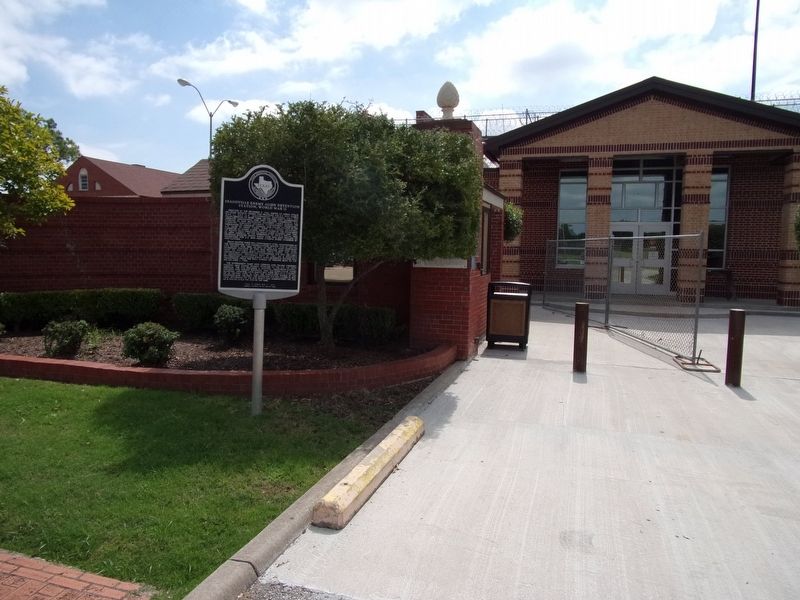
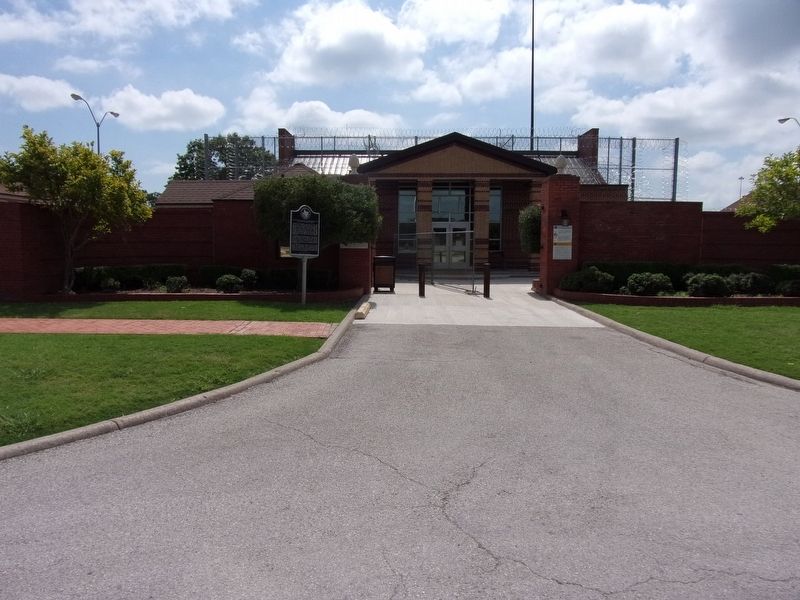
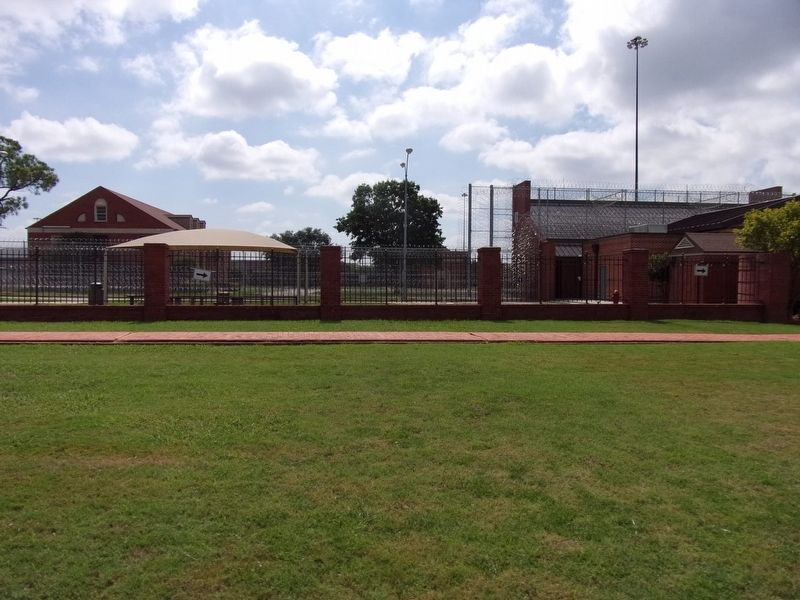
More about this marker. The marker is on the grounds of the Federal Correctional Institute. It is next to the main entrance to the prison but outside of the prison walls.
Photographed by Kayla Harper, September 6, 2020
3. Seagoville Enemy Alien Detention Station, World War II Marker
Photographed by Kayla Harper, September 6, 2020
4. Seagoville Federal Correctional Insitute
Credits. This page was last revised on September 8, 2020. It was originally submitted on September 7, 2020, by Kayla Harper of Dallas, Texas. This page has been viewed 1,300 times since then and 136 times this year. Photos: 1, 2, 3, 4. submitted on September 7, 2020, by Kayla Harper of Dallas, Texas. • J. Makali Bruton was the editor who published this page.
