
Punxsutawney in Jefferson County, Pennsylvania — The American Northeast (Mid-Atlantic)
Punxsutawney
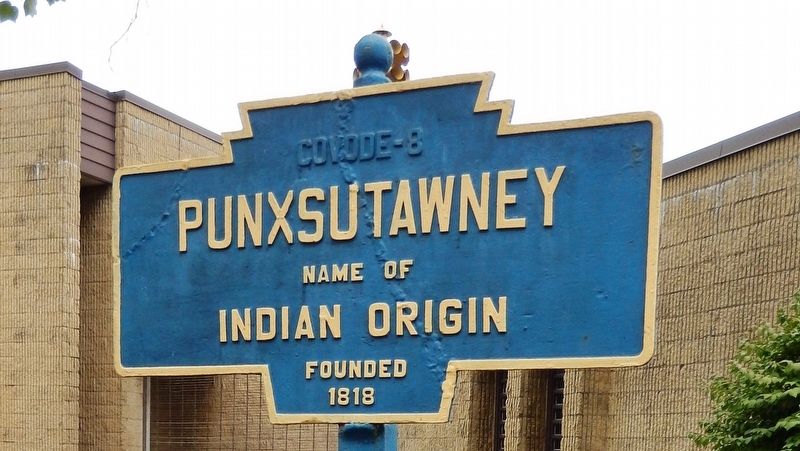
Photographed by Cosmos Mariner, August 31, 2016
1. Punxsutawney Marker
Topics and series. This historical marker is listed in these topic lists: Indigenous Peoples and Communities • Settlements & Settlers. In addition, it is included in the Pennsylvania Keystone Markers series list. A significant historical year for this entry is 1818.
Location. 40° 56.655′ N, 78° 58.077′ W. Marker is in Punxsutawney, Pennsylvania, in Jefferson County. It is on East Mahoning Street (Pennsylvania Route 36) just east of North Penn Street, on the right when traveling east. Marker is located beside the sidewalk, in front of the Punxsutawney Borough Administration building. Touch for map. Marker is at or near this postal address: 300 East Mahoning Street, Punxsutawney PA 15767, United States of America. Touch for directions.

Regionally, this marker is in the Pennsylvania Wilds. It is also in the American Northeast, in the Mid-Atlantic, in Appalachia, and specifically in Northern Appalachia. Globally, it is in North America, the Western Hemisphere, the Western World, and the Anglosphere. Historically, it finds itself in what was once the Haudenosaunee (Iroquois) Confederacy
this page online
Other nearby markers. At least 8 other markers are within walking distance of this marker: World War II Memorial (within shouting distance of this marker); SFC Scott R. Smith (within shouting distance of this marker); Fraternal Order of Eagles War Memorial (within shouting distance of this marker); Indian Mill Stone (about 300 feet away, measured in a direct line); War Memorial (about 300 feet away); Barclay Square (about 400 feet away); a different marker also named War Memorial (about 400 feet away); Vietnam War Memorial (about 500 feet away). Touch for a list and map of all markers in Punxsutawney.
Also see . . . Punxsutawney, Pennsylvania (Wikipedia). The area was originally settled by the Lenape (Delaware Native Americans), and the name "Punxsutawney" derives from a Native name in Unami (a Lenape language): Punkwsutènay, which translates to "town of the sandflies" or "town of the mosquitoes." Settlers drawn by lumbering and coal mining eventually drained the swamps and exterminated the insects. (Submitted on September 10, 2020, by Cosmos Mariner of Cape Canaveral, Florida.)
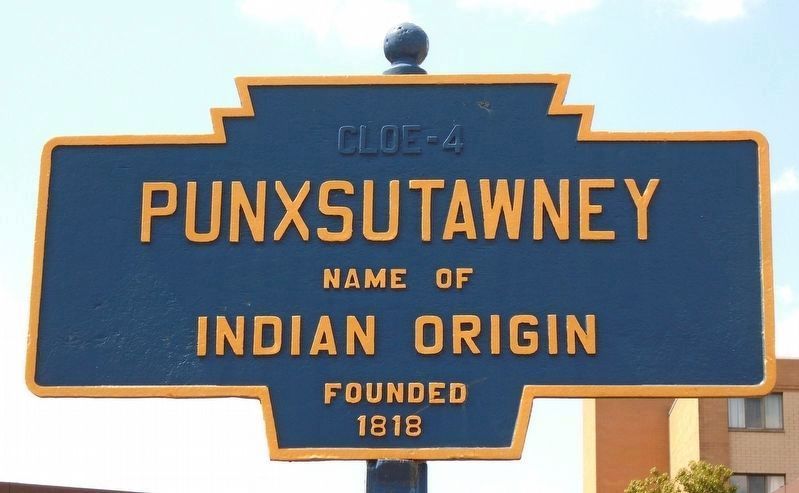
Photographed by William Fischer, Jr., August 11, 2025
2. Punxsutawney Marker
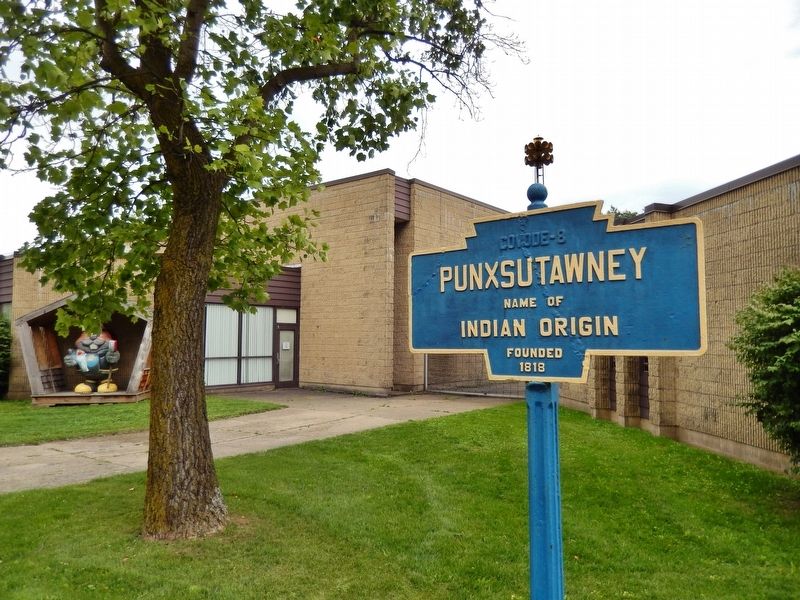
Photographed by Cosmos Mariner, August 31, 2016
3. Punxsutawney Marker
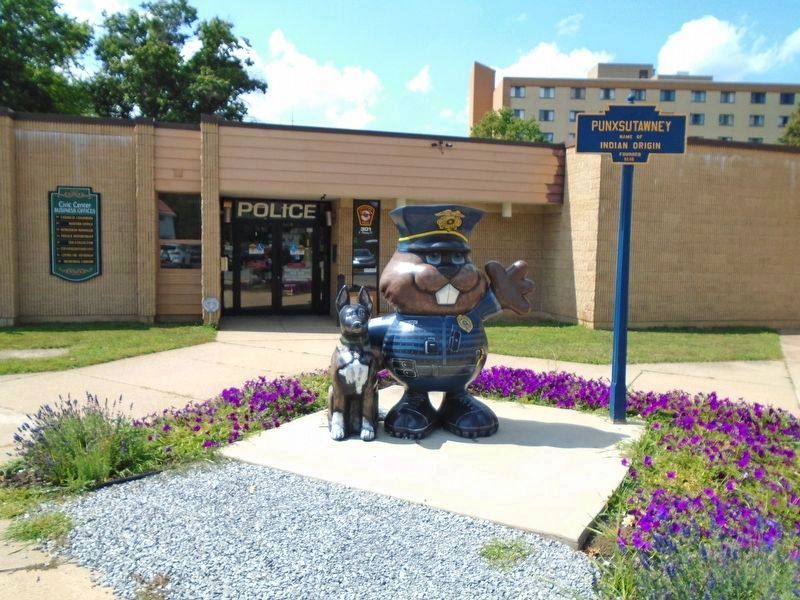
Photographed by William Fischer, Jr., August 11, 2025
4. Punxsutawney Marker
on new concrete pad with Policeman Phil
Photographed by Cosmos Mariner, August 31, 2016
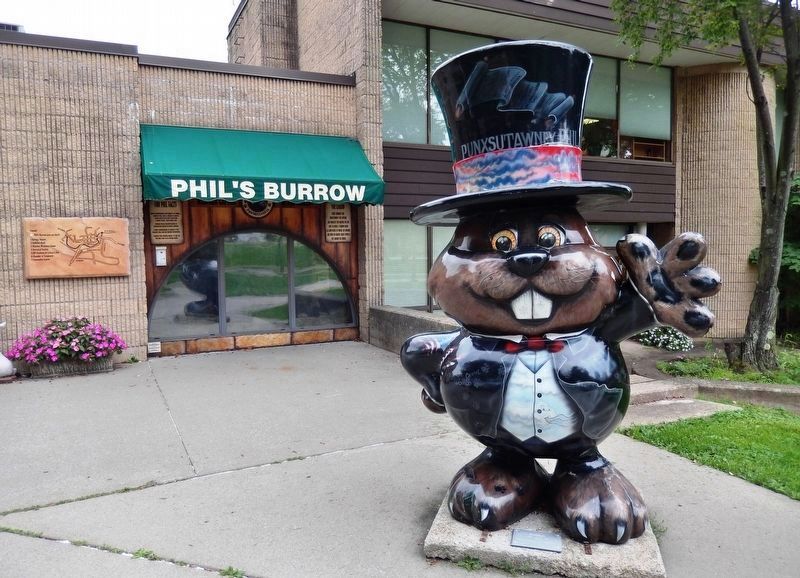
5. Punxsutawney Phil
Every February 2nd Punxsutawney Phil appears and forecasts the weather for the next six weeks. A shadow means six more weeks of winter. No sunshine, and hence no shadow, means spring is just around the corner.
Credits. This page was last revised on August 16, 2025. It was originally submitted on September 9, 2020, by Cosmos Mariner of Cape Canaveral, Florida. This page has been viewed 730 times since then and 39 times this year. Photos: 1. submitted on September 10, 2020, by Cosmos Mariner of Cape Canaveral, Florida. 2. submitted on August 16, 2025, by William Fischer, Jr. of Reynoldsburg, Ohio. 3. submitted on September 10, 2020, by Cosmos Mariner of Cape Canaveral, Florida. 4. submitted on August 16, 2025, by William Fischer, Jr. of Reynoldsburg, Ohio. 5. submitted on September 10, 2020, by Cosmos Mariner of Cape Canaveral, Florida.
