Folsom in Sacramento County, California — The American West (Pacific Coastal)
Leidesdorff Plaza
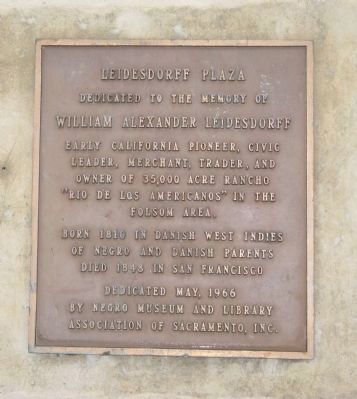
Photographed by Syd Whittle, January 25, 2009
1. Leidesdorff Plaza Marker
Erected 1966 by The Negro Museum and Library Association of Sacramento, Inc., May 1966.
Topics. This historical marker is listed in these topic lists: African Americans • Agriculture • Industry & Commerce • Settlements & Settlers. A significant historical year for this entry is 1810.
Location. 38° 40.549′ N, 121° 10.812′ W. Marker is in Folsom, California, in Sacramento County. It can be reached from the intersection of Sutter Street and Stafford Street. Marker and site are located at the Folsom Light Rail Station. Touch for map. Marker is at or near this postal address: Sutter Street, Folsom CA 95630, United States of America. Touch for directions.

Regionally, this marker is in Sacramento Metro, in the Sacramento Valley, and specifically in the Central Valley. It is also on the American Pacific Coast.
this page online
Other nearby markers. At least 8 other markers are within walking distance of this marker: Folsom Terminal (here, next to this marker); W.L. Perkins Warehouse (about 300 feet away, measured in a direct line); Site of Car/Carpenter Shop (1863) (about 400 feet away); Turning the Trains (about 400 feet away); Sacramento Valley Railroad (about 400 feet away); Turning Locomotives in Folsom (about 500 feet away); Wells Fargo and Company (about 500 feet away); Folsom History Museum (about 500 feet away). Touch for a list and map of all markers in Folsom.
Also see . . .
1. William Leidesdorff. Born in the Virgin Islands, the gifted son of William Leidesdorff, a Danish sugar planter, and Anna Marie Spark, a native woman having Negro blood, Leidesdorff found his way to California as early as 1841. (Submitted on January 25, 2009, by Syd Whittle of Mesa, Arizona.)
2. Find-A-Grave: William Alexander Leidesdorff.
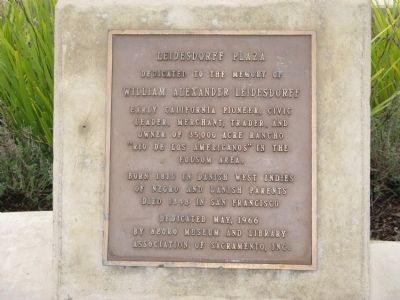
Photographed by Syd Whittle, January 25, 2009
2. Leidesdorff Plaza Marker
Additional commentary.
1. William Alexander Leidesdorff (1810-1848)
In 1841, the schooner Julie Ann sailed into the San Francisco harbor and dropped anchor by the village of Yerba Buena. The owner of the Julie Ann was William Alexander Leidesdorff, who would become one of California's leading citizens and the owner of the land on which Folsom is now located.
A year earlier he had been a successful trader in New Orleans. Leidesdorff owned 12 ships and a prosperous business. He was engaged to be married and was head over heels in love with his fiancée. Then, without warning, he was refused admission to her home and the engagement ring was returned. Her parents informed him that she was no longer interested in seeing him. Though there is no proof, it seems that her proud Creole family had learned his West Indian mother had Negro and Carib blood in her veins thus making him unacceptable as a son-in-law.
Heartbroken, Leidesdorff sold all his property and ships, and left New Orleans forever.
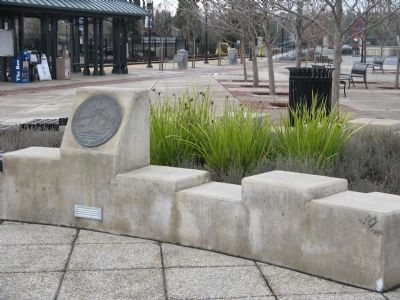
Photographed by Syd Whittle, January 25, 2009
3. Leidesdorff Plaza
Marker is off photo to the left. Marker seen in photo is a Pony Express Trail Marker.
He became a naturalized Mexican citizen and received a land grant of eight Spanish leagues, or more than 35,000 acres. The grant, called the Rancho Rio de los Americanos, began at about the point where Bradshaw Road connects with the river. A sign was posted there, one side faced west and was lettered Sutter while the east facing side said Leidesdorff. The grant extended upriver to where Folsom Prison is today. Two years later Leidesdorff had an adobe home built at the western end of his property, but he never lived there.
Meanwhile, Leidesdorff's career in San Francisco was spectacular. He became the contract agent to furnish supplies to the Russians and collect Sutter's debt. He built the City Hotel, the finest in San Francisco. He was a treasurer of San Francisco. He served on its first City Council and the first school Board.
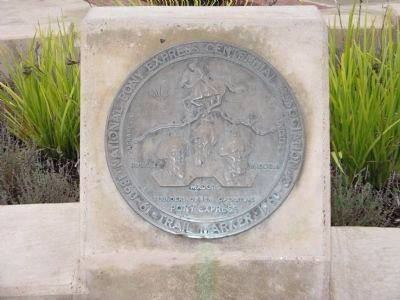
Photographed by Syd Whittle, January 25, 2009
4. Close-Up of Pony Express Trail Marker
He brought the first steamboat to San Francisco Bay, the double side-wheeler SITKK. In 1847, the year after he had the adobe built, he took the SITKK to Sacramento. Little is recorded about the trip except that he raced an ox cart on the downstream trip to Benicia and lost.
The plans he had for the Rancho de los Americanos will never be known. On May 18, 1848, as the first reports of rich gold strikes on the banks of the American River came filtering into San Francisco, William Alexander Leidesdorff died of pneumonia or typhus (two different accounts list different causes of death).
Source: Folsom History Museum - (http://www.folsomhistorymuseum.org/history.htm)
— Submitted February 2, 2009, by Syd Whittle of Mesa, Arizona.
Additional keywords. Gold Rush, Multiracial Americans
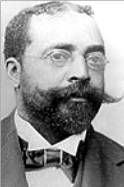
California State Library, Calif. History Section, June 20, 2007
5. William Leidesdorff
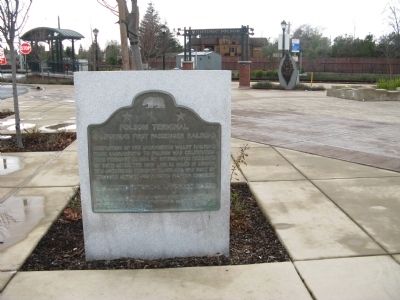
Photographed by Syd Whittle, January 25, 2009
6. Folsom Terminal Marker in Leidesdorff Plaza
Part of Leidesdorff Plaza in Background. See nearby marker for additional information.
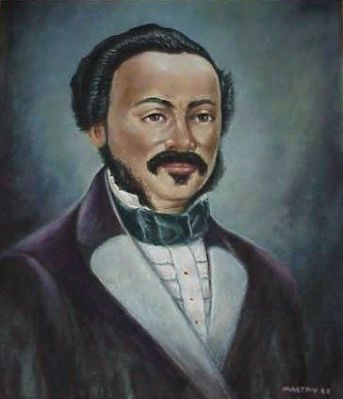
Photographed by Folsom History Museum
7. William Alexander Leidesdorff
Credits. This page was last revised on November 7, 2019. It was originally submitted on January 25, 2009, by Syd Whittle of Mesa, Arizona. This page has been viewed 3,653 times since then and 71 times this year. Photos: 1, 2, 3, 4. submitted on January 25, 2009, by Syd Whittle of Mesa, Arizona. 5. submitted on February 11, 2009, by Syd Whittle of Mesa, Arizona. 6. submitted on January 25, 2009, by Syd Whittle of Mesa, Arizona. 7. submitted on February 2, 2009, by Syd Whittle of Mesa, Arizona.
