Longwood in Seminole County, Florida — The American South (South Atlantic)
Lady Liberty
Photographed by Brandon D Cross, September 13, 2020
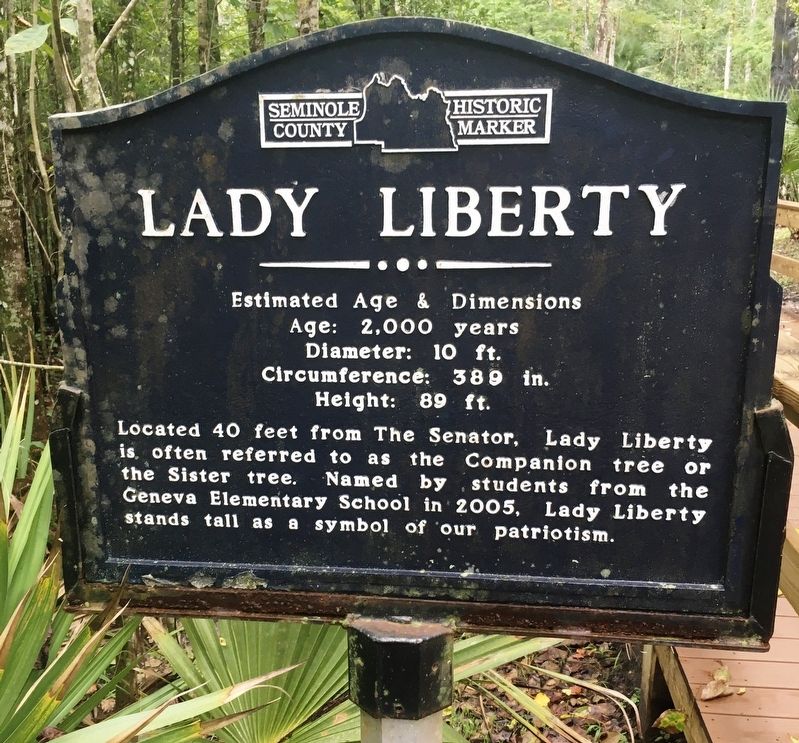
1. Lady Liberty Marker
Age: 2,000 years
Diameter: 10 ft.
Circumference: 389 in.
Height: 89 ft.
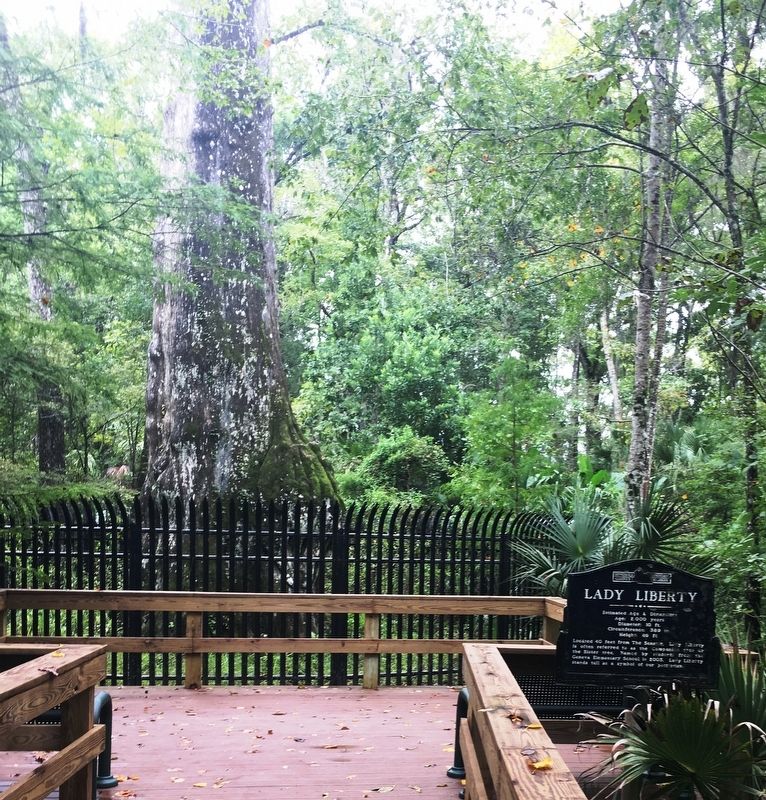
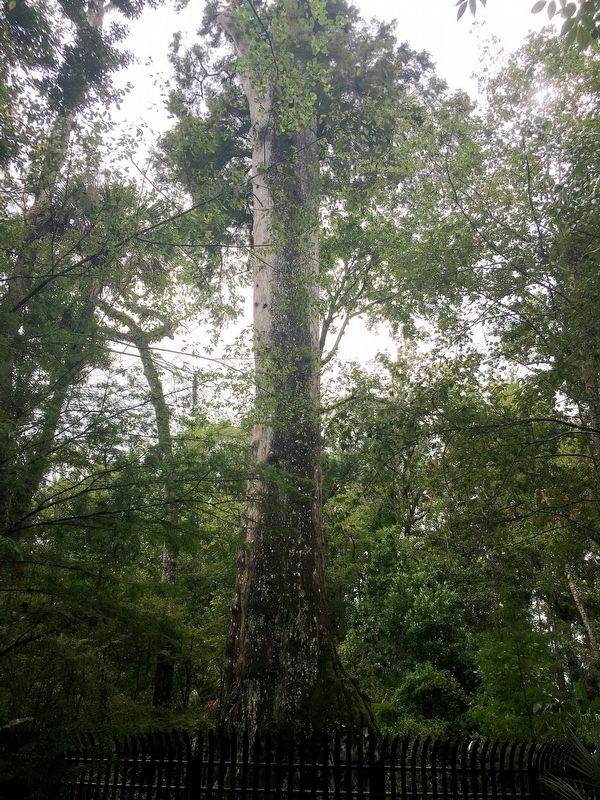
Located 40 feet from The Senator, Lady Liberty is often referred to as the Companion tree or the Sister tree. Named by students from the Geneva Elementary School in 2005, Lady Liberty stands tall as a symbol of our patriotism.
Erected by Seminole County.
Topics. This historical marker is listed in these topic lists: Horticulture & Forestry • Patriots & Patriotism.
Location. 28° 43.11′ N, 81° 19.88′ W. Marker is in Longwood, Florida, in Seminole County. It can be reached from General Hutchinson Parkway 0.3 miles east of North Ronald Reagan Boulevard, on the right when traveling east. Marker located within Big Tree Park at the east end of the boardwalk trail. Touch for map. Marker is at or near this postal address: 761 General Hutchinson Parkway, Longwood FL 32750, United States of America. Touch for directions.

Regionally, this marker is in Greater Orlando and in Central Florida. It is also in the American South. Globally, it is in the North Atlantic
this page online
Other nearby markers. At least 8 other markers are within 3 miles of this marker, measured as the crow flies: Big Tree (within shouting distance of this marker); "The Phoenix"… (about 700 feet away, measured in a direct line); Longwood Hotel/Bradley McIntyre House (approx. 1.6 miles away); Historic Longwood/E.W. Henck (approx. 1.6 miles away); Heroes Monument (approx. 1.7 miles away); The Senator II (approx. 1.7 miles away); William Bartram Trail (approx. 2.6 miles away); Florida Honors and Remembers our POW’s and MIA’s (approx. 2.6 miles away). Touch for a list and map of all markers in Longwood.
Also see . . .
1. Lady Liberty. Wikipedia entry (Submitted on July 28, 2025, by Larry Gertner of New York, New York.)
2. Big Tree Park. Seminole County website entry (Submitted on September 22, 2020, by Brandon D Cross of Flagler Beach, Florida.)
Photographed by Brandon D Cross, September 13, 2020
2. Lady Liberty Marker
Photographed by Brandon D Cross, September 13, 2020
3. Lady Liberty Tree as it appears today
Photographed by Brandon D Cross, September 13, 2020
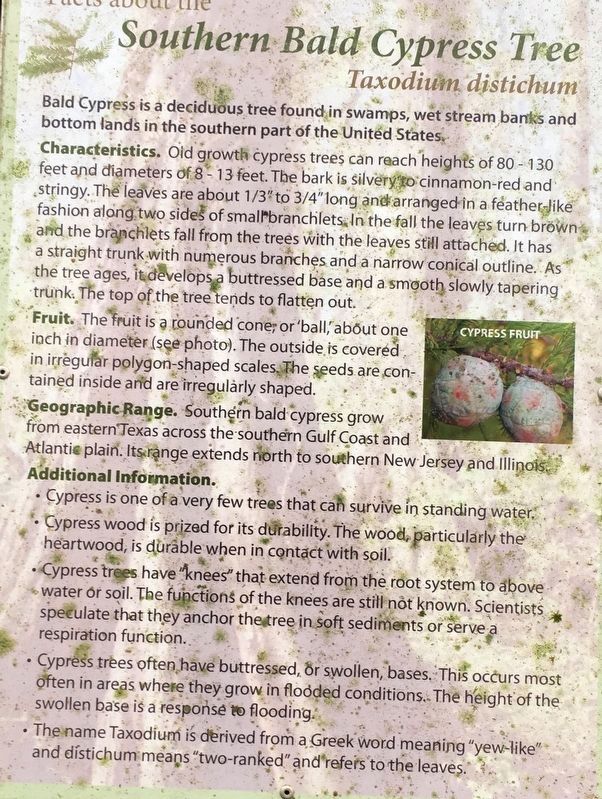
4. Southern Bald Cypress Tree Descriptive Panel
Bald Cypress is a deciduous tree found in swamps, wet stream banks and
bottom lands in the southern part of the United States.
Characteristics. Old growth cypress trees can reach heights of 80–130 feet and diameters of 8-13. The bark is silvery to cinnamon-red and Stringy. The leaves are about 1/3” to ¾” long and arranged in a feather-like fashion along two sides of small branchlets. In the fall the leaves turn brown and the branchlets fall from the trees with the leaves still attached. It has a straight trunk with numerous branches and a narrow conical outline. As the tree ages, it develops a buttressed base and a smooth slowly tapering trunk. The top of the tree tends to flatten out.
Fruit. The fruit is a rounded cone or ‘ball’ about one inch in diameter (see photo). The outside is covered in irregular polygon-shaped scales. The seeds are contained inside and are irregularly shaped.
Geographic Range. Southern bald cypress grow from eastern Texas across the southern Gulf Coast and Atlantic plain. Its range extends north to southern New Jersey and Illinois.
Additional Information.
• Cypress is one of a very few trees that can survive in standing water.
• Cypress wood is prized for its durability. The wood, particularly the heartwood, is durable when in contact with soil.
• Cypress trees have “knees” that extend from the root system to above water or soil. The functions of the knees are still not known. Scientists speculate that they anchor the tree in soft sediments or serve a respiration function.
• Cypress trees often have buttressed, or swollen, bases. This occurs most often in areas where they grow in flooded conditions. The height of the swollen base is a response to flooding.
• The name Taxodium is derived from a Greek word meaning “yew-like” and distichum means “two-ranked” and refers to the leaves.
Characteristics. Old growth cypress trees can reach heights of 80–130 feet and diameters of 8-13. The bark is silvery to cinnamon-red and Stringy. The leaves are about 1/3” to ¾” long and arranged in a feather-like fashion along two sides of small branchlets. In the fall the leaves turn brown and the branchlets fall from the trees with the leaves still attached. It has a straight trunk with numerous branches and a narrow conical outline. As the tree ages, it develops a buttressed base and a smooth slowly tapering trunk. The top of the tree tends to flatten out.
Fruit. The fruit is a rounded cone or ‘ball’ about one inch in diameter (see photo). The outside is covered in irregular polygon-shaped scales. The seeds are contained inside and are irregularly shaped.
Geographic Range. Southern bald cypress grow from eastern Texas across the southern Gulf Coast and Atlantic plain. Its range extends north to southern New Jersey and Illinois.
Additional Information.
• Cypress is one of a very few trees that can survive in standing water.
• Cypress wood is prized for its durability. The wood, particularly the heartwood, is durable when in contact with soil.
• Cypress trees have “knees” that extend from the root system to above water or soil. The functions of the knees are still not known. Scientists speculate that they anchor the tree in soft sediments or serve a respiration function.
• Cypress trees often have buttressed, or swollen, bases. This occurs most often in areas where they grow in flooded conditions. The height of the swollen base is a response to flooding.
• The name Taxodium is derived from a Greek word meaning “yew-like” and distichum means “two-ranked” and refers to the leaves.
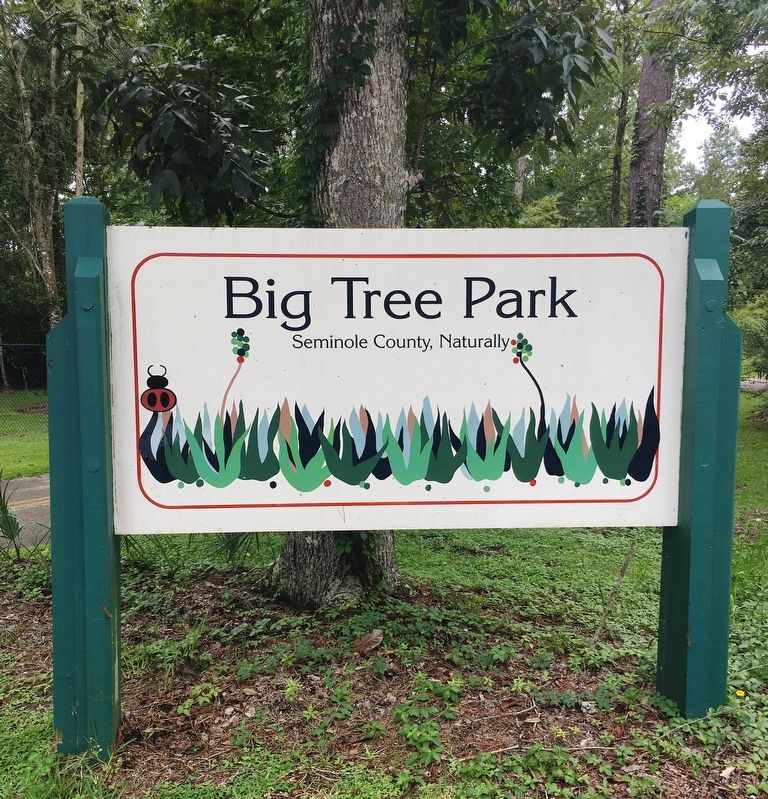
Photographed by Brandon D Cross, September 13, 2020
5. Big Tree park sign
Credits. This page was last revised on July 31, 2026. It was originally submitted on September 22, 2020, by Brandon D Cross of Flagler Beach, Florida. This page has been viewed 1,275 times since then and 127 times this year. Photos: 1, 2, 3, 4, 5. submitted on September 22, 2020, by Brandon D Cross of Flagler Beach, Florida. • Bernard Fisher was the editor who published this page.
