
Fort Smith in Sebastian County, Arkansas — The American South (West South Central)
At the Edge of Indian Country
Fort Smith National Historic Site
Photographed by Cosmos Mariner, May 18, 2015
1. At the Edge of Indian Country Marker
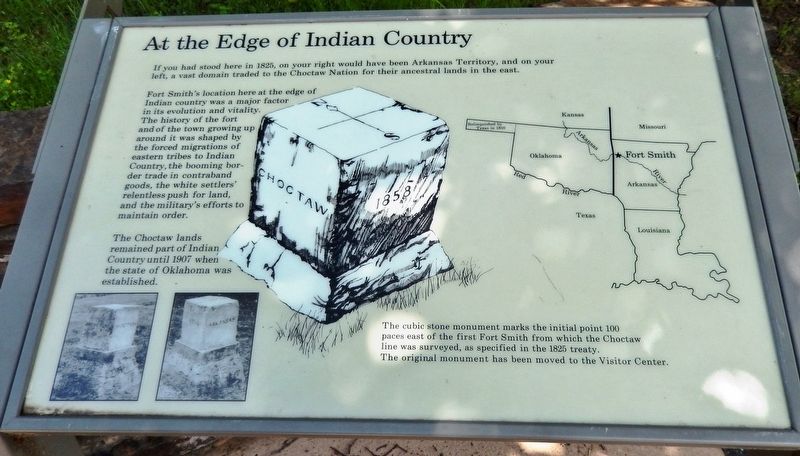
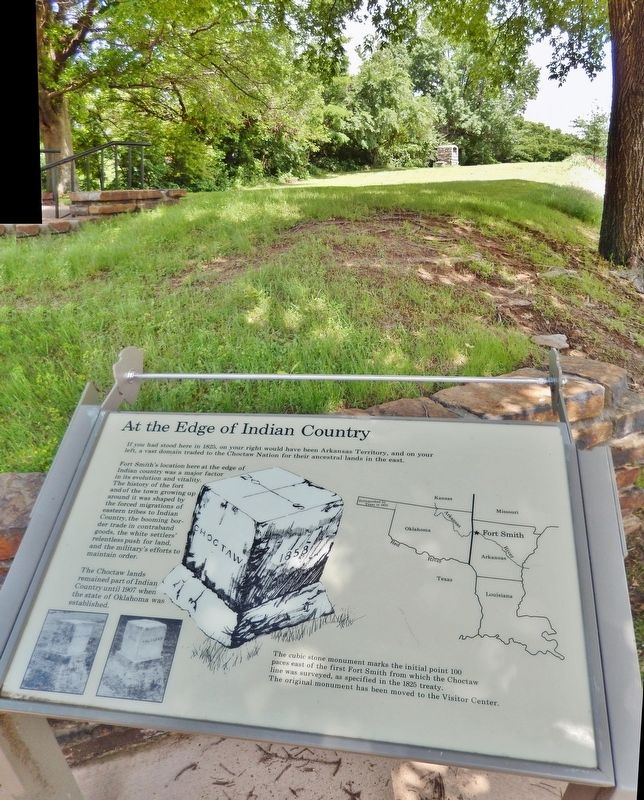
If you had stood here in 1825, on your right would have been Arkansas Territory, and on your left, a vast domain traded to the Choctaw Nation for their ancestral lands in the east.
Fort Smith’s location here at the edge of Indian country was a major factor in its evolution and vitality. The history of the fort and of the town growing up around it was shaped by the forced migrations of eastern tribes to Indian Country, the booming border trade in contraband goods, the white settlers’ relentless push for land, and the military’s efforts to maintain order.
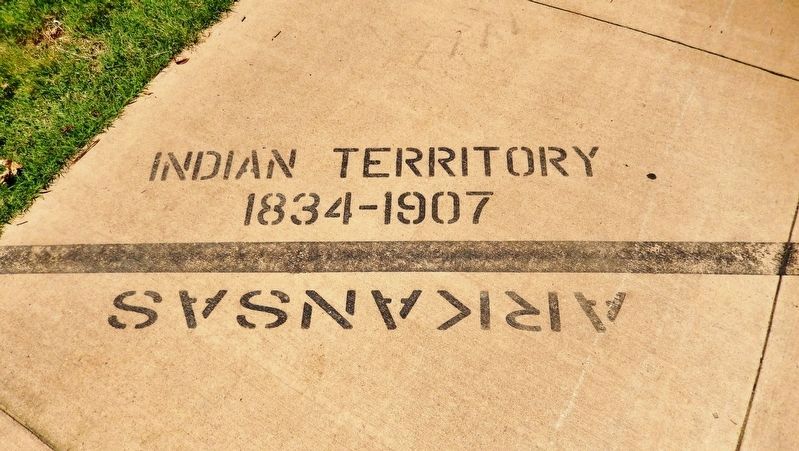
The Choctaw lands remained part of Indian Country until 1907 when the state of Oklahoma was established.
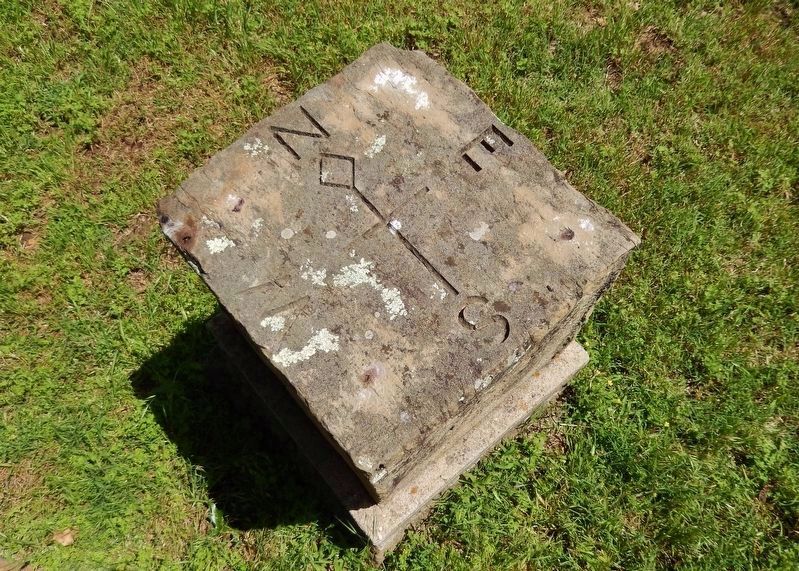
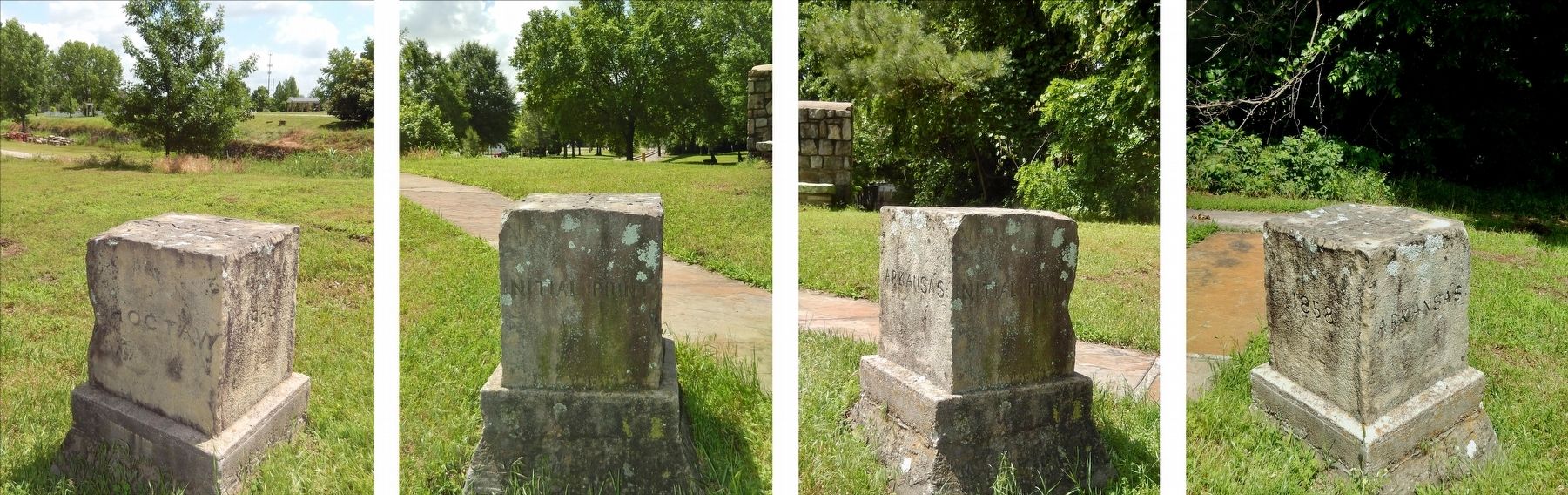
The cubic stone monument marks the initial point 100 paces east of the first Fort Smith from which the Choctaw line was surveyed, as specified in the 1825 treaty. The original monument has been moved to the Visitor Center.
Topics. This historical marker is listed in these topic lists: Forts and Castles • Indigenous Peoples and Communities • Settlements & Settlers. A significant historical year for this entry is 1825.
Location. 35° 23.272′ N, 94° 25.874′ W. Marker
this page online

Regionally, this marker is in the Arkansas River Valley, in the Cherokee Heritage Region, and in Osage Territory. It is also in the American South and specifically in the Upper South. Globally, it is in North America, the Western Hemisphere, the Western World, and the Anglosphere. Historically, it finds itself in what was once the territory of the Mississippian Culture, the Louisiana Purchase, one of the Confederate States of America, and the Antebellum South.
Other nearby markers. At least 8 other markers are within walking distance of this marker: Belle Point (within shouting distance of this marker); Fort Wall (within shouting distance of this marker); Whiskey War (within shouting distance of this marker); The War Begins (within shouting distance
2. Marker detail: Map
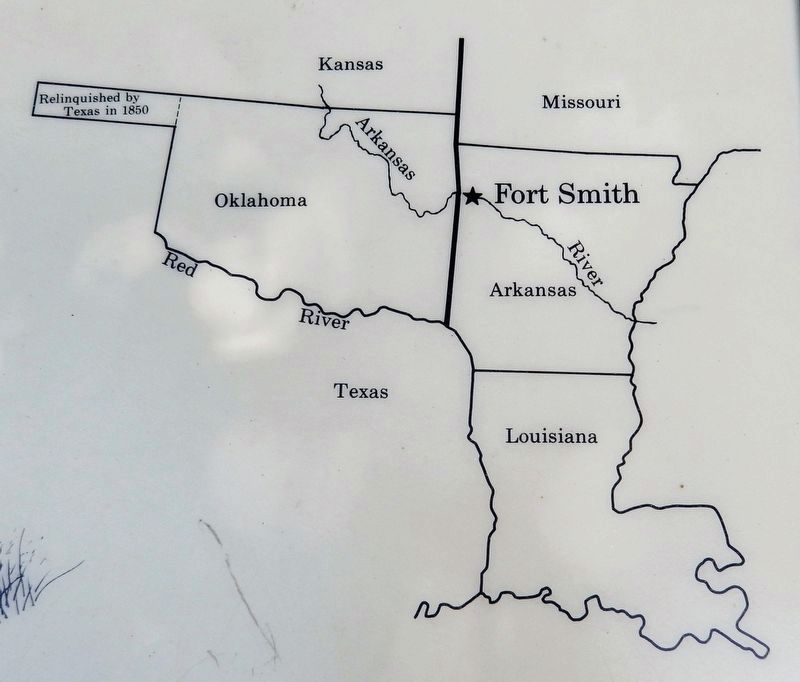
Regarding At the Edge of Indian Country. The Choctaw Nation ceded about 2 million acres to the United States; this was the land lying east of a line beginning on the Arkansas River, one hundred paces east of Fort Smith, and running due south to the Red River. The United States agreed to move to the east side of the boundary line and to prevent future settlements on the west by white people.
Also see . . .
1. Treaty of Washington City. Wikipedia entry:
Apuckshunubbee, Pushmataha, and Mosholatubbee, the principal leaders of the Choctaws, went to Washington City (the 19th century name for Washington, D.C.) to discuss encroaching settlement and to seek the expulsion of settlers or financial compensation. (Submitted on September 29, 2020, by Cosmos Mariner of Cape Canaveral, Florida.)
2. Treaty with The Chocktaw; January 20, 1825.
Photographed by Cosmos Mariner, May 18, 2015
3. At the Edge of Indian Country Marker
Treaty text (Submitted on March 17, 2021, by Larry Gertner of New York, New York.)
Photographed by Cosmos Mariner, May 18, 2015
4. Indian Territory Line, 1834-1907
Photographed by Cosmos Mariner, May 18, 2015
5. Boundary Monument Top
Photographed by Cosmos Mariner, May 18, 2015
6. Boundary Monument
Credits. This page was last revised on March 17, 2021. It was originally submitted on September 28, 2020, by Cosmos Mariner of Cape Canaveral, Florida. This page has been viewed 738 times since then and 55 times this year. Photos: 1, 2, 3, 4, 5, 6. submitted on September 29, 2020, by Cosmos Mariner of Cape Canaveral, Florida.
