Cumberland Township near Gettysburg in Adams County, Pennsylvania — The American Northeast (Mid-Atlantic)
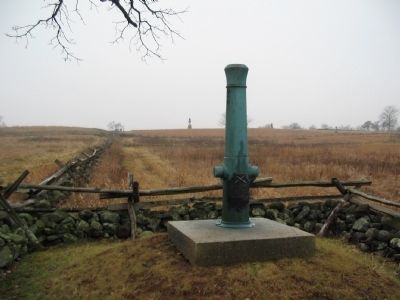
Headquarters of Brigadier General Henry Hunt
Photographed by Craig Swain, December 27, 2008
1. General Hunt's Headquarters Marker
The marker incorporates a 12-pounder heavy field gun.
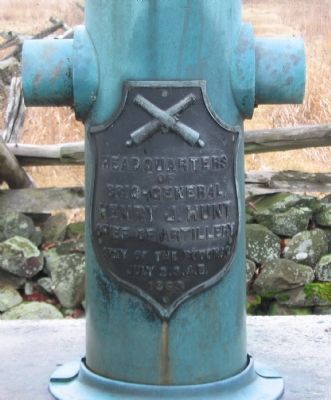
of
Brig-General
Henry J. Hunt
Chief of Artillery
Army of the Potomac
July 2,3,4,5,
1863
Erected 1913 by Gettysburg National Military Park Commission.
Topics. This memorial is listed in this topic list: War, US Civil. A significant historical date for this entry is July 2, 1863.
Location. 39° 48.817′ N, 77° 13.907′ W. Memorial is near Gettysburg, Pennsylvania, in Adams County. It is in Cumberland Township. It is on Taneytown Road (State Highway 134), on the right when traveling south. Located south of the Leister House (Meade's Headquarters) in Gettysburg National Military Park. Touch for map. Memorial is in this post office area: Gettysburg PA 17325, United States of America. Touch for directions.

Regionally, this memorial is in South-Central Pennsylvania. It is also in the American Northeast, in the Mid-Atlantic, in Appalachia, and specifically in Northern Appalachia. Globally, it is in North America, the Western Hemisphere, the Western World, and the Anglosphere. Historically, it finds itself in what was once the Haudenosaunee (Iroquois) Confederacy and also one of the original Thirteen Colonies.
Other nearby markers. At
this page online
Also see . . . Reports of Brig. Gen. Henry J. Hunt. General Hunt provided a very detailed report emphasizing the role of the artillery batteries in the battle. He summarized the totals for the Army's artillery:
Of these 320 guns, 142 were light 12-pounders, 106 3-inch guns, 6 20-pounders, 60 10-pounder Parrott guns, and a battery of 4 James rifles and 2 12-pounder howitzers, which joined the army on the march to Gettysburg. This table excludes the Horse Artillery, 44 3-inch guns, serving with the cavalry. It will be seen that the Artillery Reserve, every gun of which was brought into requisition, bore, as in all the campaigns of the Army of the Potomac, its full share, and more, of the losses.
The expenditure of ammunition in the three days amounted to 32,781 rounds, averaging over 100 rounds per gun. Many rounds were lost in the caissons and limbers by explosions and otherwise. The supply carried with the army being 270 rounds per gun, left sufficient to fill the ammunition chests and enable the army to fight another battle. There was for a short time during the battle a fear that the ammunition would give out. This fear was caused by the large and unreasonable demands made by corps commanders who had left their own trains or a portion of them behind, contrary to the orders of the commanding general. In this emergency, the train of the Artillery Reserve, as on so many other occasions, supplied all demands, and proved its great usefulness to the army.
Photographed by Craig Swain, December 27, 2008
2. Close Up of the Plaque
Photographed by Craig Swain, December 27, 2008
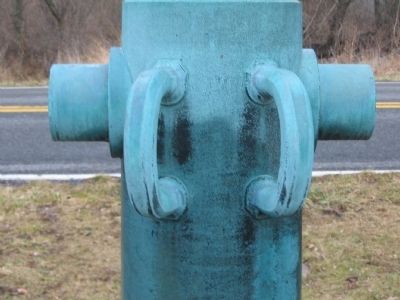
3. "Handles" on the Other Side of the Cannon
The 12-pounder Heavy Field Gun was the predecessor of the widely used 12-pounder Napoleon. The gun design included a set of "handles" for use when mounting or dismounting the gun.
Photographed by Craig Swain, December 27, 2008
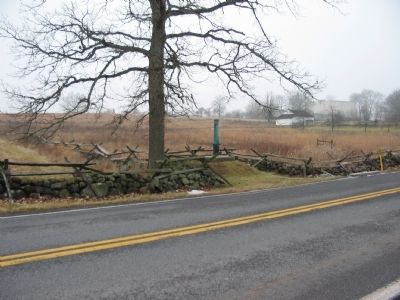
4. Hunt's Headquarters
General Hunt maintained a headquarters close to those of General Meade, who placed his flag at the Leister Farm seen in the background here.
Internet Archive
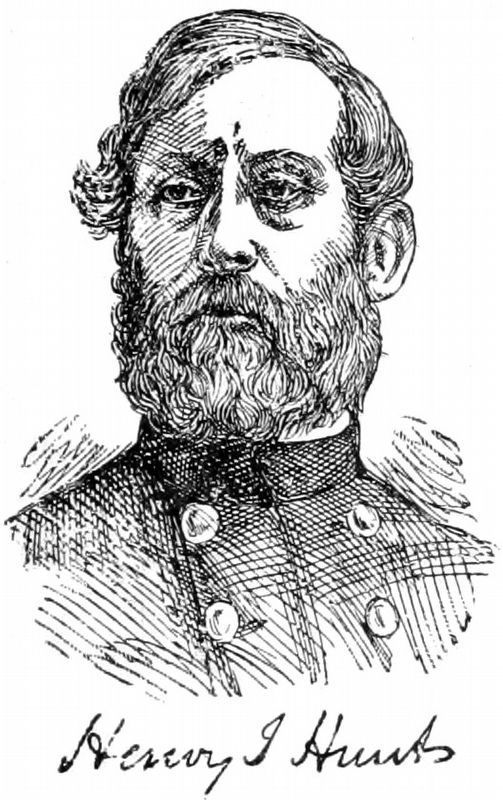
5. Henry J. Hunt
from The Biographical Dictionary of America, 1906, by Rossiter Johnson.
Photographed by J. Makali Bruton, July 31, 2016
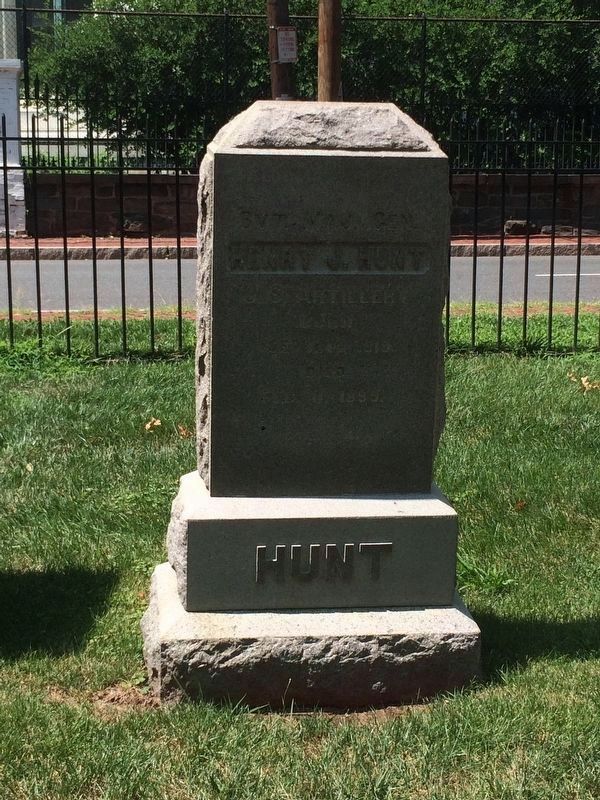
6. Grave of Bvt. Maj. Gen. Henry J. Hunt
His grave is at the United States Soldiers’ and Airmen’s Home National Cemetery, Washington, D.C.
Credits. This page was last revised on February 7, 2023. It was originally submitted on February 10, 2009, by Craig Swain of Leesburg, Virginia. This page has been viewed 1,626 times since then and 37 times this year. Photos: 1, 2, 3, 4. submitted on February 10, 2009, by Craig Swain of Leesburg, Virginia. 5. submitted on September 6, 2018, by Allen C. Browne of Silver Spring, Maryland. 6. submitted on September 15, 2016, by J. Makali Bruton of Washington, District of Columbia.
