Santa Barbara in Santa Barbara County, California — The American West (Pacific Coastal)
Jose Francisco De Ortega
Photographed by Andrew Ruppenstein, November 30, 2020
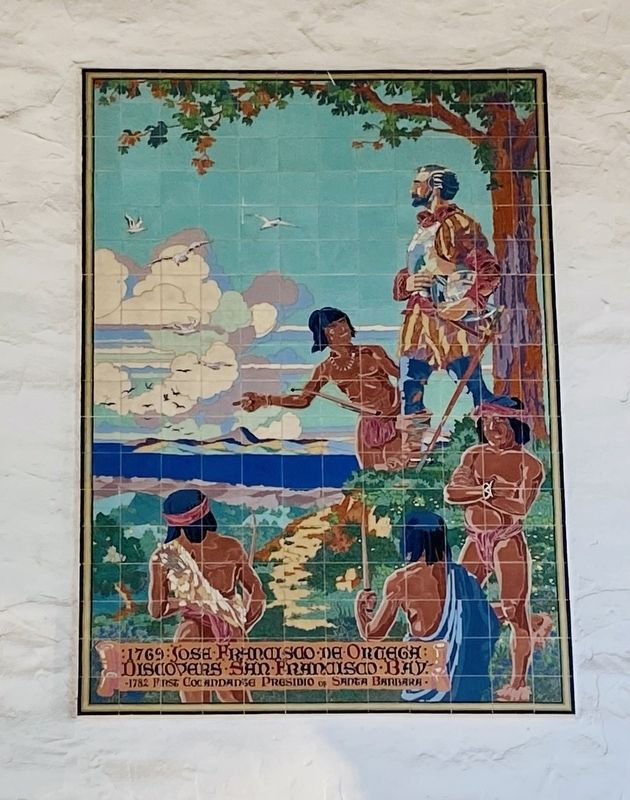
1. Jose Francisco De Ortega Marker
1769 Jose Francisco De Ortega discovers San Francisco Bay
1782 First Comandante Presidio of Santa Barbara
Topics. This historical marker is listed in these topic lists: Exploration • Hispanic Americans • Settlements & Settlers. A significant historical date for this entry is November 1, 1769.
Location. 34° 25.455′ N, 119° 42.155′ W. Marker is in Santa Barbara, California, in Santa Barbara County. It can be reached from Anacapa Street south of East Anapamu Street. Touch for map. Marker is at or near this postal address: 1100 Anacapa Street, Santa Barbara CA 93101, United States of America. Touch for directions.

Regionally, this marker is on the Central Coast, specifically on the Coast Ranges, and specifically in the Transverse Ranges. It is also on the American Pacific Coast. Globally, it is in North America, on the Ring of Fire, on the Pacific Rim, in the Western Hemisphere, in the Western World, and in the Anglosphere. Historically, it finds itself in what was once New Spain and also Mexico’s Alta California.
Other nearby markers. At least 8 other markers are within walking distance of this marker: Santa Barbara County Courthouse (here, next to this marker); a different marker also named Santa Barbara County Courthouse (a few steps from this marker); First Ruling Sovereign of Europe to Visit America (within shouting distance
this page online
Another marker is no longer nearby. In Honor of Gov. Gaspar de Portola (was within shouting distance of this marker but has been permanently removed).
Related marker. Click here for another marker that is related to this marker.
Also see . . . José Francisco Ortega. Wikipedia entry. Excerpt:
José Francisco Ortega (1734 – 1798) was an indigenous Californio soldier and early settler of Alta California. He joined the military at the age of twenty-one and rose to the rank of sergeant by the time he joined the Portola expedition in 1769. At the end of his military duty he would be granted land which he named Rancho Nuestra Senora del Refugio near Santa Barbara.(Submitted on December 11, 2020.)
Additional commentary.
1. José Francisco Ortega was not European
I’m a direct lineal descendant of Jose Francisco Ortega and your page indicated that he was European. He was of indigenous and Spanish descent but not from Europe, he was born in Celaya, Guanajuato,
Photographed by Andrew Ruppenstein, November 30, 2020
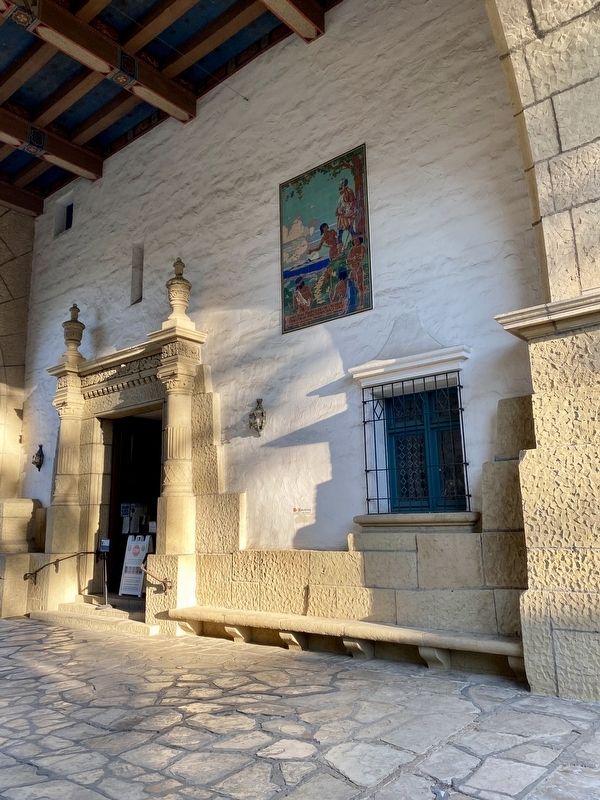
2. Jose Francisco De Ortega Marker - wide view
José Francisco’s great great grandfather Pedro Ortega was the first Ortega to come to Mexico or “Nueva Espania” from Castilla Leon Spain. He married an indigenous woman from northern Mexico. Jose Francisco Ortega was considered a “Castizo” which was a term used in colonial Spain to refer to people who were part indigenous and part Spanish by descent.
The history of my Ortega ancestors has been terribly distorted and is a disservice to the indigenous people of California and a disservice to the history of California itself. Santa Barbara has perpetuated a false narrative in an effort to erase my Ortega family’s legacy.
Editor’s response: Our page quoted his Wikipedia entry, which was recently updated. It now says that José Francisco Ortega was an indigenous Californio soldier. We have updated our quote and that update removed the incorrect information. Note To Editor only visible by Contributor and editor
— Submitted November 8, 2022, by George A Bustillos of Santa Barbara, California.
Photographed by Andrew Ruppenstein, March 4, 2019
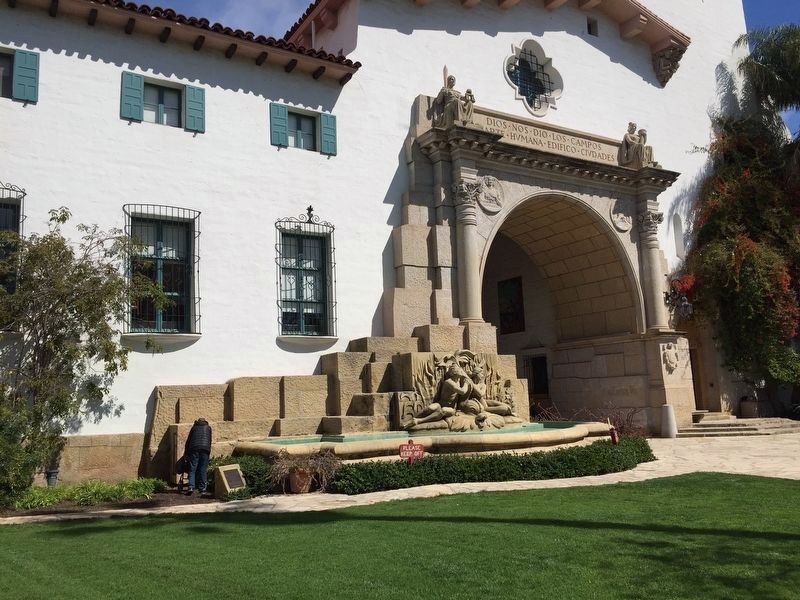
3. Jose Francisco De Ortega Marker - wider view
The marker can be seen here in the arched passageway between the front of the building and the courtyard of the Santa Barbara County Courthouse.
Credits. This page was last revised on September 11, 2023. It was originally submitted on December 11, 2020, by Andrew Ruppenstein of Lamorinda, California. This page has been viewed 1,826 times since then and 107 times this year. Photos: 1, 2, 3. submitted on December 11, 2020, by Andrew Ruppenstein of Lamorinda, California.
