Hampton University Museum
Oldest African-American Museum in the United States
| — | Hampton University | — |
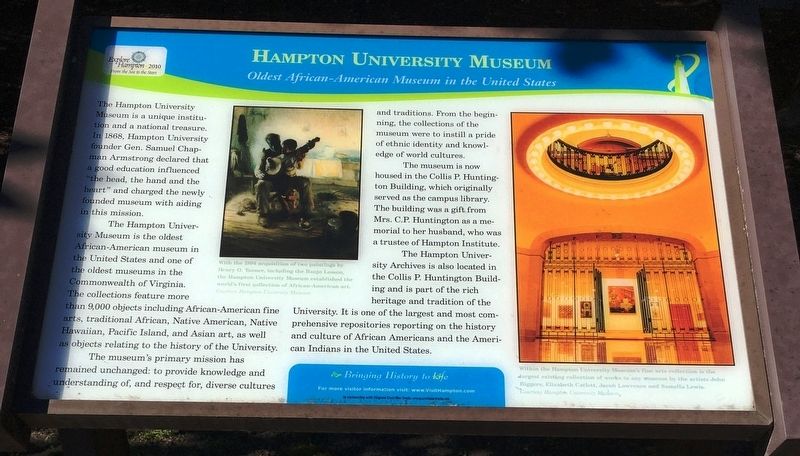
The Hampton University Museum is a unique institution and a national treasure. In 1868, Hampton University founder Gen. Samuel Chapman Armstrong declared that a good education influenced “the head, the hand and the heart” and charged the newly founded museum with aiding in this mission.
The Hampton University Museum is the oldest African-American museum in the United States and one of the oldest museums in the Commonwealth of Virginia. The collections feature more than 9,000 objects including African-American fine arts, traditional African, Native American, Native Hawaiian, Pacific Island, and Asian art, as well as objects relating to the history of the University.
The museum’s primary mission has remained unchanged: to provide knowledge and understanding of, and respect for, diverse cultures and traditions. From the beginning, the collections of the museum were to instill a pride of ethnic identity and knowledge of world cultures.
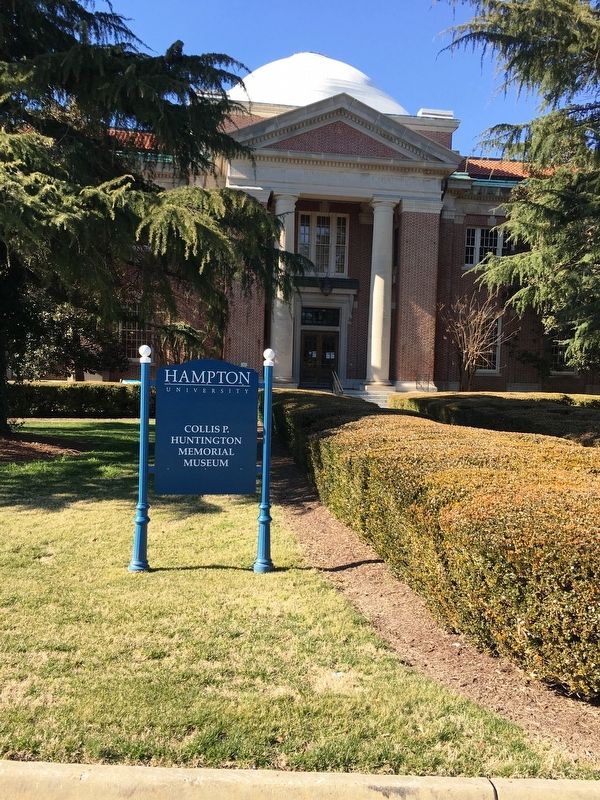
The museum is now housed in the Collis P. Huntington Building, which originally served as the campus library. The building was a gift from Mrs. C.P. Huntington as a memorial
this page online
The Hampton University Archives is also located in the Collis P. Huntington Building and is part of the rich heritage and tradition of the University. It is one of the largest and most comprehensive repositories reporting on the history and culture of African Americans and the American Indians in the United States.
(captions)
With the 1894 acquisition of two paintings by Henry O. Tanner, including Banjo Lesson, the Hampton University Museum established the world's first collection of African-American art. Courtesy Hampton University Museum
Within the Hampton University Museum's fine arts collection is the largest existing collection of works in any museum by the artists John Biggers, Elizabeth Catlett, Jacob Lawrence and Samuel Lewis. Courtesy Hampton University Museum
Erected 2010 by Hampton Convention & Visitor Bureau and the Virginia Civil War Trails.
Topics and series. This historical marker is listed in these topic lists: African Americans • Arts, Letters, Music • Education. In addition, it is included in the Historically Black Colleges and Universities
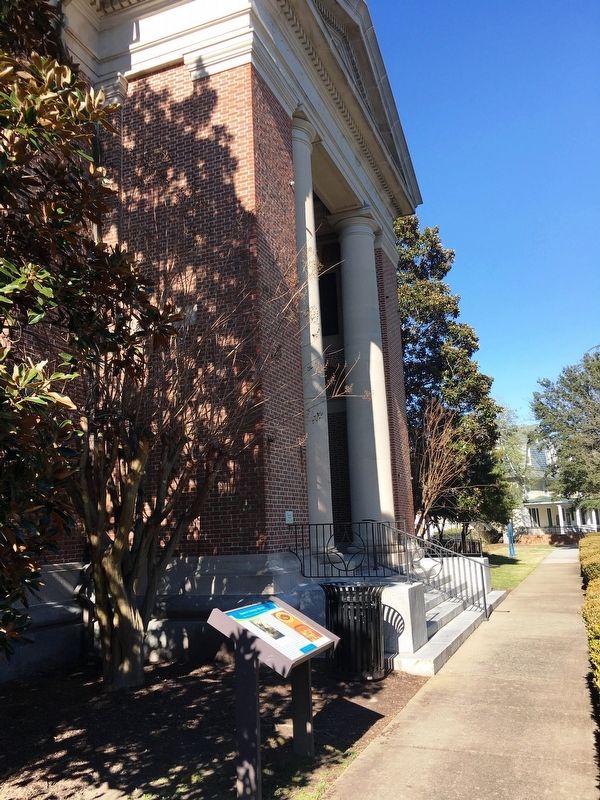
Location. 37° 1.256′ N, 76° 20.358′ W. Marker is in Hampton, Virginia. It is in Phoebus. It is at the intersection of Frissell Avenue and Ogden Circle, on the right when traveling west on Frissell Avenue. The marker is located on the Hampton University campus. Touch for map. Marker is at or near this postal address: 14 Frissell Avenue, Hampton VA 23669, United States of America. Touch for directions.

Regionally, this marker is on Virginia’s Peninsula and in Coastal Virginia. It is also in the American South, specifically in the Upper South, in the Tidewater, and on the Eastern Seaboard. Globally, it is in the North Atlantic Region, North America, the Western Hemisphere, the Western World, and the Anglosphere. Historically, it finds itself in what was once the territory of the Mississippian Culture, one of the original Thirteen Colonies, one of the Confederate States of America, and the Antebellum South.
Other nearby markers. At least 8 other markers are within walking distance of this marker: Robert C. Ogden Auditorium (within shouting distance of this marker);
Also see . . .
1. Visit Hampton Virginia. Hampton Convention & Visitor Bureau (Submitted on March 1, 2021.)
2. Hampton University Museum. (Submitted on March 1, 2021.)
Credits. This page was last revised on February 1, 2023. It was originally submitted on February 28, 2021, by Brandon D Cross of Flagler Beach, Florida. This page has been viewed 615 times since then and 57 times this year. Photos: 1, 2, 3. submitted on February 28, 2021, by Brandon D Cross of Flagler Beach, Florida. • Bernard Fisher was the editor who published this page.
