Frankenmuth in Saginaw County, Michigan — The American Midwest (Great Lakes)
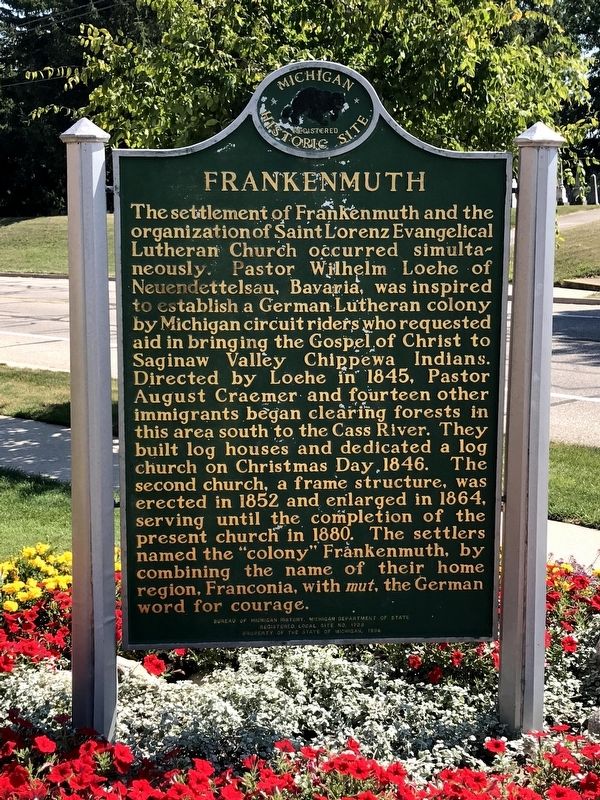
Frankenmuth
⎯⎯⎯
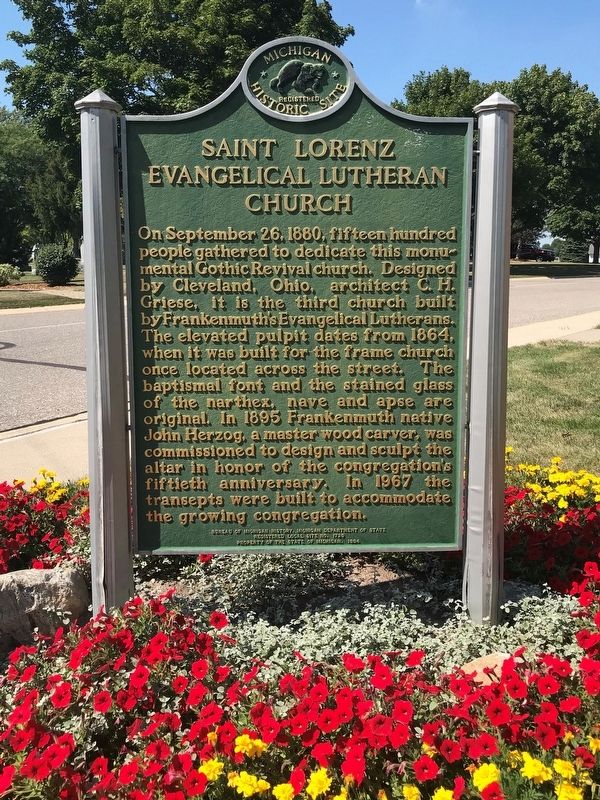
Saint Lorenz Evangelical Lutheran Church
Photographed by Kathy Garman, August 22, 2020
1. Frankenmuth Marker
this page online
Erected 1994 by Bureau of Michigan History, Michigan Department of State. (Marker Number L1729.)
Topics and series. This historical marker is listed in these topic lists: Architecture • Religion & Religious Structures • Settlements & Settlers. In addition, it is included in the Michigan Historical Commission series list. A significant historical year for this entry is 1845.
Location. 43° 19.791′ N, 83° 45.364′ W. Marker is in Frankenmuth, Michigan, in Saginaw County. It is on West Tuscola Street 0.1 miles east of South Dehmel Road, on the left when traveling east. Located just east of the entrance to the church's parking lot off of West Tuscola Street. Touch for map. Marker is at or near this postal address:
Photographed by Kathy Garman, August 22, 2020
2. Saint Lorenz Evangelical Lutheran Church Marker

Regionally, this marker is in Mid-Michigan. It is also in the American Midwest. Globally, it is in North America, the Western Hemisphere, the Western World, and the Anglosphere. Historically, it finds itself in what was once the Northwest Territory.
Other nearby markers. At least 8 other markers are within walking distance of this marker: Site of St. Lorenz Frame Church (within shouting distance of this marker); Frankenmuth Insurance (approx. half a mile away); St. Lorenz Main Street Central School (approx. half a mile away); Zehnder’s (approx. 0.8 miles away); Rau's Country Store Recalls Bygone Era (approx. 0.8 miles away); Michigan's German Settlers (approx. 0.8 miles away); Frankenmuth Bavarian Inn (approx. 0.8 miles away); Frankenmuth Woolen Mill (approx. 0.8 miles away). Touch for a list and map of all markers in Frankenmuth.
Photographed by John Garman, August 22, 2020
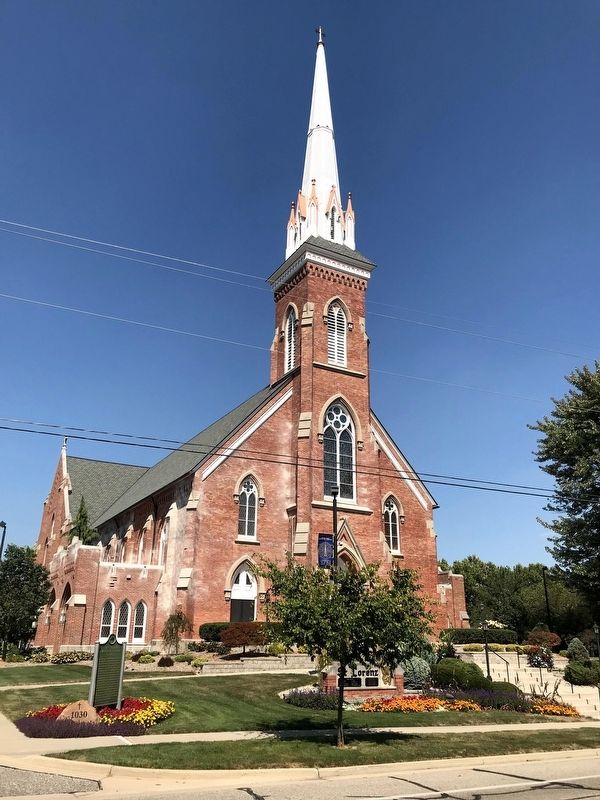
3. Saint Lorenz Evangelical Lutheran Church and the Historical Marker

Photographed by Kathy Garman, August 22, 2020
4. Saint Lorenz Evangelical Lutheran Church
A view from the northwest corner of the church looking southeast.
Photographed by Kathy Garman, August 22, 2020
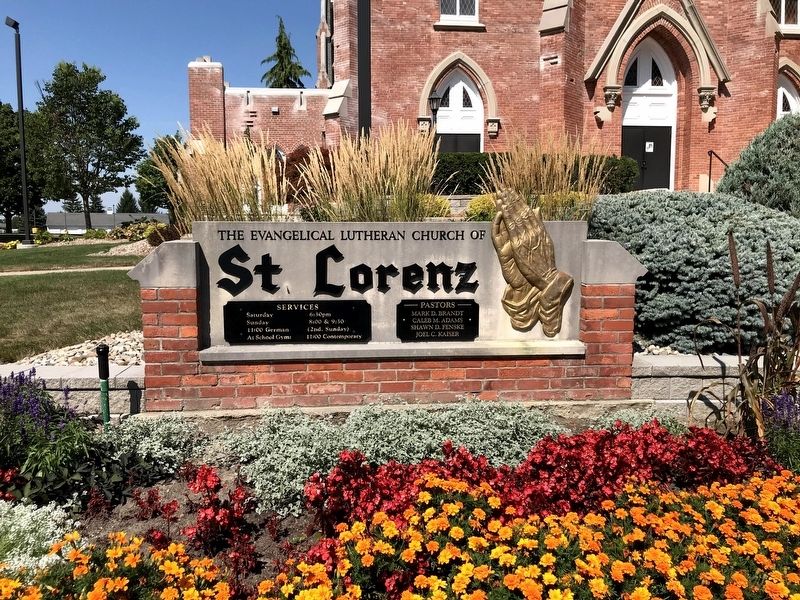
5. Saint Lorenz Evangelical Lutheran Church Sign
Credits. This page was last revised on March 7, 2021. It was originally submitted on March 6, 2021, by John Garman of Rochester Hills. This page has been viewed 863 times since then and 72 times this year. Photos: 1, 2, 3, 4, 5. submitted on March 6, 2021, by John Garman of Rochester Hills. • Mark Hilton was the editor who published this page.
