The Street of Royalty
Pennsylvania Avenue Heritage Trail
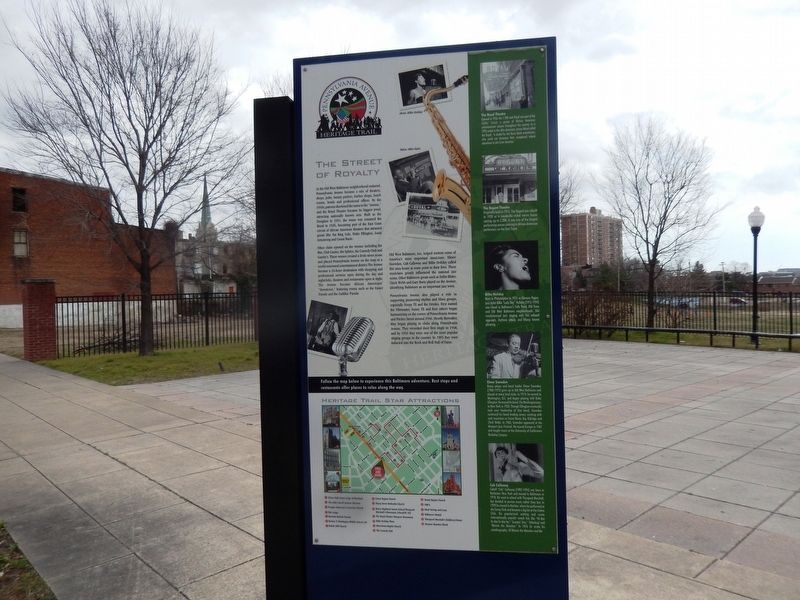
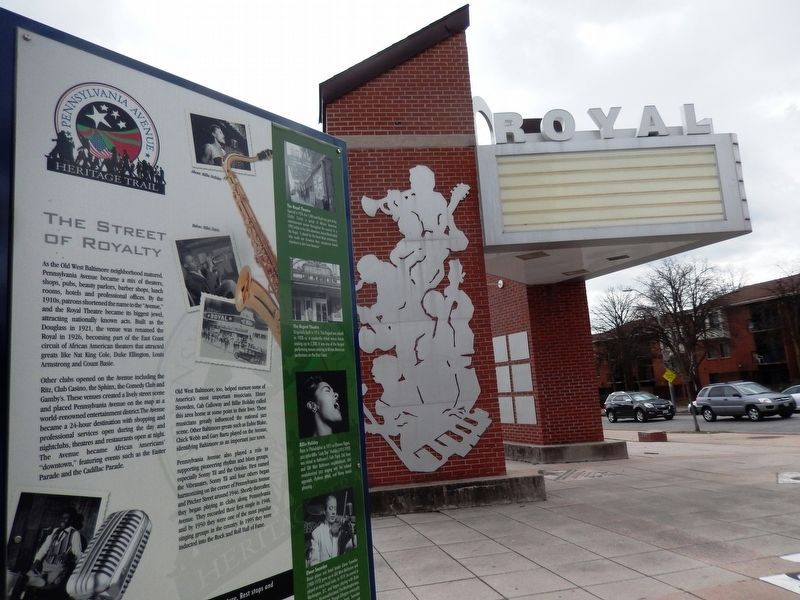
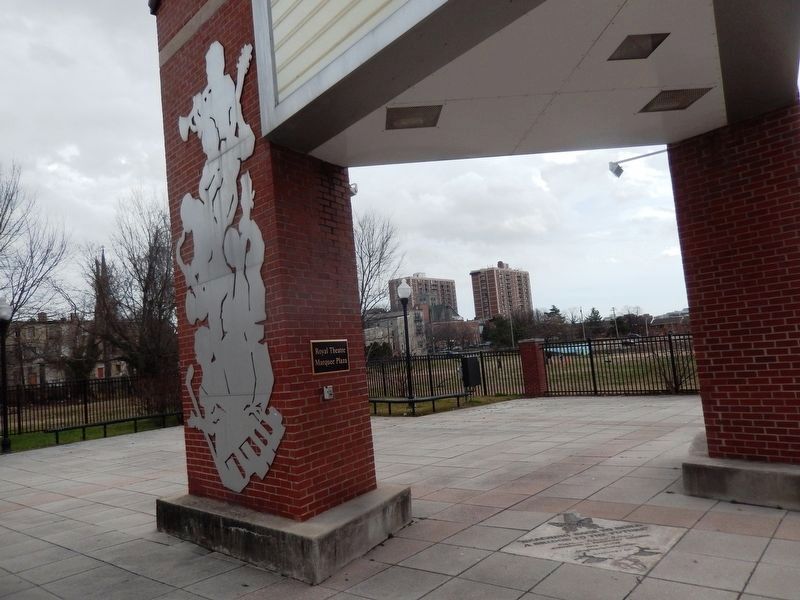
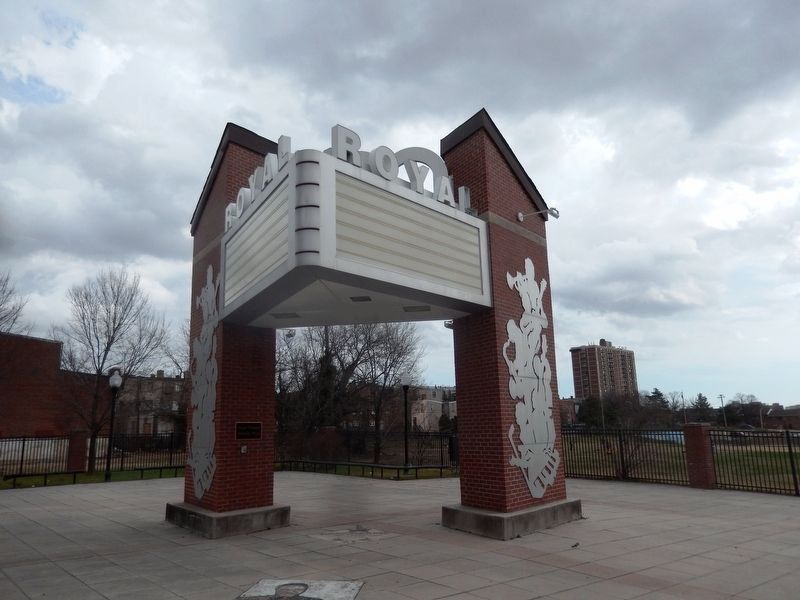
As the Old West Baltimore neighborhood matured, Pennsylvania Avenue became a mix of theaters, shops, pubs, beauty parlors, barber shops, lunch rooms, hotel and professional offices. By the 1910s, patrons shortened the name to the “Avenue,” and the Royal Theatre became its biggest jewel, attracting nationally known acts. Built as the Douglas in 1921, the venue was renamed the Royal in 1926, becoming part of the East Coast circuit of African American theaters that attracted greats like Nat King Col, Duke Ellington, Louis Armstrong and Count Basie.
Other clubs opened on the Avenue including the Ritz, Club Casino, the Sphinx, the Comedy Club and Gamby’s. These venues created a lively street scene and placed Pennsylvania Avenue on the map as a world-renowned entertainment district. The Avenue became a 24-hour destination with shopping and professional services open during the day and nightclubs, theatres and restaurants open at night. The Avenue became African Americans’ “downtown,” featuring events such as the Easter Parade and the Cadillac Parade.
Old West Baltimore, too, helped nurture some
this page online
Pennsylvania Avenue also played a role in supporting pioneering rhythm and blues groups, especially Sonny Til and the Orioles. First named the Vibranairs, Sonny Til and four others began harmonizing on the corner of Pennsylvania Avenue and Pitcher Street around 1946. Shortly thereafter, they began playing in clubs along Pennsylvania Avenue. They recorded their first single in 1948, and by 1950 they were one of the most popular singing groups in the country. In 1995 they were inducted into the Rock and Roll Hall of Fame.
(Inscriptions under the images on the right)
The Royal Theatre-Opened in 1926, the 1,100 seat Royal was part of the Chitin’ Circuit, a group of African Americans entertainment venue throughout the country. In a 1992 article in the Afro-American, James Wood called the Royal, “a
Reverse Side of the Marker
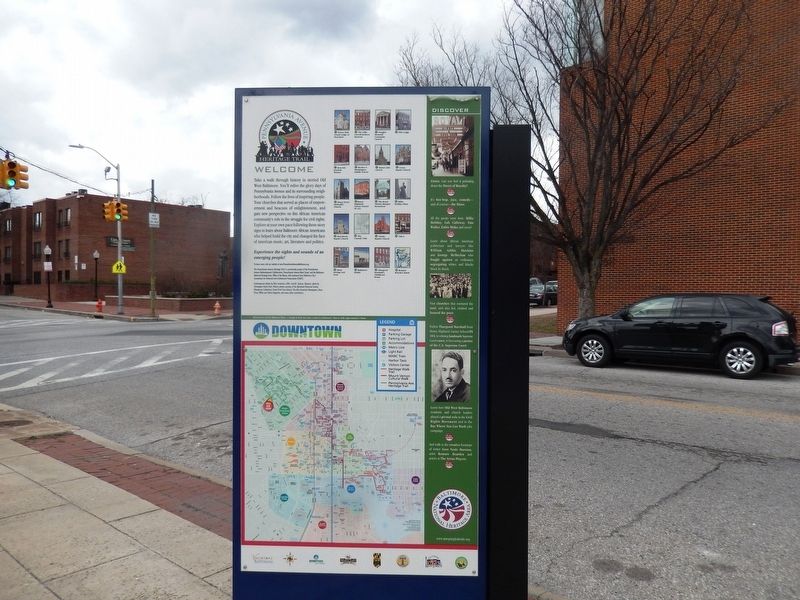
Welcome
Take a walk through history in storied Old West Baltimore. You’ll relive the glory days of Pennsylvania Avenue and its surrounding neighborhoods. Follow the lives of inspiring people. Tour churches that served as places of empowerment and beacons of enlightenment, and gain new perspective on this African American community’s role in the struggle for civil rights. Explore at your own pace following
(Inscriptions under the images on the right)
1.Prince Hall Grand Lodge of Maryland
2.The Lillie Carroll Jackson Museum
3.Douglas Memorial Community Church
4.Elks Lodge
5.Morriah Keyhole Houses
6.Booker T. Washington Middle School
7.Bethel AME Church
8.Union Baptist Church
9.Sharp Street Methodist Church
10.Henry Highland Garnet School/PS 103
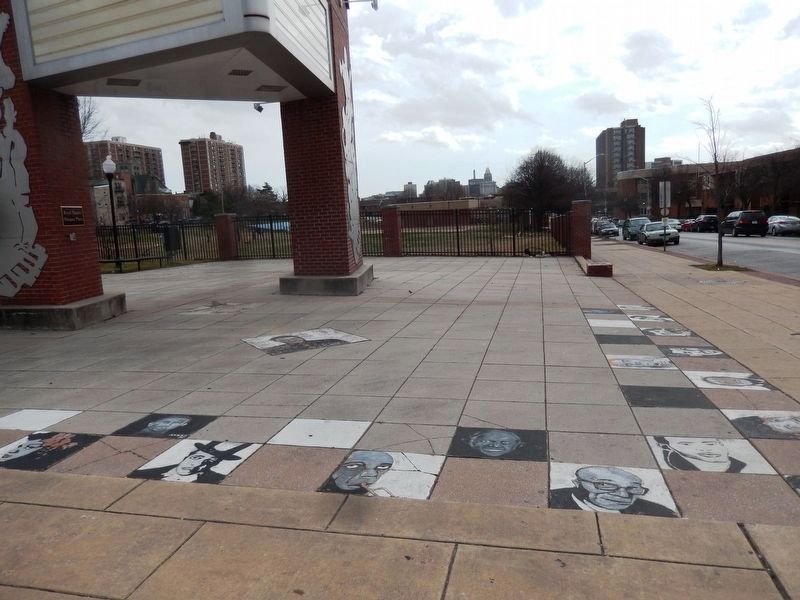
11.The Royal Theatre Marquee Monument
12.Billie Holiday Plaza
13.Macedonia Baptist Church
14.The Comedy Club
15.Trinity Baptist Church
16.YMCA
17.Ideal Savings and Loan
18.Baltimore Masjid
19.Thurgood Marshall’s Childhood Home
20.Romare Bearden Mural.
Discover
(Inscriptions under the images)
*Listen, Can you feel it pulsating down the Street of Royalty?
*It’s bee-bop, jazz, comedy—and of course—the blues.
*All the greats were here. Billie Holiday, Cab Calloway, Fats Waller, Eubie Blake and more!
*Learn about African American politicians and lawyers like William Ashbie Hawkins and George McMechan who fought against an ordinance
*Visit churches that nurtured the soul, and also fed, clothed and housed the poor.
*Follow Thurgood Marshall from Henry Highland Garnet School/PS 103, to winning landmark Supreme Court cases, to becoming a justice of the U.S. Supreme Court.
*Learn how Old West Baltimore residents and church leaders played a pivotal role in the Civil Rights Movement and in the Buy Where You Can Work jobs campaign.
*And walk in the creative footsteps of writer Zora Neale Hurston, artist Romare Bearden and actors at the Arena Players.
Topics. This historical marker is listed in these topic lists: African Americans • Arts, Letters, Music • Civil Rights. A significant historical year for this entry is 1921.
Location. 39° 18.076′ N, 76° 37.888′ W. Marker is in Baltimore, Maryland. It is in Upton. It is at the intersection of West Lafayette Avenue and Pennsylvania Avenue on West Lafayette Avenue. Touch for map. Marker is in this post office area: Baltimore MD 21217, United States of America. Touch for directions.

Regionally, this marker is in Central Maryland. It is also in the American Mid-Atlantic,
Other nearby markers. At least 8 other markers are within walking distance of this marker: Billie Holiday (within shouting distance of this marker); African American Politicians (about 300 feet away, measured in a direct line); Henry Highland Garnett School (about 400 feet away); Courting Justice (about 600 feet away); Buy Where You Can Work Campaign & Higher Education (about 800 feet away); Bethel A.M.E. Church (approx. 0.2 miles away); Henry Highland Garnet Park (approx. 0.2 miles away); Creating an African American Neighborhood (approx. 0.2 miles away). Touch for a list and map of all markers in Baltimore.
Another marker is no longer nearby. In Memory of Dr. Lillie May Jackson (was approx. 0.2 miles away but has been confirmed missing).
Credits. This page was last revised on March 16, 2021. It was originally submitted on March 3, 2017, by Don Morfe of Baltimore, Maryland. This page has been viewed 1,584 times since then and 132 times this year. Last updated on March 16, 2021, by Carl Gordon Moore Jr. of North East, Maryland. Photos: 1, 2, 3, 4, 5, 6. submitted on March 3, 2017, by Don Morfe of Baltimore, Maryland. • Bill Pfingsten was the editor who published this page.
