Johnny Cash
| — | Rock 'n Roll Highway 67 | — |
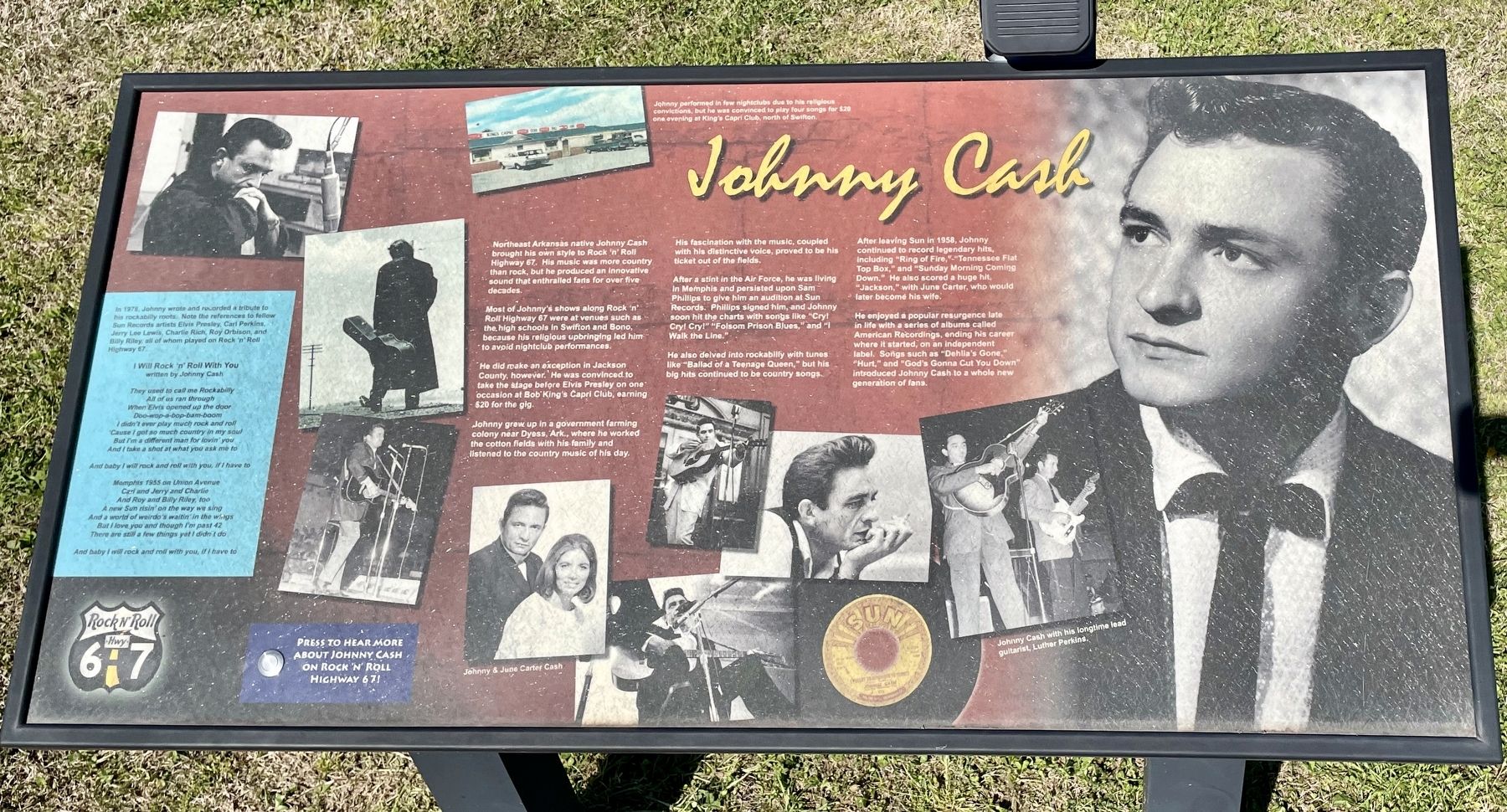
Most of Johnny's shows along Rock 'n' Roll Highway 67 were at venues such as the high schools in Swifton and Bono, because his religious upbringing led him to avoid nightclub performances.
He did make an exception in Jackson County, however. He was convinced to take the stage before Elvis Presley on one occasion at Bob King's Capri Club, earning $20 for the gig.
Johnny grew up in a government farming colony near Dyess, Ark., where he worked the cotton fields with his family and listened to the country music of his day.
His fascination with the music, coupled with his distinctive voice, proved to be his ticket out of the fields.
After a stint in the Air Force, he was living in Memphis and persisted upon Sam Phillips to give him an audition at Sun Records. Phillips signed him, and Johnny soon hit the charts with songs like "Cry! Cry! Cry!" "Folsom Prison Blues," and "I Walk the
this page online
He also delved into rockabilly with tunes like “Ballad of a Teenage Queen," but his big hits continued to be country songs.
After leaving Sun in 1958, Johnny continued to record legendary hits, including “Ring of Fire," "Tennessee Flat Top Box," and “Sunday Morning Coming Down." He also scored a huge hit, Jackson,” with June Carter, who would later become his wife.
He enjoyed a popular resurgence late in life with a series of albums called American Recordings, ending his career where it started, on an independent label. Songs such as “Dehlia's Gone," "Hurt," and "God's Gonna Cut You Down" introduced Johnny Cash to a whole new generation of fans.
Photo caption at top: Johnny performed in few nightclubs due to his religious convictions, but he was convinced to play four songs for $20
one evening at King's Capri Club, north of Swifton.
Topics. This historical marker is listed in these topic lists: Arts, Letters, Music • Entertainment. A significant historical year for this entry is 1958.
Location. 36° 4.029′ N, 90° 57.447′ W. Marker is in Walnut Ridge, Arkansas, in
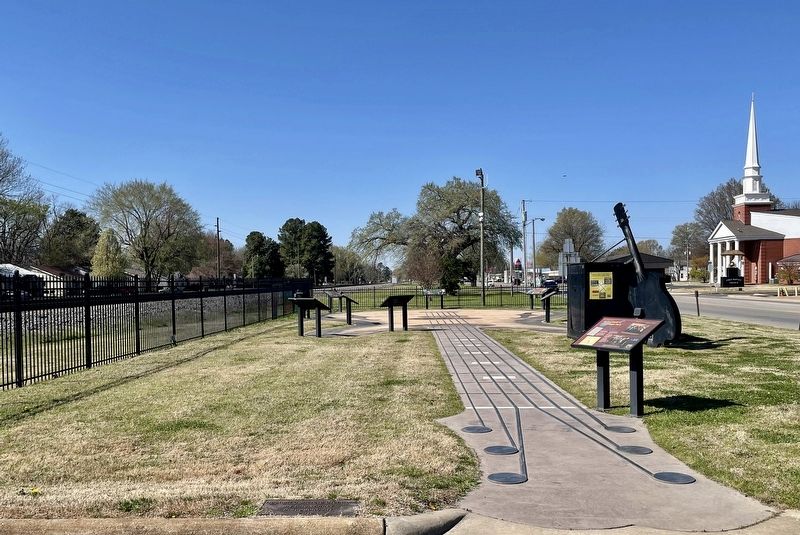

Regionally, this marker is in the American South and specifically in the Upper South. Globally, it is in North America, the Western Hemisphere, the Western World, and the Anglosphere. Historically, it finds itself in what was once the territory of the Mississippian Culture, the Louisiana Purchase, one of the Confederate States of America, and the Antebellum South.
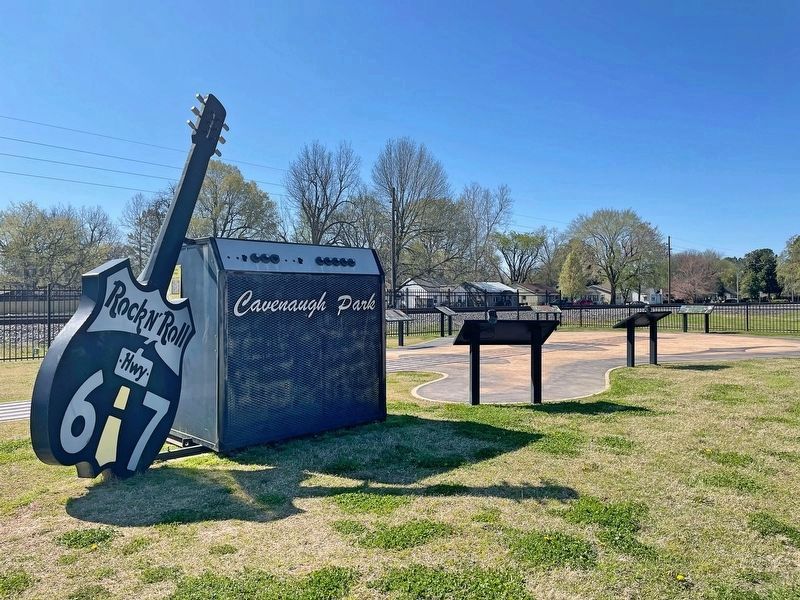
Other nearby markers. At least 8 other markers are within walking distance of this marker: Billy Lee Riley (here, next to this marker); Carl Perkins (here, next to this marker); Jerry Lee Lewis (a few steps from this marker); Roy Orbison (a few steps from this marker); Conway Twitty (a few steps from this marker); Wanda Jackson (a few steps from this marker); Sonny Burgess (a few steps from this marker); When The Beatles Came to Town (about 600 feet away, measured
Credits. This page was last revised on April 13, 2021. It was originally submitted on April 6, 2021, by Mark Hilton of Montgomery, Alabama. This page has been viewed 550 times since then and 16 times this year. Photos: 1, 2, 3. submitted on April 6, 2021, by Mark Hilton of Montgomery, Alabama.
