Central Park West Historic District in Manhattan in New York County, New York — The American Northeast (Mid-Atlantic)
African Union Church
Seneca Village Community
Photographed by Larry Gertner, June 17, 2020
1. African Union Church Marker..
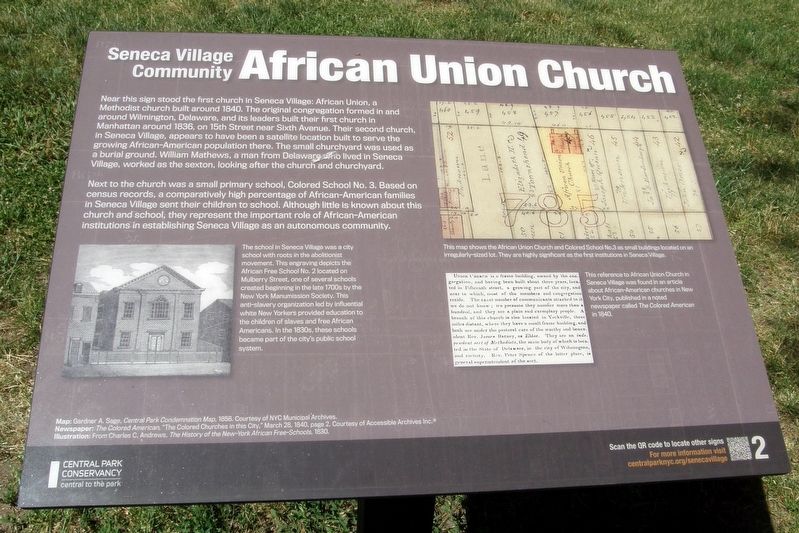
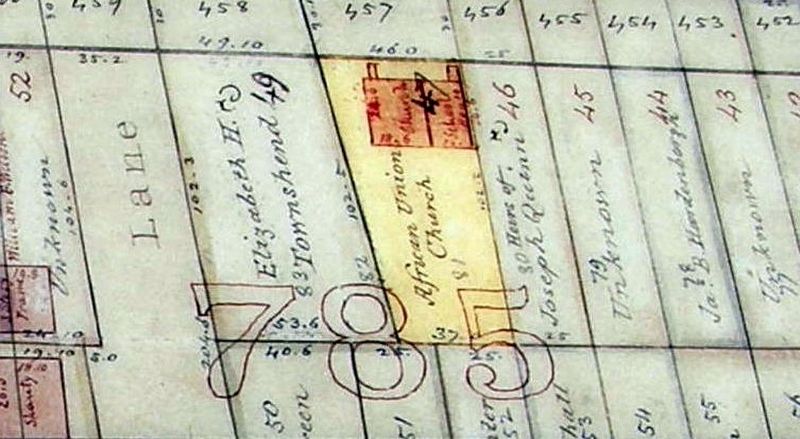
Near this sign stood the first church in Seneca Village: African Union, a Methodist church built around 1840. The original congregation formed in and around Wilmington, Delaware, and its leaders built their first church in Manhattan around 1836, on 15th Street near Sixth Avenue. Their second church, in Seneca Village, appears to have been a satellite location built to serve the growing African-American population there. The small churchyard was used as a burial ground. William Matthews, a man from Delaware who lived in Seneca Village, worker as the sexton, looking after the church and churchyard.
Next to the church was a small primary school, Colored School No. 3. Based on census records, a comparatively high percentage of African-American families in Seneca Village sent their children to school. Although little is known about the church and school, they represent the important role of African-American institutions in establishing Seneca Village as an autonomous community.
Erected 2020 by Central Park Conservancy.
Topics. This historical marker is listed in these topic lists: African Americans • Parks & Recreational Areas
this page online
Location. 40° 47.042′ N, 73° 58.094′ W. Marker is in Manhattan, New York, in New York County. It is in the Central Park West Historic District. It can be reached from West 85th Street east of Central Park West. Touch for map. Marker is at or near this postal address: Central Park, New York NY 10024, United States of America. Touch for directions.

Regionally, this marker is in New York City. It is also in the American Northeast, in the Mid-Atlantic, and on the Eastern Seaboard. Globally, it is in the North Atlantic Region, North America, the Western Hemisphere, the Western World, and the Anglosphere. Historically, it finds itself in what was once New Netherland and also one of the original Thirteen Colonies.
Other nearby markers. At least 8 other markers are within walking distance of this marker: Seneca Village (a few steps from this marker); Gardens (a few steps from this marker); AME Zion Church (a few steps from this marker); Seneca Village Community (within shouting distance of this marker); Seneca Village Landscape (within shouting distance
Photographed by Larry Gertner, June 17, 2020
2. African Union Church Marker
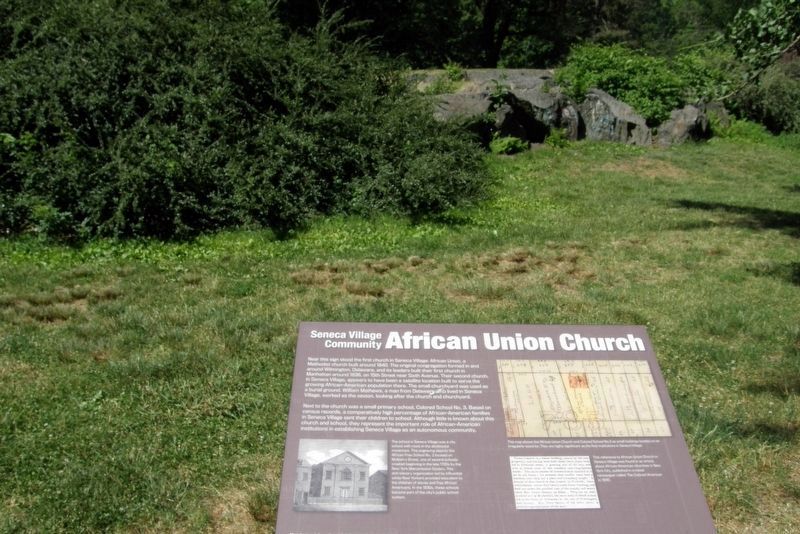
Like most Seneca Village sites, there are no physical remains here.
Also see . . .
1. Seneca Village. Wikipedia entry (Submitted on April 20, 2021, by Larry Gertner of New York, New York.)
2. Seneca Village Site. Central Park Conservancy website entry:
Links to several related sub-topics (Submitted on April 20, 2021, by Larry Gertner of New York, New York.)
3. Seneca Village, New York City. National Park Service entry (Submitted on April 20, 2021, by Larry Gertner of New York, New York.)
Photographed by Larry Gertner, June 17, 2020
3. Inset
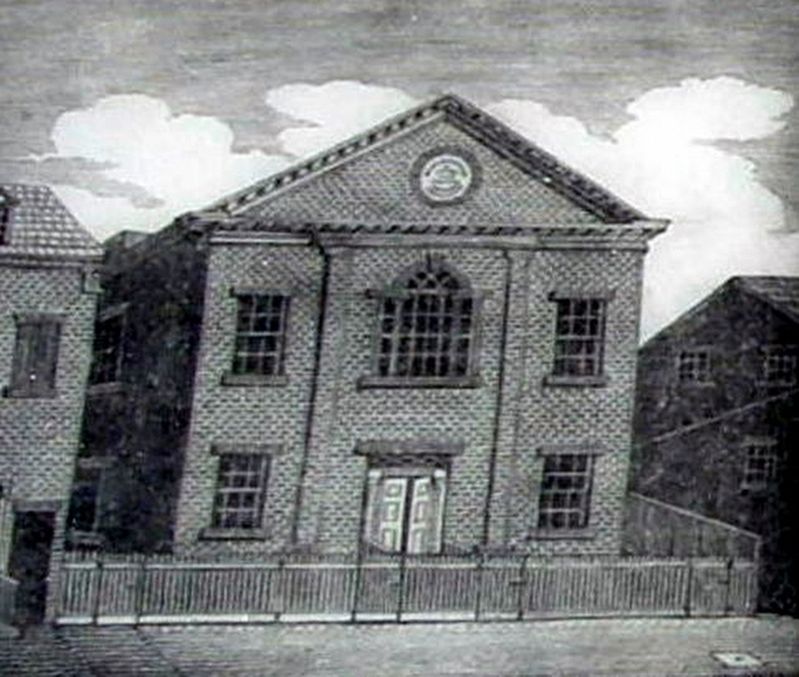
"The school in Seneca Village was a city school with roots in the abolitionist movement. This engraving depicts the African Free School No. 2 located on Mulberry Street, one of several schools created beginning in the late 1700s by the New York Manumission Society. This anti-slavery organization led by influential white New Yorkers provided education to the children of slaves and free African Americans. In the 1830s, there schools became part of the city’s public school system."
Photographed by Larry Gertner, 110
4. Inset
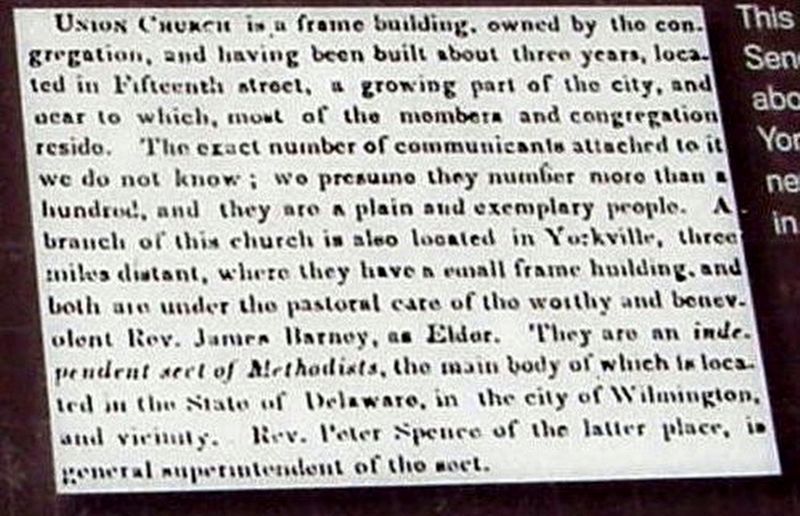
"This reference to African Union Church in Seneca Village was found in an article about African-American churches in New York City, published in a noted newspaper called The Colored American in 1840."
Photographed by Larry Gertner, June 17, 2020
5. Inset
"This map shows the African Union Church and Colored School No. 3 as small buildings located on an irregularly-sized lot. They are highly significant as the first institutions in Seneca Village."
Credits. This page was last revised on January 31, 2023. It was originally submitted on April 20, 2021, by Larry Gertner of New York, New York. This page has been viewed 1,298 times since then and 107 times this year. Photos: 1, 2, 3, 4, 5. submitted on April 20, 2021, by Larry Gertner of New York, New York.
