Piqua in Miami County, Ohio — The American Midwest (Great Lakes)
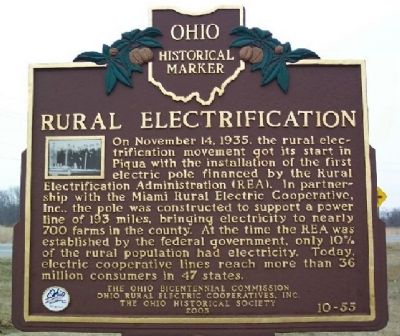
Rural Electrification
Photographed by William Fischer, Jr., March 6, 2009
1. Rural Electrification Marker
Erected 2003 by Ohio Bicentennial Commission, Ohio Rural Rlectric Cooperatives, Inc., and The Ohio Historical Society. (Marker Number 10-55.)
Topics and series. This historical marker is listed in these topic lists: Charity & Public Work • Communications • Industry & Commerce. In addition, it is included in the Ohio Historical Society / The Ohio History Connection, and the Rural Electrification 💡 series lists. A significant historical month for this entry is November 1736.
Location. 40° 9.003′ N, 84° 12.156′ W. Marker is in Piqua, Ohio, in Miami County.
this page online

Regionally, this marker is in the Dayton Metro, in the Miami Valley, and in the Till Plains. It is also in the American Midwest and in the Corn Belt. Globally, it is in North America, the Western Hemisphere, the Western World, and the Anglosphere. Historically, it finds itself in what was once the Haudenosaunee (Iroquois) Confederacy, the territory of the Mississippian Culture, and the Northwest Territory.
Other nearby markers. At least 8 other markers are within 2 miles of this marker, measured as the crow flies: Home Town Hero (about 300 feet away, measured in a direct line); J. Scott Garbry (approx. ¼ mile away); Vice Admiral Stephen Clegg Rowan (approx. 1.8 miles away); The Village of Huntersville (approx. 1.8 miles away); Randolph Settlement / Jackson Cemetery (African) (approx. 1.8 miles away); Jackson Cemetery (approx. 1.9 miles away); Shawnee Bridge (approx. 1.9 miles
Photographed by William Fischer, Jr., Ohio Bicen
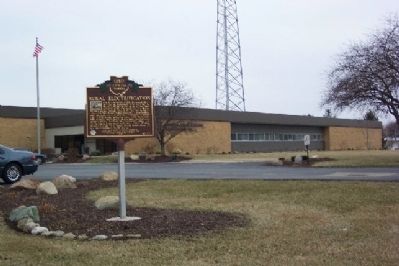
2. Rural Electrification Marker
Pioneer Electric Cooperative building in background.
Another marker is no longer nearby. Lock Nine (was approx. 1.9 miles away but has been confirmed missing).
Photographed by William Fischer, Jr., Ohio Bicen
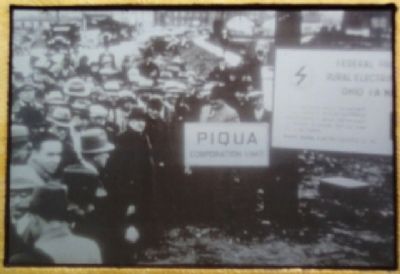
3. Rural Electrification Marker Photograph
Credits. This page was last revised on January 21, 2020. It was originally submitted on March 23, 2009, by William Fischer, Jr. of Reynoldsburg, Ohio. This page has been viewed 1,670 times since then and 44 times this year. Photos: 1, 2, 3. submitted on March 23, 2009, by William Fischer, Jr. of Reynoldsburg, Ohio. • Kevin W. was the editor who published this page.
