Riverside in Riverside County, California — The American West (Pacific Coastal)
First Congregational Church
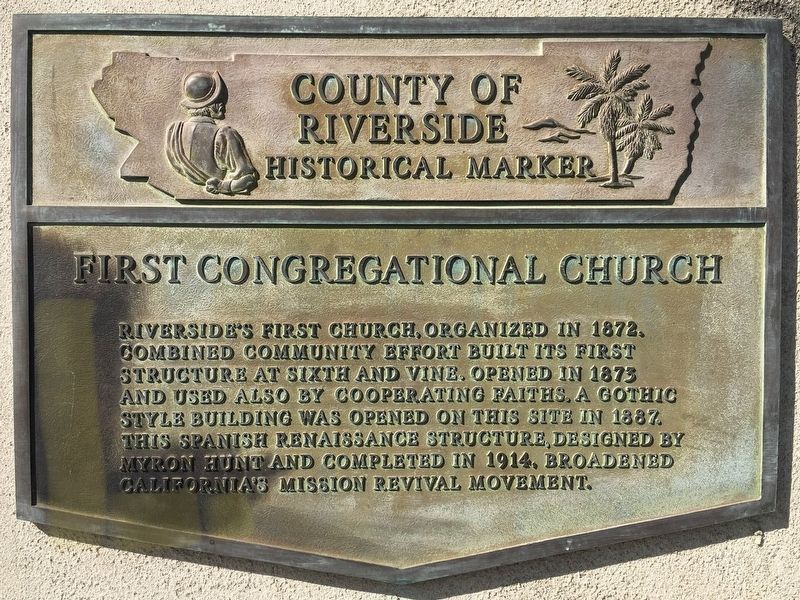
County of Riverside Historical Marker
Photographed by Craig Baker, July 1, 2021
1. First Congregational Church Marker
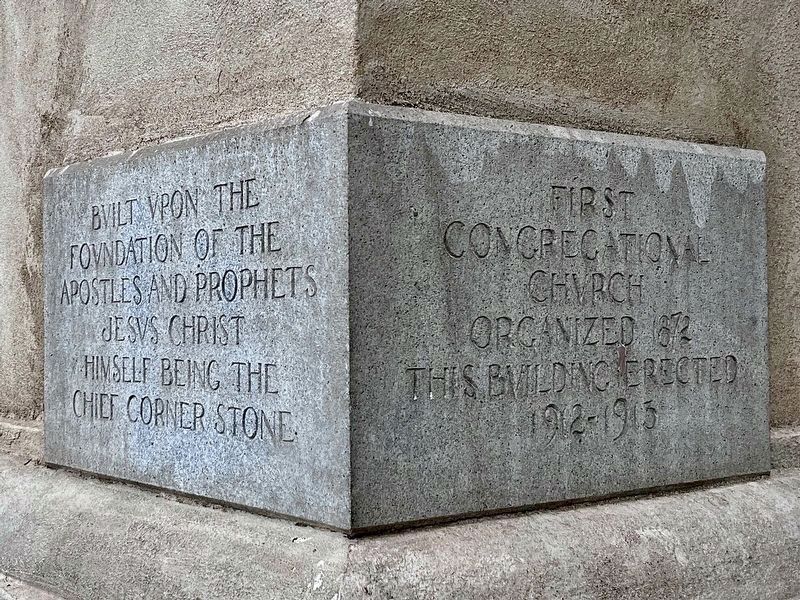
Riverside's first church, organized in 1872. Combined community effort built its first structure at Sixth and Vine. Opened in 1873 and used also by cooperating faiths, a Gothic style building was opened on this site in 1887. This Spanish Renaissance structure, designed by Myron Hunt and completed in 1914, broadened California's Mission Revival movement.
City of Riverside plaque:
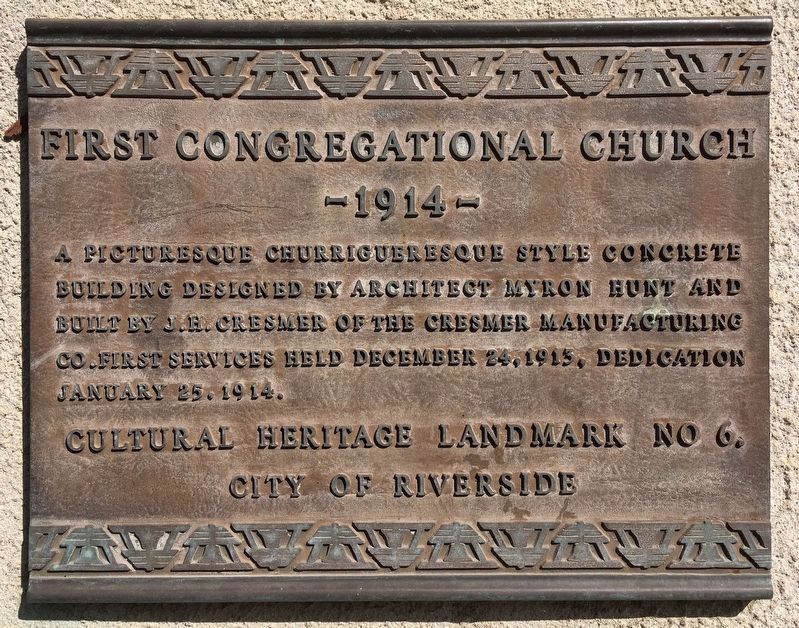
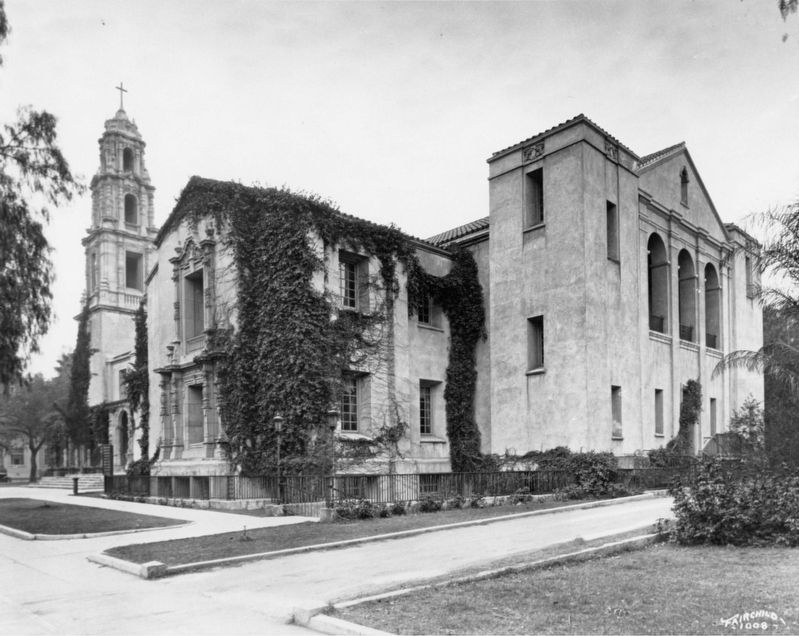
A picturesque Churrigueresque style concrete building designed by architect Myron Hunt and built by J.H.Cresmer of the Cresmer Manufacturing Co. First services held December 24, 1915, dedication January 25, 1914.
Erected by County of Riverside; and City of Riverside. (Marker Number 6.)
Topics and series. This historical marker is listed in these topic lists: Architecture • Religion & Religious Structures. In addition, it is included in the Riverside Cultural Heritage Board Landmarks series list. A significant historical date for this entry is January 25, 1914.
Location. 33° 58.912′ N, 117° 22.319′ W. Marker is in Riverside, California, in Riverside County. It is at the intersection of Mission Inn Avenue and Lemon Street, on
this page online

Regionally, this marker is in Greater Los Angeles, in the Inland Empire, and in the Peninsular Ranges. It is also in the American Southwest. Globally, it is in North America, on the Ring of Fire, on the Pacific Rim, in the Western Hemisphere, in the Western World, and in the Anglosphere. Historically, it finds itself in what was once New Spain and also Mexico’s Alta California.
Other nearby markers. At least 8 other markers are within walking distance of this marker: Universalist-Unitarian Church (within shouting distance of this marker); Meet Me at the Cheech (about 300 feet away, measured in a direct line); Riverside Municipal Auditorium (about 300 feet away); Old City Hall (about 300 feet away); Chinese Memorial Pavilion (about 300 feet away); This Olive Tree (about 400 feet away); Bell From Locomotive 66 (about 400 feet away); Riverside Art Center and Museum (about 400 feet away). Touch for a list and map of all markers
Photographed by Craig Baker, July 1, 2021
2. City Marker
Also see . . .
1. Landmarks of the City of Riverside #6. (Submitted on June 6, 2026, by Volt Craft of Riverside, California.)
2. National Register of Historic Places #97000297 (62MB PDF). Entered into the National Register 4/6/1997 - This document is the entire application process including detailed description of the site, statement of significance, and pictures.
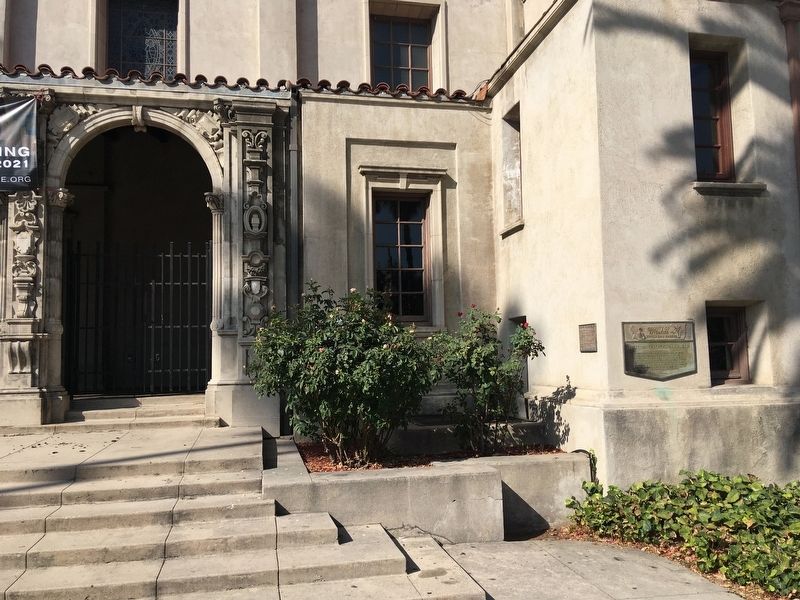
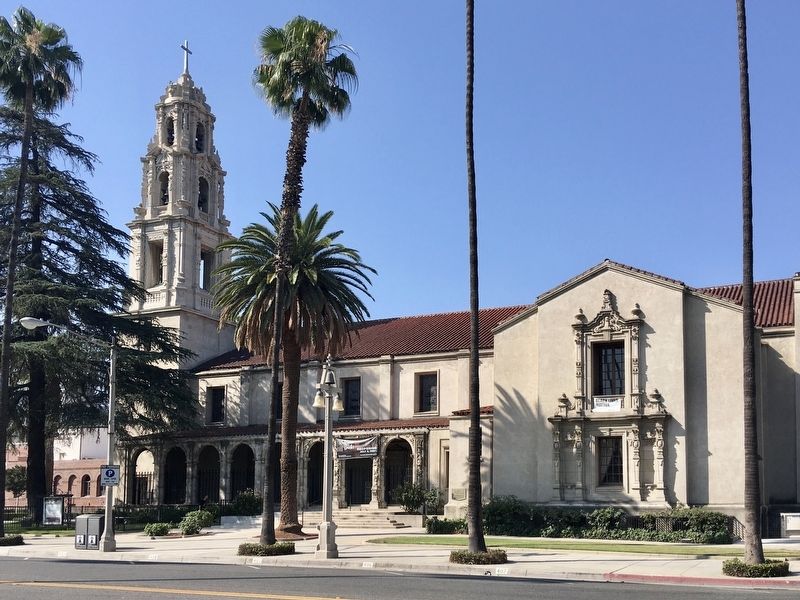
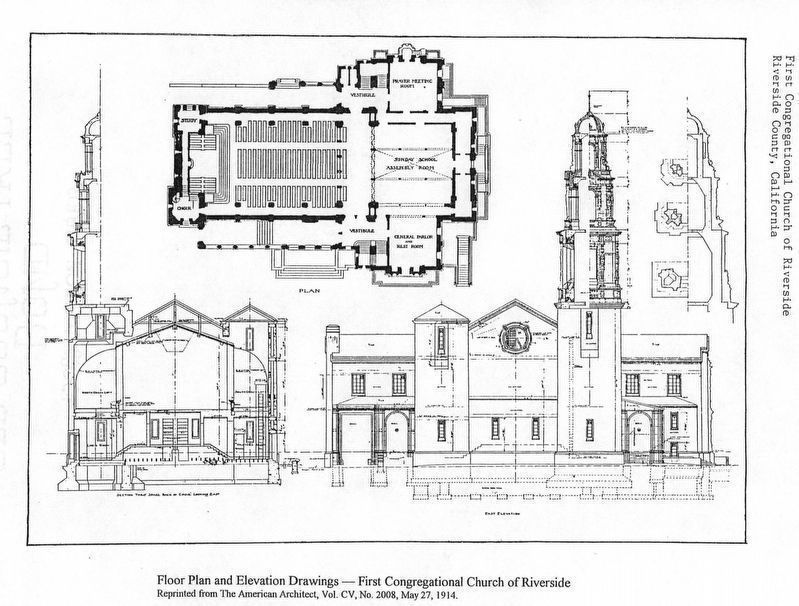
The First Congregational Church of Riverside (1913) is significant as an early example of the Churrigueresque phase of Spanish Colonial Revival style architecture in the state of California. This phase of the Spanish Colonial Revival, dating from ca. 1913-1930, is defined by the use of richly decorative groups of vertical rows of estipites and other ornamentation to frame, most typically, the entrance, windows and the upper sections of a building, including towers, in a fashion that is derived from the precedent of eighteenth-century Baroque of Spain and Latin American. The church was designed in 1910 by well-known Pasadena architects Myron Hunt and Elmer Grey. Later that same year the team ended their partnership; Hunt took over the project(Submitted on June 25, 2026, by Volt Craft of Riverside, California.)and significantly modified the original design before construction began in 1912. The church design preceded the 1915 California Panama International Exposition, typically considered to be the launching point for the popularity of the Spanish Colonial Revival in California. The First Congregational Church is eligible for listing in the National Register under Criterion C, at the state level of significance. The church also meets Criteria Consideration A: Religious Properties, as the property is significant for its architectural and design values, not for religious doctrine.Photographed by Craig Baker, July 1, 20213. First Congregational Church Markers
Photographed by Craig Baker, July 1, 2021
4. First Congregational Church
Photographed by Adam Margolis, June 14, 2023
5. Church Cornerstone, 1912 - 1913
courtesy NRHP/NPS
6. Floor Plan - 1914
courtesy NRHP/NPS, 1997
7. First Congregational Church
Credits. This page was last revised on July 9, 2026. It was originally submitted on July 3, 2021, by Craig Baker of Sylmar, California. This page has been viewed 775 times since then and 63 times this year. Photos: 1, 2, 3, 4. submitted on July 3, 2021, by Craig Baker of Sylmar, California. 5. submitted on June 15, 2023, by Adam Margolis of Mission Viejo, California. 6, 7. submitted on June 25, 2026, by Volt Craft of Riverside, California.
