Lake Elsinore in Riverside County, California — The American West (Pacific Coastal)
Crescent Bath House
Photographed by Craig Baker, July 1, 2021
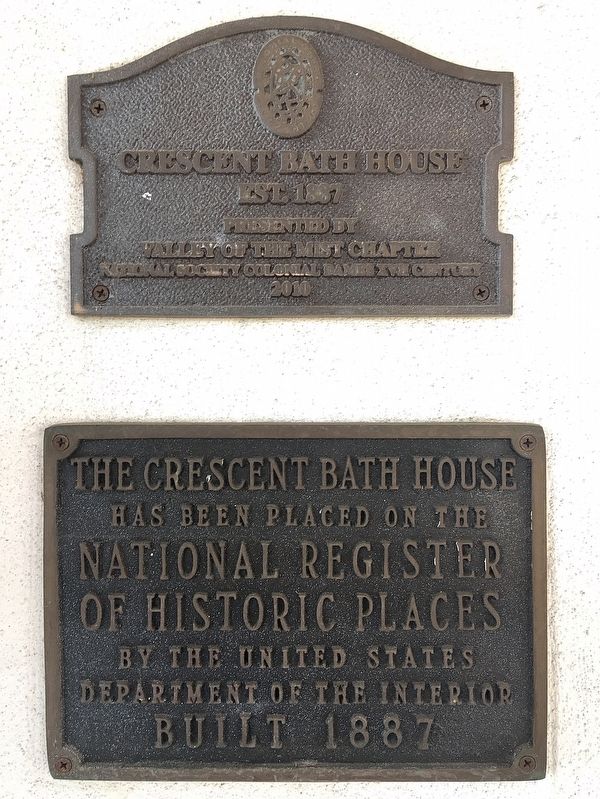
1. Crescent Bath House Marker
Est. 1887.
Presented by Valley of the Mist Chapter, National Society Colonial Dames XVII Century, 2010.
The Crescent Bath House has been placed on the National Register of Historic Places by the United States Department of the Interior. Built 1887.
Erected 2010 by National Society Colonial Dames XVII Century, and National Park Service.
Topics and series. This historical marker is listed in these topic lists: Architecture • Industry & Commerce • Settlements & Settlers. In addition, it is included in the The Colonial Dames XVII Century, National Society series list. A significant historical year for this entry is 1887.
Location. 33° 40.114′ N, 117° 19.751′ W. Marker is in Lake Elsinore, California, in Riverside County. It is at the intersection of Graham Avenue and Spring Street, on the right when traveling west on Graham Avenue. Touch for map. Marker is at or near this postal address: 201 W Graham Ave, Lake Elsinore CA 92530, United States of America. Touch for directions.

Regionally, this marker is in Greater Los Angeles, in the Inland Empire, and in the Peninsular Ranges. It is also
this page online
Other nearby markers. At least 5 other markers are within walking distance of this marker: Santa Fe Station (within shouting distance of this marker); Methodist Episcopal Church (about 700 feet away, measured in a direct line); Mary McDonald Gazebo (about 700 feet away); Plants and People (approx. ¼ mile away); Lake Elsinore Library (approx. 0.3 miles away). Touch for a list and map of all markers in Lake Elsinore.
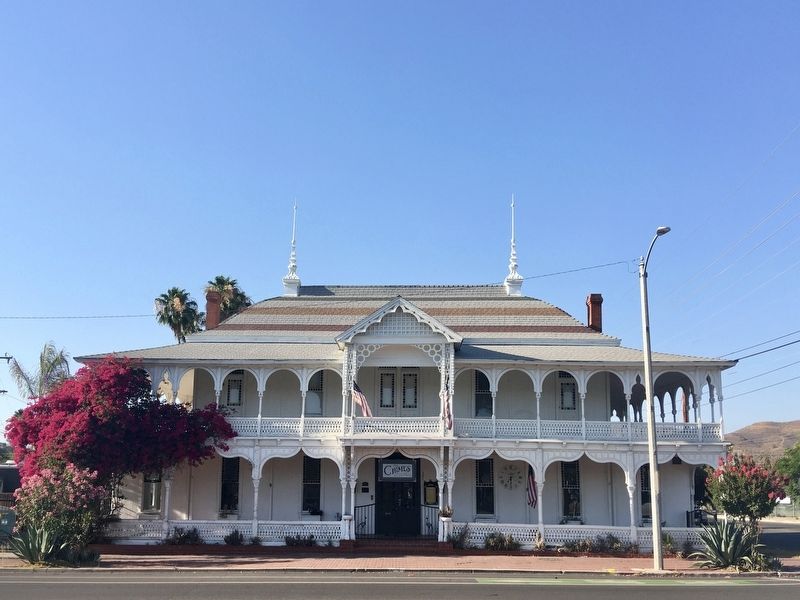
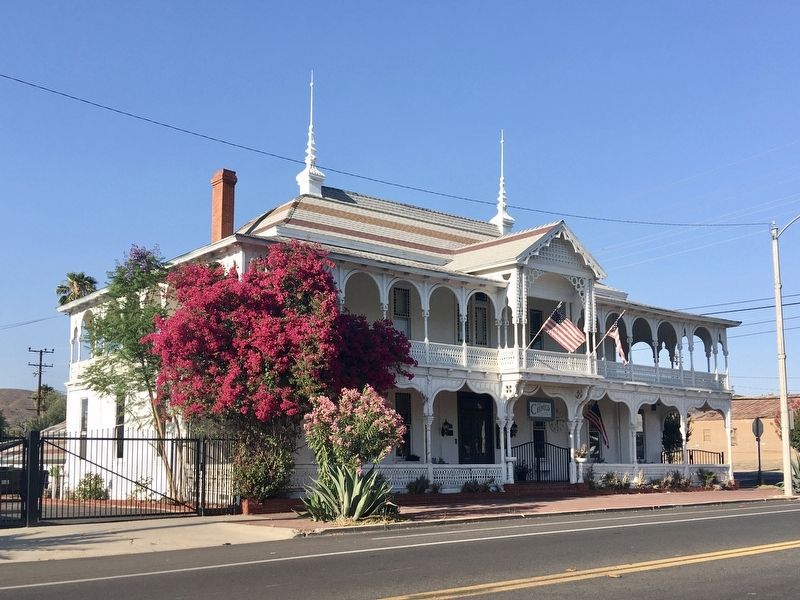
Regarding Crescent Bath House. In 1887, Franklin Heald and Frank Ferris constructed an elaborate facility at the area’s largest mineral springs, with a building designed in Moorish architecture in which everything was suggestive of Oriental luxury.
The building had 10 sunken porcelain-tiled bathtubs, an area for mud bathing, an enclosed mineral pool, therapy rooms, and sauna facilities. A regular swimming pool was added in the early 1900s.
The
Photographed by Craig Baker, July 1, 2021
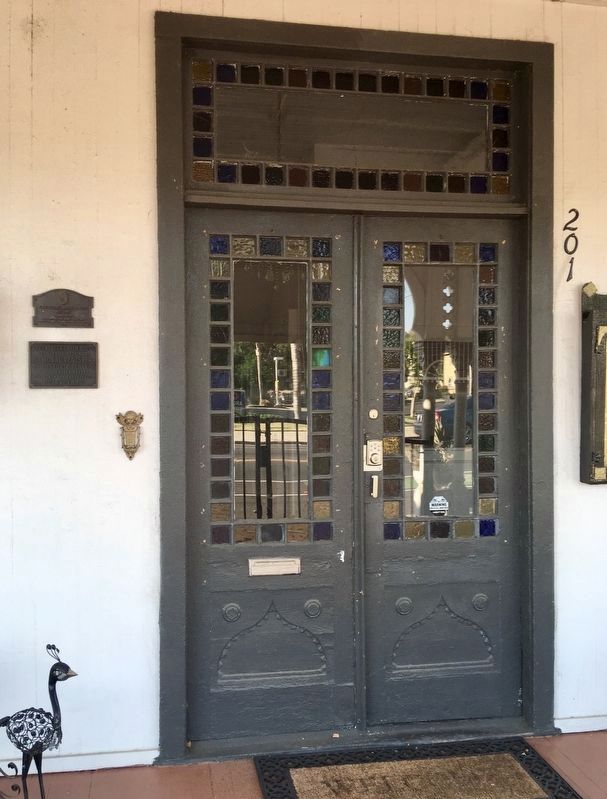
2. Crescent Bath House Markers
In later years, the Crescent Bath House has been a private residence, and an antique store.
Photographed by Craig Baker, July 1, 2021
3. Crescent Bath House
Photographed by Craig Baker, July 1, 2021
4. Crescent Bath House
Credits. This page was last revised on September 27, 2024. It was originally submitted on August 6, 2021, by Craig Baker of Sylmar, California. This page has been viewed 1,209 times since then and 222 times this year. Photos: 1, 2, 3, 4. submitted on August 6, 2021, by Craig Baker of Sylmar, California.
