Oak Park in Cook County, Illinois — The American Midwest (Great Lakes)
Moore-Dugal Residence
Photographed by Andrew Ruppenstein, August 26, 2021
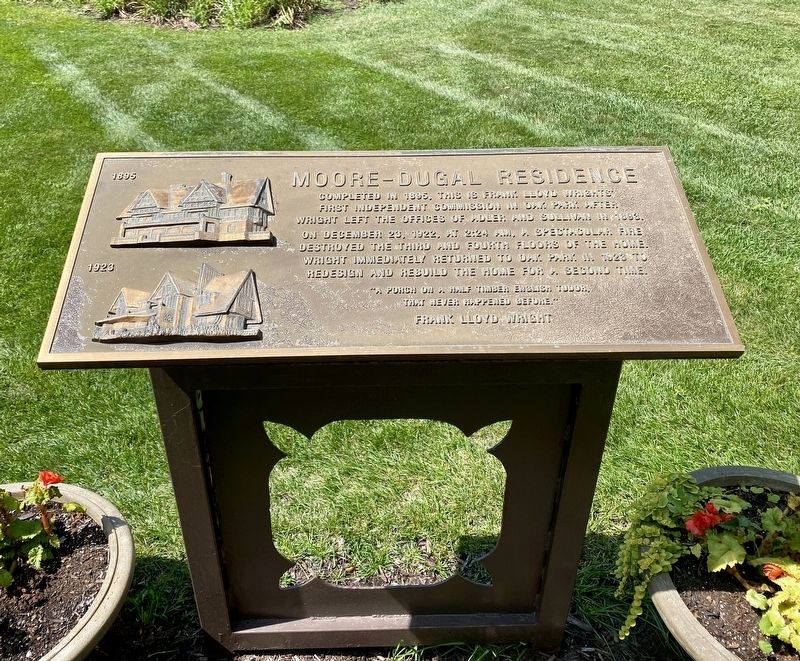
1. Moore-Dugal Residence Marker
"A porch on a half timber English tudor. That never happened before."
Frank Lloyd Wright
Topics and series. This historical marker is listed in this topic list: Architecture. In addition, it is included in the Frank Lloyd Wright series list. A significant historical date for this entry is December 23, 1922.
Location. 41° 53.57′ N, 87° 48.025′ W. Marker is in Oak Park, Illinois, in Cook County. It is on Forest Avenue north of Lake Street, on the left when traveling north. Touch for map. Marker is at or near this postal address: 333 Forest Avenue, Oak Park IL 60302, United States of America. Touch for directions.

Regionally, this marker is in Greater Chicago. It is also in the American Midwest. Globally, it is in North America, on the Great Lakes, in the Western Hemisphere,
this page online
Other nearby markers. At least 8 other markers are within walking distance of this marker: Grace W. Trout (within shouting distance of this marker); Frank Lloyd Wright Home and Studio Campaign (about 500 feet away, measured in a direct line); Frank Lloyd Wright Preservation Fund (about 600 feet away); Frank Lloyd Wright Home and Studio (about 600 feet away); Austin Gardens Woodland Habitat (approx. 0.2 miles away); a different marker also named Austin Gardens Woodland Habitat (approx. 0.2 miles away); The Nineteenth Century Club (approx. 0.2 miles away); The History of Austin Gardens (approx. ¼ mile away). Touch for a list and map of all markers in Oak Park.
Also see . . . Nathan G. Moore House (Wikipedia).
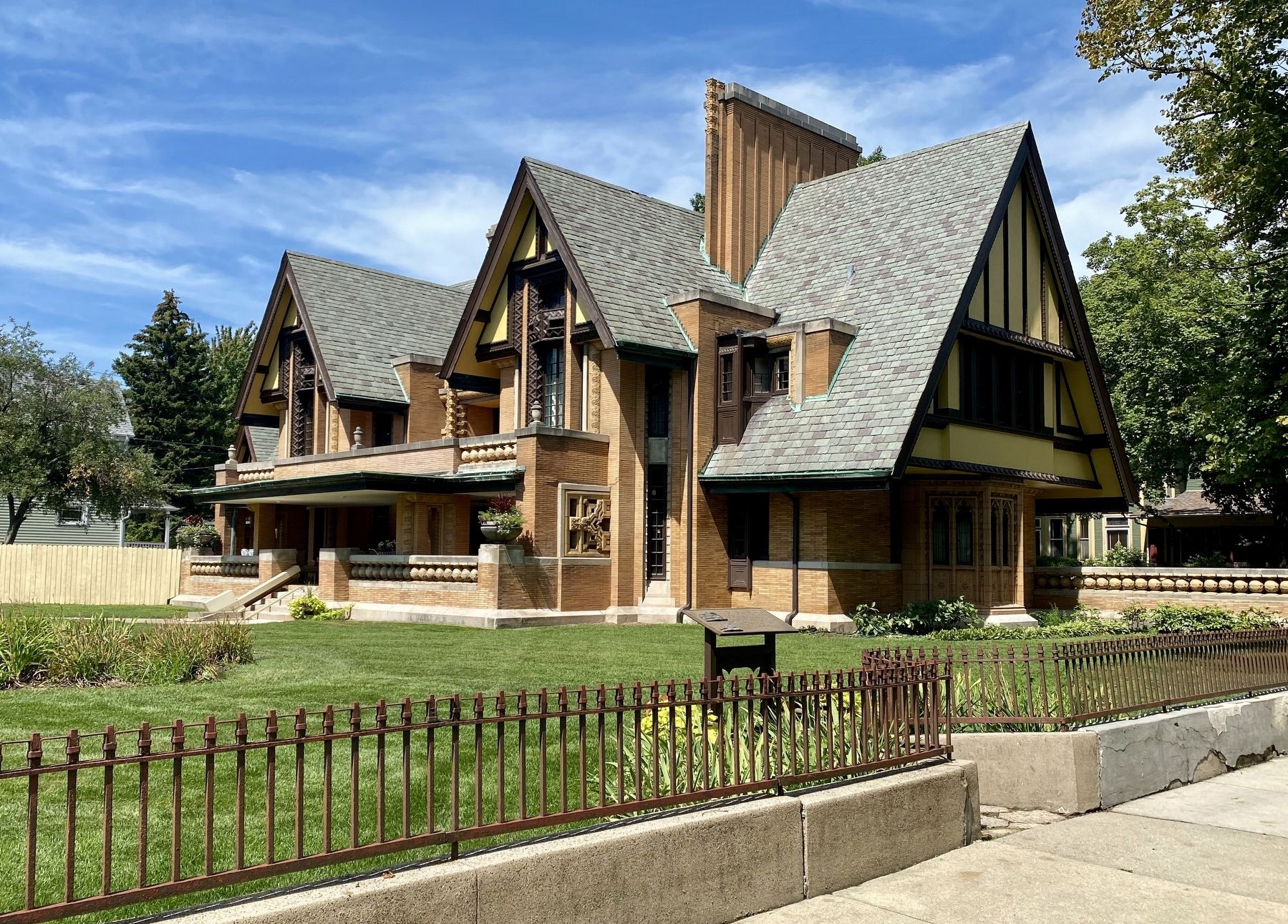
"The Nathan G. Moore House, also known as the Moore-Dugal Residence, is a house designed by Frank Lloyd Wright. The house was built one block south of Wright's home and studio at 333 Forest Avenue in the Chicago suburb(Submitted on August 31, 2021.)of Oak Park, Illinois. It was originally completed in 1895 in the Tudor Revival style at the request of client Nathan Moore. Wright obliged his client's wishes, but long after disliked the house for its adherence to historical styles.Photographed by Andrew Ruppenstein, August 26, 20212. Moore-Dugal Residence and Marker
A 1922 fire gave Wright the opportunity to redesign the house. The structure was completely rebuilt above the first or lowest floor in a manner in keeping with Wright's other works of the late 1910s and early 1920s. While the new design stayed evocative of Tudor architecture, the house was heavily ornamented by details of Sullivanesque, Mayan, and other exotic origins. Wright's second scheme remains largely intact today and the house continues to be a private residence despite a brief period as a tour home."
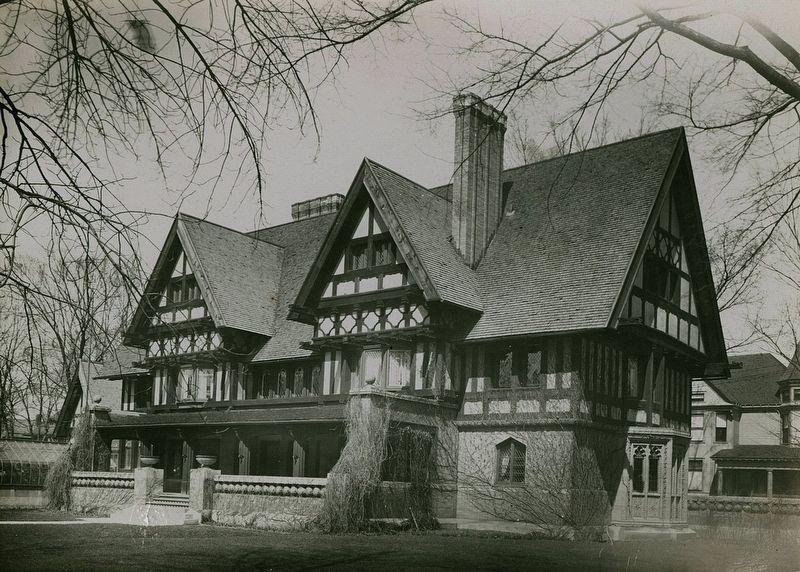
Percy H. Sloan (courtesy of the Newberry Library, via Wikipedia Commons)
3. Nathan G. Moore House, Oak Park, Illinois, early 20th century
Credits. This page was last revised on January 30, 2023. It was originally submitted on August 31, 2021, by Andrew Ruppenstein of Lamorinda, California. This page has been viewed 1,182 times since then and 86 times this year. Photos: 1, 2, 3. submitted on August 31, 2021, by Andrew Ruppenstein of Lamorinda, California.
