Wessington Springs in Jerauld County, South Dakota — The American Midwest (Upper Plains)
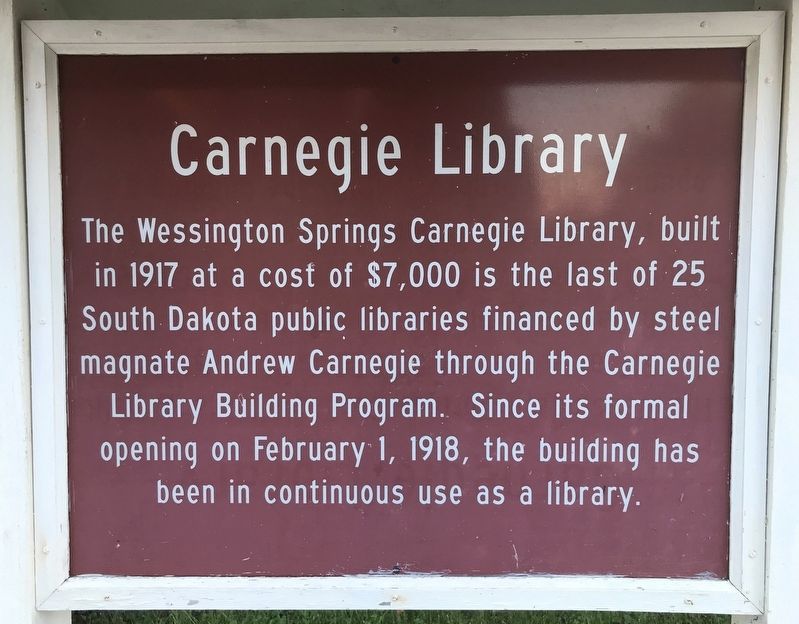
Carnegie Library
August 29, 2021
1. Carnegie Library Marker
Topics and series. This historical marker is listed in these topic lists: Arts, Letters, Music • Education. In addition, it is included in the Carnegie Libraries, and the National Register of Historic Places (NRHP) series lists. A significant historical date for this entry is February 1, 1918.
Location. 44° 4.755′ N, 98° 34.331′ W. Marker is in Wessington Springs, South Dakota, in Jerauld County. It is on West Main Street east of Dakota Avenue, on the right when traveling east. Touch for map. Marker is at or near this postal address: 109 W Main St, Wessington Springs SD 57382, United States of America. Touch for directions.

Regionally, this marker is in the Yankton Sioux Tribe, in East River, and specifically in the James River Valley. It is also in the American Lewis & Clark Corridor, on the prairies, and on the Northern
this page online
Other nearby markers. At least 8 other markers are within walking distance of this marker: Methodist Episcopal Church of Wessington Springs (within shouting distance of this marker); Stratton Park (within shouting distance of this marker); South Dakota Amateur Baseball Hall of Fame (about 500 feet away, measured in a direct line); Opera House (about 500 feet away); Jerauld County Courthouse (about 500 feet away); Wessington Springs' First Home (about 600 feet away); Wessington Springs, South Dakota Veterans Memorial (about 700 feet away); Legion Hill (approx. 0.2 miles away). Touch for a list and map of all markers in Wessington Springs.
Also see . . . South Dakota SP Wessington Springs Carnegie Library - National Archives Catalog. From the National Register of Historic Places Continuation Sheet (1999):
Statement of Significance:(Submitted on January 5, 2025.)
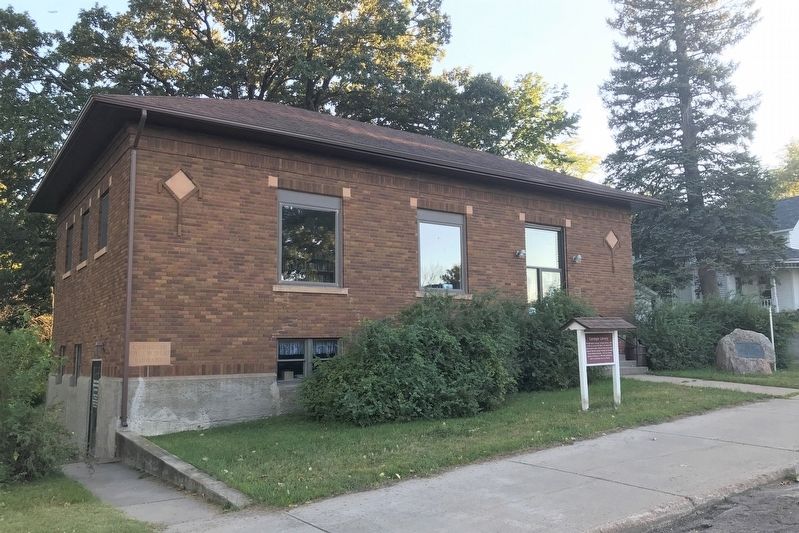
"In 1916, a group of Wessington Springs citizens realizing the cultural and educationalimpact of a library on a growing community, applied to the Carnegie Corporation for funding to construct a library building. They were awarded $7,000.00 providing they would pledge themselves to expend at least 10% of the grant amount to provide books and ongoing services. F.C.W. Kuehn of Huron, South Dakota was contacted to develop plans for the building's design. Construction began in the summer of 1917 and officially opened on February 1, 1918."August 29, 20212. Wessington Springs Carnegie Library & Marker
"The library at Wessington Springs is unique, for it was designed in the Prairie style, a style that was merely 3% of the total style used. The library in Wessington Springs exhibits common Prairie style traits: a low and horizontal design emphasis; overhanging hip roof; walls of brick; ribbon windows; and geometric design elements. Most Prairie style libraries are located in the mid-west but isolated examples can be found as far a field as Washington but those are designed by mid-west firms.
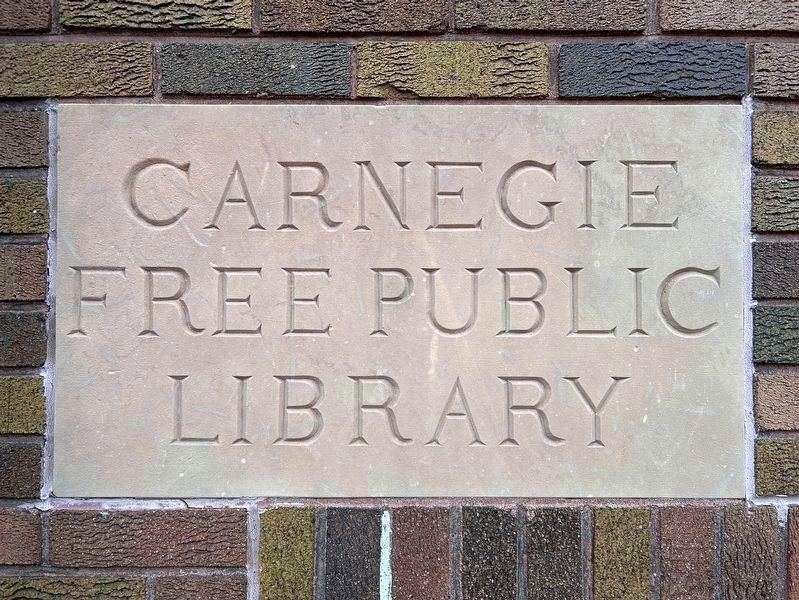
Of the 25 Carnegie Libraries constructed in South Dakota three have been razed (25%), 14 no longer function as a library (56%) and 8 are still libraries (32%). The library at Wessington Springsis significant because it is one of eight libraries in the State of South Dakota that is still used as a library."November 24, 20243. Carnegie Library Cornerstone
August 29, 2021
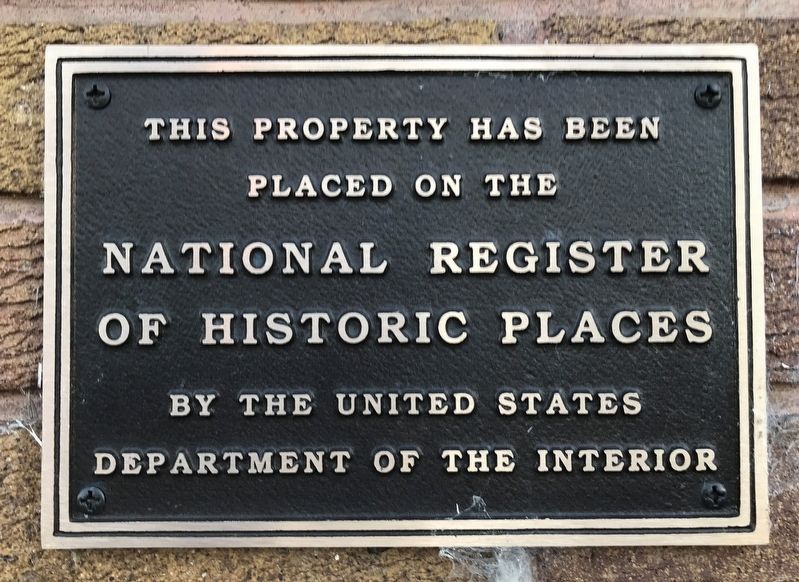
4. National Register of Historic Places Marker
August 29, 2021
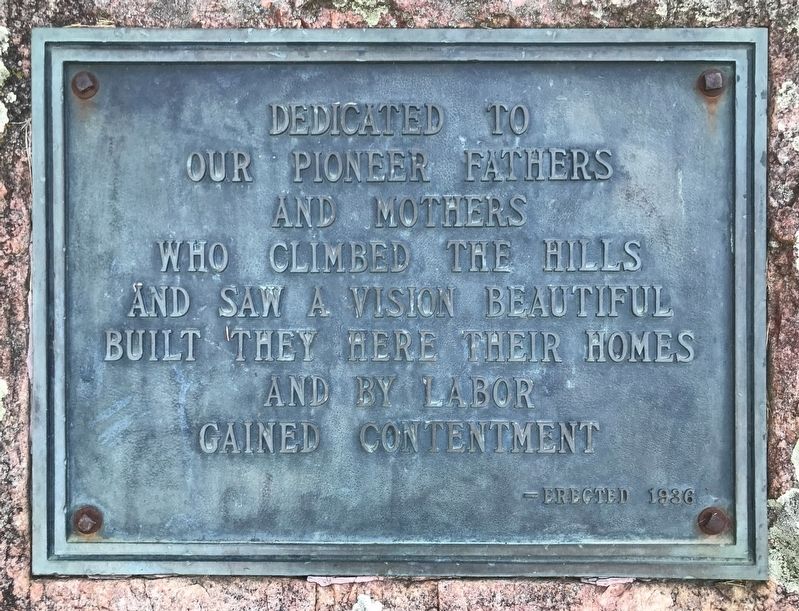
5. Dedication Stone Marker
-erected 1936
Credits. This page was last revised on January 5, 2025. It was originally submitted on August 31, 2021. This page has been viewed 431 times since then and 13 times this year. Photos: 1, 2. submitted on August 31, 2021. 3. submitted on January 5, 2025. 4, 5. submitted on August 31, 2021. • Bill Pfingsten was the editor who published this page.
