Old Fourth Ward in Ann Arbor in Washtenaw County, Michigan — The American Midwest (Great Lakes)
St. Andrew´s Episcopal Church
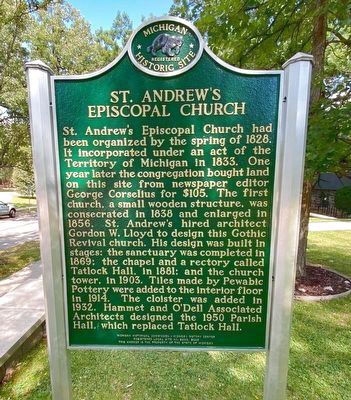
Photographed by J.T. Lambrou, September 10, 2021
1. St. Andrew´s Episcopal Church Marker (side 1)
St. Andrew’s is Ann Arbor’s oldest church building in continuous use and has earned state and local preservation awards. The church helped establish nearby Episcopal churches in the mid-twentieth century: St. Clare of Assisi in Ann Arbor (1952), St. Barnabas in Chelsea (1954) and St. Aidan’s in Ann Arbor (1967). In 1970, St. Andrew’s joined and financially
this page online
Erected 2020 by Michigan Historical Commission - Michigan History Center. (Marker Number L2333.)
Topics and series. This historical marker is listed in this topic list: Religion & Religious Structures. In addition, it is included in the Michigan Historical Commission series list. A significant historical year for this entry is 1828.
Location. 42° 16.997′ N, 83° 44.619′ W. Marker is in Ann Arbor, Michigan, in Washtenaw County. It is in the Old Fourth Ward. It is at the intersection of North Division Street and Catherine Street, on the right when traveling north on North Division Street. Touch for map. Marker is at or near this postal address: 306 N Division St, Ann Arbor MI 48104, United States of America. Touch for directions.

Regionally,
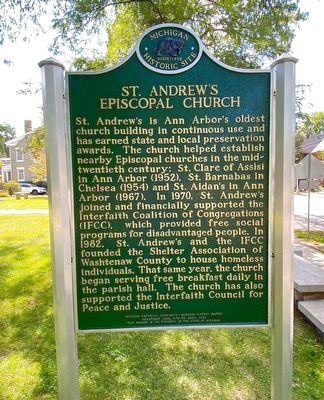
Photographed by J.T. Lambrou, September 10, 2021
2. St. Andrew´s Episcopal Church Marker (side 2)
Other nearby markers. At least 8 other markers are within walking distance of this marker: St. Thomas the Apostle Church (about 800 feet away, measured in a direct line); Ann Arbor and LGBTQ+ History / Ann Arbor and Human Rights (about 800 feet away); Antislavery Society (approx. 0.2 miles away); A Supply Side of Town (approx. 0.2 miles away); The Growth of City Services (approx. 0.2 miles away); New City Government, New Issues, and a New City Hall (approx. 0.2 miles away); Essential City Services (approx. 0.2 miles away); Harris Hall (approx. 0.2 miles away). Touch for a list and map of all markers in Ann Arbor.
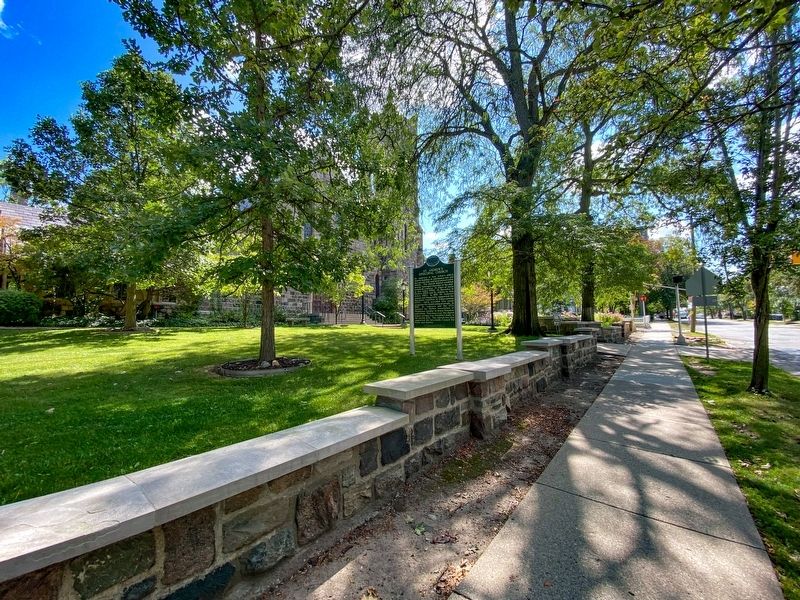
Photographed by J.T. Lambrou, September 10, 2021
3. St. Andrew´s Episcopal Church Marker
Looking south on Division Street
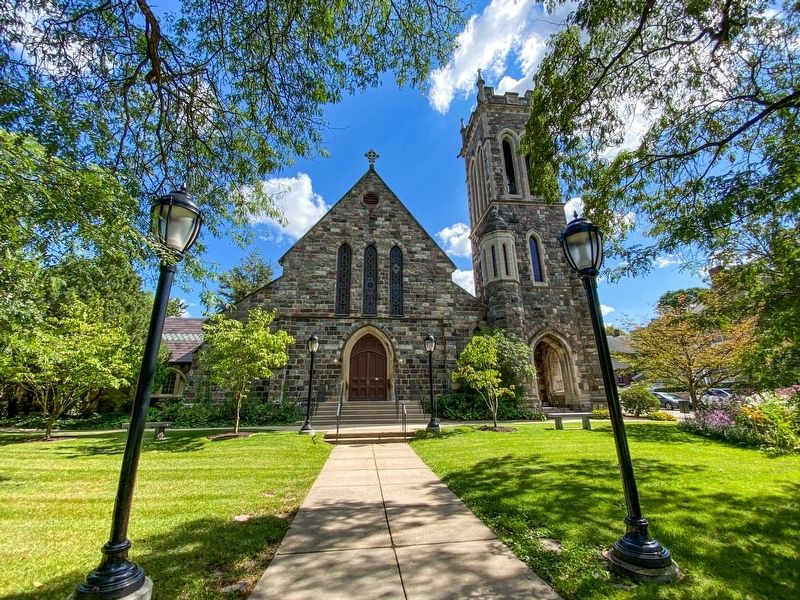
Photographed by J.T. Lambrou, September 10, 2021
4. St. Andrew´s Episcopal Church
View of church from Division Street.
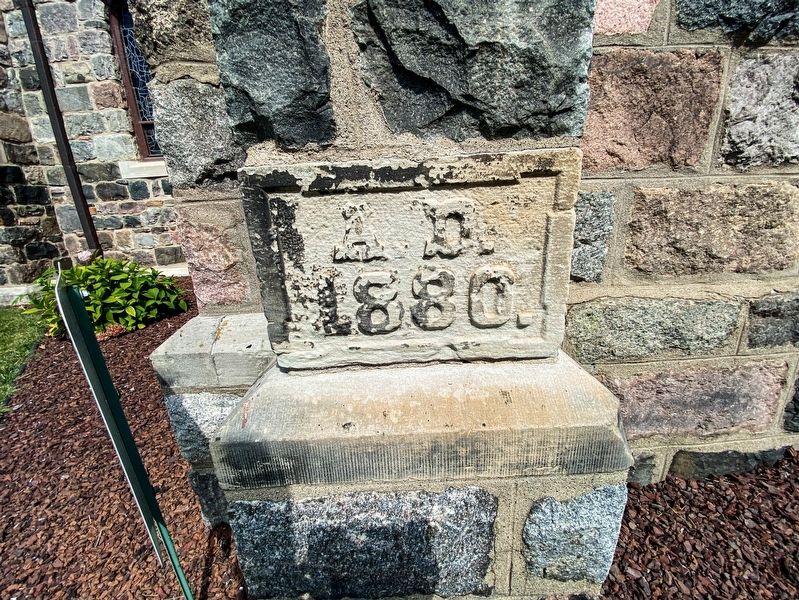
Photographed by J.T. Lambrou, September 10, 2021
5. St. Andrew´s Episcopal Church Cornerstone
Credits. This page was last revised on February 12, 2023. It was originally submitted on September 13, 2021, by J.T. Lambrou of New Boston, Michigan. This page has been viewed 739 times since then and 68 times this year. Photos: 1, 2, 3, 4, 5. submitted on September 13, 2021, by J.T. Lambrou of New Boston, Michigan. • Mark Hilton was the editor who published this page.
