
Zeeland in Ottawa County, Michigan — The American Midwest (Great Lakes)
New Groningen ⎯⎯⎯ Jan Rabbers
Photographed by Kathy Garman, June 6, 2021
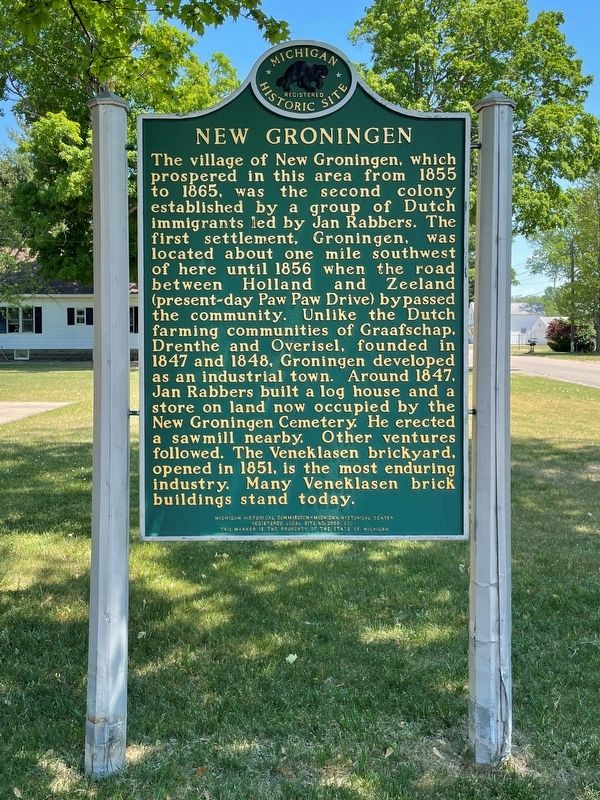
1. New Groningen Marker
Inscription.
New Groningen, also, Jan Rabbers. .
New Groningen. The village of New Groningen, which prospered in this area from 1855 to 1865, was the second colony established by a group of Dutch immigrants led by Jan Rabbers. The first settlement, Groningen, was located about one mile southwest of here until 1856 when the road between Holland and Zeeland (present-day Paw Paw Drive) bypassed the community. Unlike the Dutch farming communities of Graafschap, Drenthe and Overisel, founded in 1847 and 1848, Groningen developed as an industrial town. Around 1847, Jan Rabbers built a log house and a store on land now occupied by the New Groningen Cemetery. He erected a sawmill nearby. Other ventures followed. The Veneklasen brickyard, opened in 1851, is the most enduring industry. Many Veneklasen brick buildings stand today.,
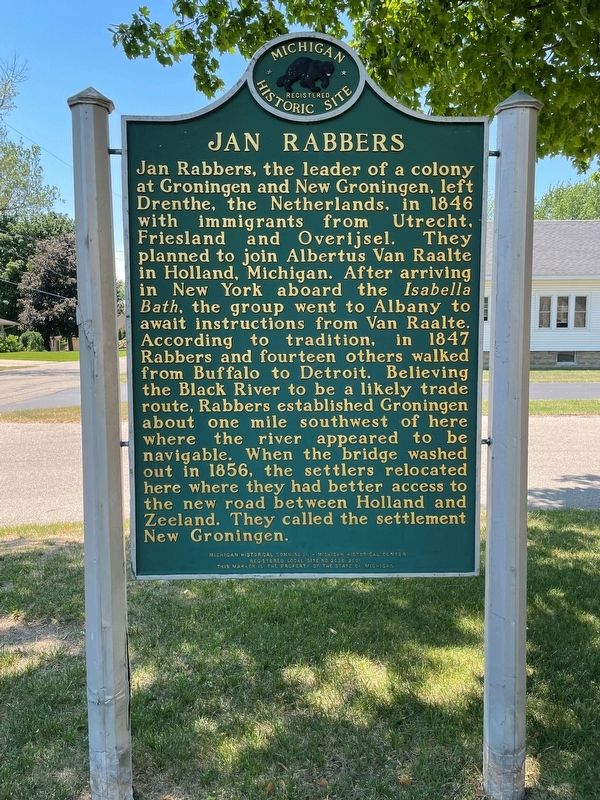
Jan Rabbers. Jan Rabbers, the leader of a colony at Groningen and New Groningen, left Drenthe, the Netherlands, in 1846 with immigrants from Utrecht, Friesland and Overijsel. They planned to join Albertus Van Raalte in Holland, Michigan. After arriving in New York aboard the Isabella Bath, the group went to Albany to await instructions from Van Raalte. According to tradition, in 1847 Rabbers and fourteen others walked from Buffalo to Detroit. Believing the Black River to be a likely trade route, Rabbers established Groningen about one mile southwest of here where the river appeared to be navigable. When the bridge washed out in 1856, the settlers relocated here where they had better access to the new road between Holland and Zeeland. They called the settlement New Groningen.
New Groningen
The village of New Groningen, which prospered in this area from 1855 to 1865, was the second colony established by a group of Dutch immigrants led by Jan Rabbers. The first settlement, Groningen, was located about one mile southwest of here until 1856 when the road between Holland and Zeeland (present-day Paw Paw Drive) bypassed the community. Unlike the Dutch farming communities of Graafschap, Drenthe and Overisel, founded in 1847 and 1848, Groningen developed as an industrial town. Around 1847, Jan Rabbers built a log house and a store on land now occupied by the New Groningen Cemetery. He erected a sawmill nearby. Other ventures followed. The Veneklasen brickyard, opened in 1851, is the most enduring industry. Many Veneklasen brick buildings stand today.
Jan Rabbers
Jan Rabbers, the leader of a colony at Groningen and New Groningen, left Drenthe, the Netherlands, in 1846 with immigrants from Utrecht, Friesland and Overijsel. They planned to join Albertus Van Raalte in Holland, Michigan. After arriving in New York aboard the Isabella Bath, the group went to Albany to await instructions from Van
Click or scan to see this page online
Raalte. According to tradition, in 1847 Rabbers and fourteen others walked from Buffalo to Detroit. Believing the Black River to be a likely trade route, Rabbers established Groningen about one mile southwest of here where the river appeared to be navigable. When the bridge washed out in 1856, the settlers relocated here where they had better access to the new road between Holland and Zeeland. They called the settlement New Groningen.
Erected 2001 by Michigan Historical Commission - Michigan Historical Center. (Marker Number L2096.)
Location. 42° 48.471′ N, 86° 2.457′ W. Marker is in Zeeland, Michigan, in Ottawa County. It is on Paw Paw Drive 0.3 miles north of Business Interstate 196, on the left when traveling north. Touch for map. Marker is at or near this postal address: 10537 Paw Paw Dr, Zeeland MI 49464, United States of America. Touch for directions.

Regionally, this
Photographed by Kathy Garman, June 6, 2021
2. Jan Rabbers Marker
marker is in West Michigan, specifically in Greater Grand Rapids, and in one of the Lake Michigan Shore counties. It is also in the American Midwest and on the Great Lakes. Globally, it is in North America, the Western Hemisphere, the Western World, and the Anglosphere. Historically, it finds itself in what was once the Northwest Territory.
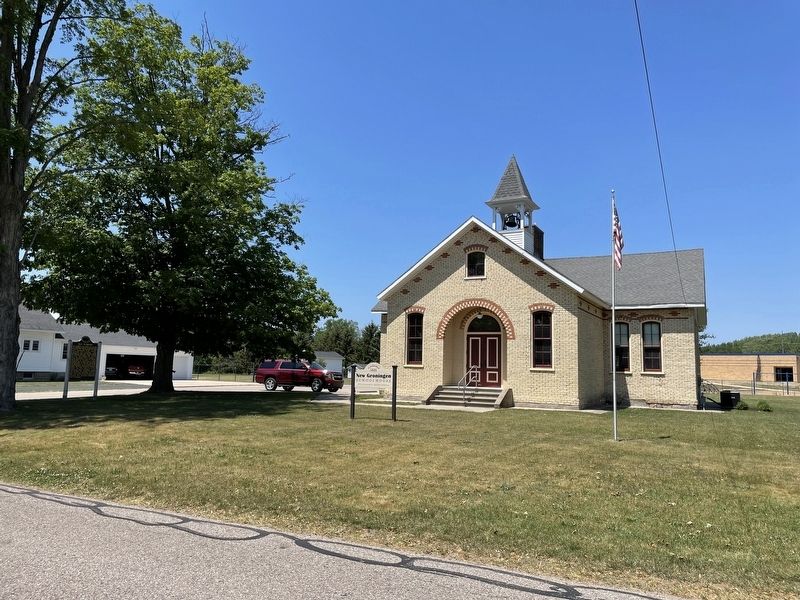
Additional commentary. 1. New Groningen Schoolhouse https://www.zeelandhistory.org/home/1881-new-groningen-schoolhouse/
— Submitted September 22, 2021, by John Garman of Rochester Hills.
Photographed by John Garman, June 6, 2021
3. New Groningen Schoolhouse and Historical Marker
The Schoolhouse was established in 1881.
Photographed by Kathy Garman, June 6, 2021
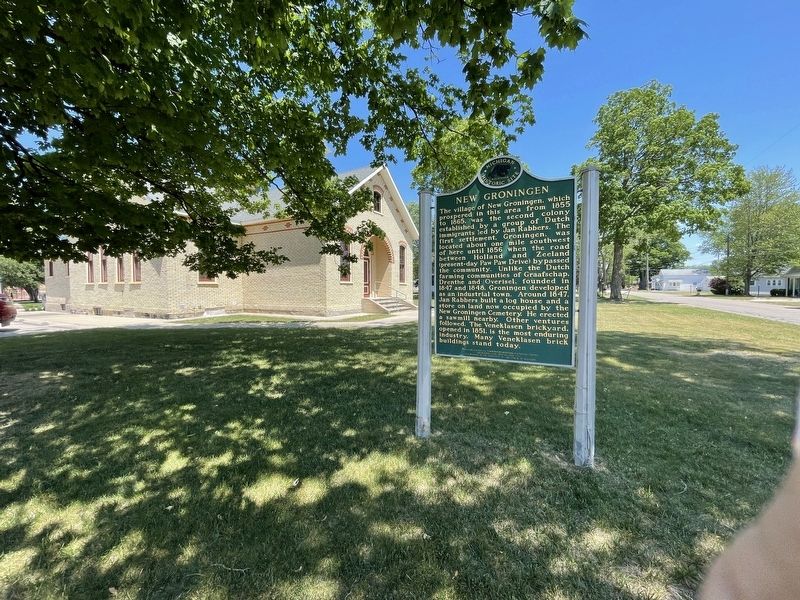
4. New Groningen Schoolhouse and Historical Marker
Looking northeast on Paw Paw Street.
Credits. This page was last revised on September 23, 2021. It was originally submitted on September 22, 2021, by John Garman of Rochester Hills. This page has been viewed 1,473 times since then and 93 times this year. Photos:1, 2, 3, 4. submitted on September 22, 2021, by John Garman of Rochester Hills. • Mark Hilton was the editor who published this page.
