Thurmont in Frederick County, Maryland — The American Northeast (Mid-Atlantic)
Catoctin Furnace African American Cemetery Interpretive Trail
| — | No. 1 | — |
Photographed by Allen C. Browne, October 18, 2021
1. Catoctin Furnace African American Cemetery Interpretive Trail Marker
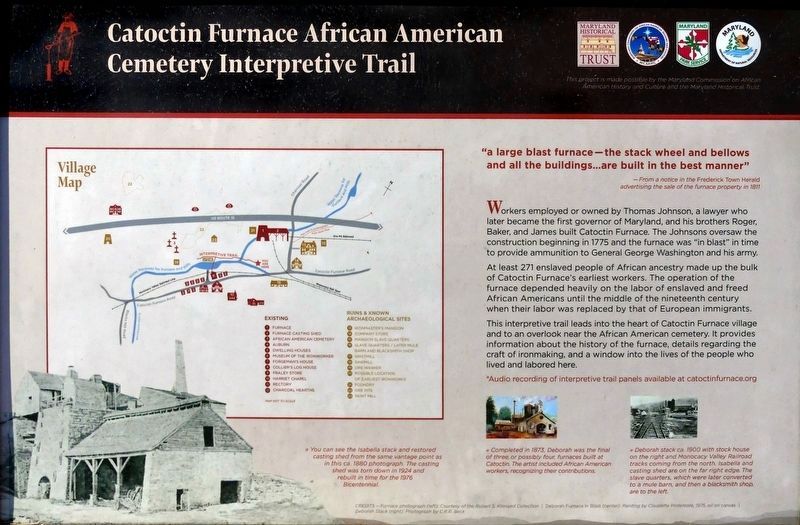
"a large blast furnace— the stack wheel and bellows and all the buildings… are built in the best manner"
— From a notice in the Frederick Town Herald advertising the sale of the furnace property in 1871 workers employed or owned by Thomas Johnson, a lawyer who later became the first governor of Maryland, and his brothers Roger, Baker, and James built Catoctin Furnace. The Johnsons oversaw the construction beginning in 1775 and the furnace was "in blast" in time to provide ammunition to General George Washington and his army.
At least 271 enslaved people of African ancestry made up the bulk of Catoctin Furnace's earliest workers. The operation of the furnace depended heavily on the labor of enslaved and freed African Americans until the middle of the nineteenth century when their labor was replaced by that of European immigrants. This interpretive trail leads into the heart of Catoctin Furnace village and to an overlook near the African American cemetery. It provides information about the history of the furnace, details regarding the craft of ironmaking, and a window into the lives of the people who lived and labored
this page online
*Audio recording of interpretive trail panels available at catoctinfurnace.org
[Captions:]
» You can see the Isabella stack and restored casting shed from the same vantage point in this ca. 1880 photograph. The casting shed was torn down in 1924 and rebuilt in time for the 1976 Bicentennial.
» Completed in 1873, Deborah was the final of the three, or possibly four, furnaces built at Catoctin. The artist included African American workers, recognizing their contributions.
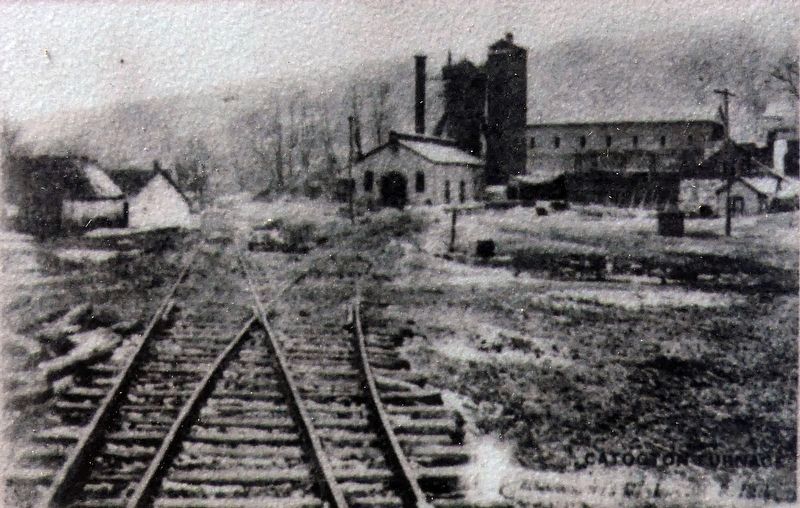
» Deborah stack ca. 1900 with stock house on the right and Monocacy Valley Railroad tracks coming from the north. Isabella and casting shed are on the far right edge. The slave quarters, which were later converted to a mule barn, and then a blacksmith shop, are to the left.
Erected by Maryland Historical Trust; Maryland Commission on African American History and Culture; Maryland Park Service, Maryland Department of Natural Resources. (Marker Number 1.)
Topics and series. This historical marker is listed in these topic lists: African Americans • Cemeteries & Burial Sites • Industry & Commerce • Railroads & Streetcars.
Photographed by Adam Margolis, September 20, 2025
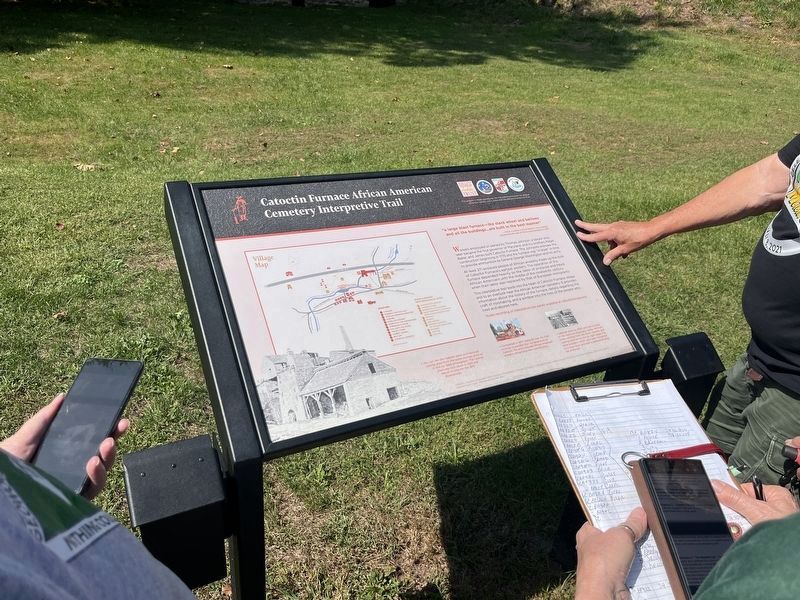
2. Catoctin Furnace African American Cemetery Interpretive Trail Marker
Location. 39° 34.869′ N, 77° 26.047′ W. Marker is in Thurmont, Maryland, in Frederick County. It is on Catoctin Furnace Road (Maryland Route 806) 0.1 miles north of Catoctin Hollow Road, on the left when traveling north. Touch for map. Marker is at or near this postal address: 12698 Catoctin Furnace Rd, Thurmont MD 21788, United States of America. Touch for directions.

Regionally, this marker is in the Washington Metropolitan Area and in Central Maryland. It is also in the American Mid-Atlantic. Globally, it is in North America, the Western Hemisphere, the Western World, and the Anglosphere. Historically, it finds itself in what was once one of the original Thirteen Colonies and also the Antebellum South.
Other nearby markers. At least 8 other markers are within walking distance of this marker: Dirty and Dangerous (here, next to this marker); Catoctin Iron Furnace (here, next to this marker); a different marker also named Catoctin Iron Furnace (a few steps from this marker); The Watchful Eye (a few steps
Photographed by Allen C. Browne, October 18, 2021
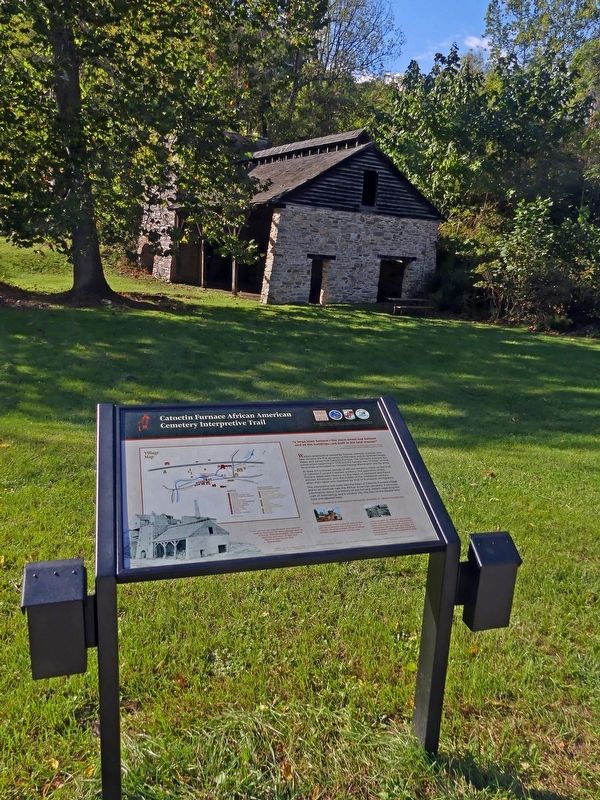
3. Catoctin Furnace African American Cemetery Interpretive Trail Marker
Another marker is no longer nearby. Prosperity and Power (was about 300 feet away, measured in a direct line but has been replaced with another marker now near it).
Photographed by Adam Margolis, September 20, 2025
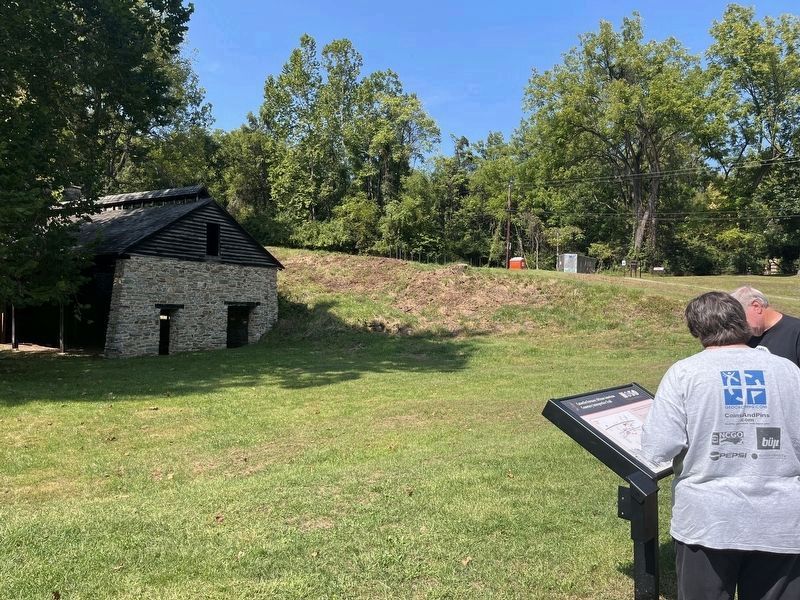
4. Catoctin Furnace African American Cemetery Interpretive Trail Marker

Photographed by Claudette Pridemore
5. Deborah Furnace in Blast
1975
by Claudette Pridemore
1975
by Claudette Pridemore
Completed in 1873, Deborah was the final of three, or possibly four, furnaces built at Catoctin. The artist included African American workers, recognizing their contributions.
Close-up of image on marker
Photographed by C. R. R. Beck
6. Deborah stack ca. 1900
Photo by C. R. R. Beck
Photo by C. R. R. Beck
Deborah stack ca 1900 with stock house on the right and Monocacy Valley Railroad tracks coming from the north Isabella and casting shed are on the far right edge. The slave quarters, which were later converted to a mule barn, and then a blacksmith shop, are to the left.Close-up of photo on marker.
Credits. This page was last revised on May 18, 2026. It was originally submitted on October 19, 2021, by Allen C. Browne of Silver Spring, Maryland. This page has been viewed 946 times since then and 62 times this year. Photos: 1. submitted on October 19, 2021, by Allen C. Browne of Silver Spring, Maryland. 2. submitted on May 7, 2026, by Adam Margolis of Mission Viejo, California. 3. submitted on October 19, 2021, by Allen C. Browne of Silver Spring, Maryland. 4. submitted on May 7, 2026, by Adam Margolis of Mission Viejo, California. 5, 6. submitted on October 19, 2021, by Allen C. Browne of Silver Spring, Maryland. • Devry Becker Jones was the editor who published this page.
