Smithsonian National Zoo in Northwest Washington in Washington, District of Columbia — The American Northeast (Mid-Atlantic)
The Scoop on Poop
Smithsonian's National Zoo
| — | 125 Years | — |
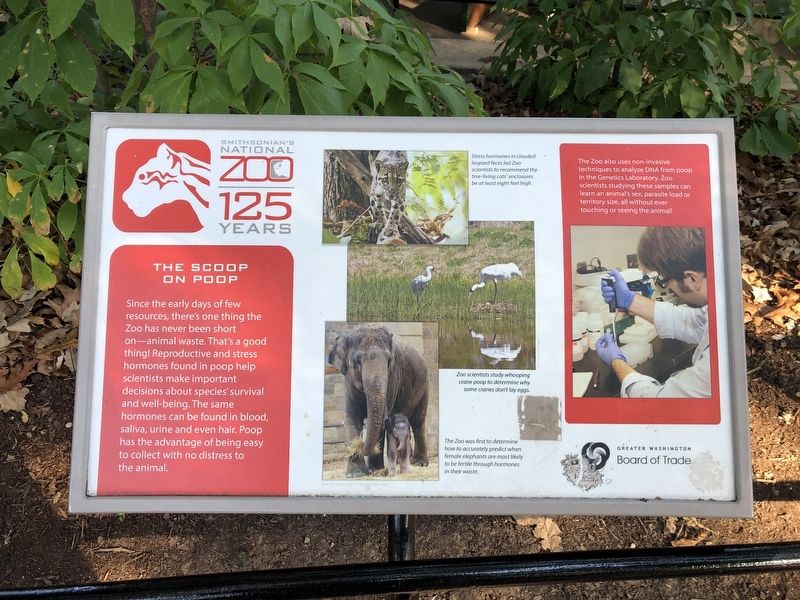
Since the early days of few resources, there's one thing the Zoo has never been short on—animal waste. That's a good thing! Reproductive and stress hormones found in poop help scientists make important decisions about species' survival and well-being. The same hormones can be found in blood, saliva, urine and even hair. Poop has the advantage of being easy to collect with no distress to the animal.
The Zoo also uses non-invasive techniques to analyze DNA from poop in the Genetics Laboratory. Zoo scientists studying these samples can learn an animal's sex, parasite load or territory size, all without ever touching or seeing the animal!
[Captions:]
Stress hormones in clouded leopard feces led Zoo scientists to recommend the tree-living cats' enclosures to be at least eight feet high.
Zoo scientists study whooping crane poop to determine why some cranes don't lay eggs.
The Zoo was the first to determine how to accurately predict when female elephants are most likely to be fertile through hormones in their waste.
Erected by Smithsonian Institution.
Topics. This historical marker is listed in these
this page online
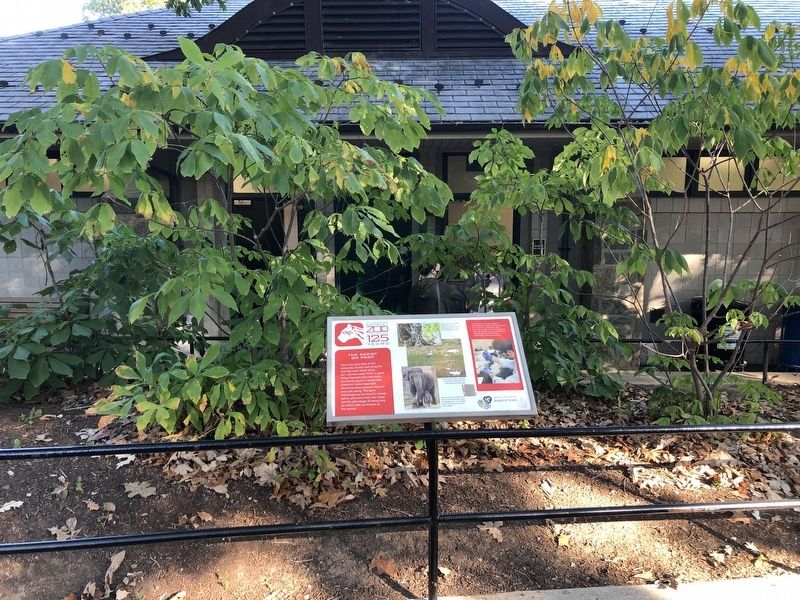
Location. 38° 55.908′ N, 77° 3.153′ W. Marker is in Northwest Washington in Washington, District of Columbia. It is in Smithsonian National Zoo. It is on Olmsted Walk 0.3 miles east of Connecticut Avenue Northwest, on the left when traveling east. Touch for map. Marker is at or near this postal address: 3001 Connecticut Ave NW, Washington DC 20008, United States of America. Touch for directions.

Regionally, this marker is in the Washington Metropolitan Area. It is also in the American Northeast, in the Upper South, in the Mid-Atlantic, in the Tidewater, and in the Chesapeake Bay Region. Globally, it is in North America, the Western Hemisphere, the Western World, and the Anglosphere.
Other nearby markers. At least 8 other markers are within walking distance of this marker: From Collecting to Breeding (here, next to this marker); Bison and the Land (a few steps from this marker); And Then There Were (Almost) None (a few steps from this marker); Are They Bison or Buffalo? (within shouting distance of this marker); Meet Our Bison (within
Another marker is no longer nearby. Meet Our Bison (was within shouting distance of this marker but has been replaced with another marker now near it).
Credits. This page was last revised on January 30, 2023. It was originally submitted on October 22, 2021, by Devry Becker Jones of Washington, District of Columbia. This page has been viewed 221 times since then and 15 times this year. Photos: 1, 2. submitted on October 22, 2021, by Devry Becker Jones of Washington, District of Columbia.
