Near Pocahontas in Tazewell County, Virginia — The American South (Mid-Atlantic)
Pocahontas
Photographed by Dawn Bowen, July 20, 2007
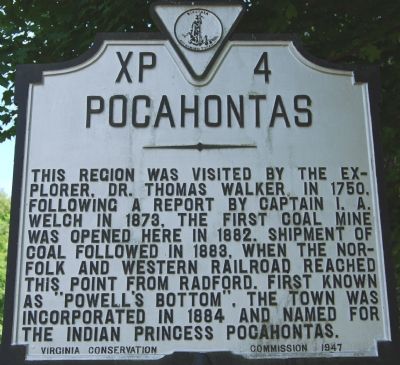
1. Pocahontas Marker
Erected 1947 by Virginia Conservation Commission. (Marker Number XP-4.)
Topics and series. This historical marker is listed in these topic lists: Industry & Commerce • Natural Resources • Settlements & Settlers. In addition, it is included in the Virginia Department of Historic Resources (DHR) series list. A significant historical year for this entry is 1750.
Location. 37° 18.595′ N, 81° 20.091′ W. Marker is near Pocahontas, Virginia, in Tazewell County. It is on Bramwell Road (County Route 644) 0 miles Virginia Route 102, on the right when traveling west. Touch for map. Marker is in this post office area: Pocahontas VA 24635, United States of America. Touch for directions.

Regionally, this marker is in Southwest Virginia.
this page online
Other nearby markers. At least 8 other markers are within 2 miles of this marker, measured as the crow flies: Abb’s Valley (a few steps from this marker); Pocahontas Cemetery (a few steps from this marker); Jordan Nelson’s Coal Bank (approx. ¼ mile away in West Virginia); Town of Pocahontas Commercial District (approx. half a mile away); Pocahontas Mine No. 1 (approx. 0.6 miles away); Bramwell (approx. one mile away in West Virginia); Mill Creek Coal & Coke Co. (approx. one mile away in West Virginia); The Coal Barons (approx. 1.6 miles away in West Virginia). Touch for a list and map of all markers in Pocahontas.
Photographed by Dawn Bowen, July 20, 2007
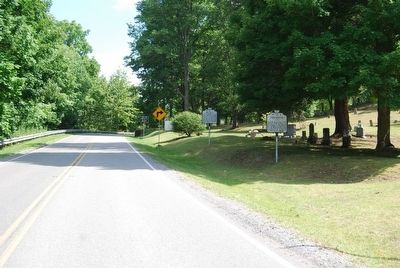
2. Markers on Bramwell Road
Photographed by Dawn Bowen, July 20, 2007
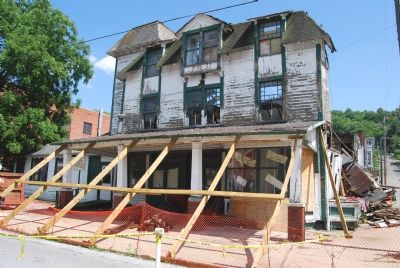
3. The company store
Photographed by Dawn Bowen, July 20, 2007
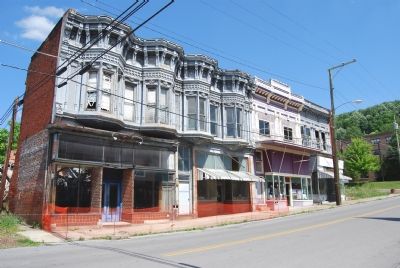
4. Abandoned business block
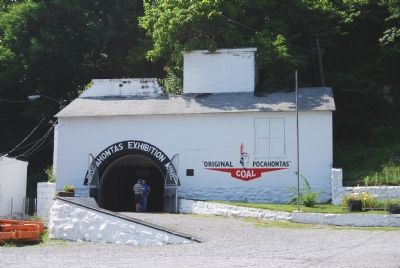
Photographed by Dawn Bowen, July 20, 2007
5. Pocahontas Exhibition Mine
Photographed by Allen C. Browne, February 16, 2015
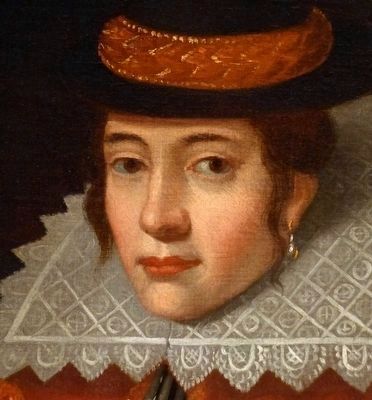
6. Pocahontas
This portrait of Pocahontas (Matoaks) after a 1616 engraving by Simon van de Passe hangs in the National Portrait Gallery in Washington DC.
“Pocahontas, the Indian princess who allegedly saved the life of English colonist John Smith, survives and flourishes as an example of an early American heroine. While Smith may have embellished the story of his rescue, the importance of Pocahontas to relations between colonists and Native Americans is undisputed. Following her conversion to Christianity and marriage to Englishman John Rolfe, Pocahontas journeyed to England with her family to demonstrate the ability of new settlers and native tribes to coexist in the Virginia colony. While in England, Pocahontas sat for her portrait, which was later engraved. That print served as the basis for this later portrait …” — National Portrait Gallery
“Pocahontas, the Indian princess who allegedly saved the life of English colonist John Smith, survives and flourishes as an example of an early American heroine. While Smith may have embellished the story of his rescue, the importance of Pocahontas to relations between colonists and Native Americans is undisputed. Following her conversion to Christianity and marriage to Englishman John Rolfe, Pocahontas journeyed to England with her family to demonstrate the ability of new settlers and native tribes to coexist in the Virginia colony. While in England, Pocahontas sat for her portrait, which was later engraved. That print served as the basis for this later portrait …” — National Portrait Gallery
Credits. This page was last revised on June 16, 2016. It was originally submitted on July 22, 2007, by Dawn Bowen of Fredericksburg, Virginia. This page has been viewed 2,134 times since then and 28 times this year. Photos: 1, 2, 3, 4, 5. submitted on July 22, 2007, by Dawn Bowen of Fredericksburg, Virginia. 6. submitted on October 26, 2015, by Allen C. Browne of Silver Spring, Maryland. • J. J. Prats was the editor who published this page.
